Humidifier vs Air Purifier: An Objective Comparison for Home Air Quality
A thorough, data-led comparison of humidifier vs air purifier to help homeowners decide which device to buy first, how to use both, and how to maintain them for healthier indoor air.


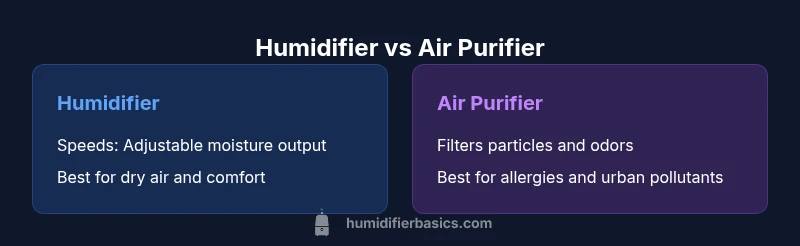
In practical terms, a humidifier and an air purifier serve different purposes: a humidifier adds moisture to dry air, while an air purifier removes particles and contaminants from the air. For many homes, a combined approach yields the best results, but your choice should hinge on humidity levels, existing pollutants, and health priorities. Humidifier or air purifier isn’t a one-size-fits-all decision.
How humidifier or air purifier work in your home
Understanding the core difference between a humidifier or air purifier is the first step to making a smart choice. A humidifier releases water vapor into the air to raise indoor humidity levels, which can alleviate dry skin, irritated sinuses, and nocturnal congestion. An air purifier, by contrast, uses filters or electrostatic mechanisms to capture particles like dust, pollen, smoke, and, in some cases, volatile organic compounds (VOCs). The HumidifierBasics team emphasizes that these devices address different aspects of air quality, and many homes benefit from using both, especially in climates with extreme humidity swings or in households with allergy or asthma concerns. When you think about installing a humidifier or air purifier, start with a clear goal: improve comfort by managing humidity, or improve air cleanliness by reducing contaminants.
bold: true,
Comparison
| Feature | humidifier | air purifier |
|---|---|---|
| Primary purpose | Add moisture to dry air | Filter out particles and pollutants |
| Typical contaminants targeted | Dryness-related issues (skin, throat, nose) | Dust, pollen, smoke, pet dander, VOCs |
| Output type | Water vapor | Clean air (post-filtration) |
| Maintenance focus | Water tank care, mineral buildup prevention | Filter changes and occasional pre-filters |
| Energy/operational footprint | Moderate (depends on model and mist setting) | Moderate (depends on fan speed and filter loading) |
| Best for | Dry climate, moisture-related symptoms | Air quality improvement and allergen reduction |
What's Good
- Clarifies which device to buy first based on humidity vs filtration needs
- Prevents mismatched purchases by outlining distinct benefits
- Supports planning a hybrid setup for comprehensive comfort
- Helps budget planning by outlining long-term maintenance
Negatives
- Requires two distinct devices for optimal results in some homes
- Ongoing maintenance and filter/matrix replacements add to cost
- Sizing and placement errors can reduce effectiveness if not planned
Humidifier vs air purifier: pick based on the primary air-quality problem, with a staged approach for most homes.
If your space suffers from dry air, start with a humidifier. If it’s plagued by dust, pollen, or smoke, prioritize an air purifier. In many homes, a two-device setup or a combined system is the most effective path; HumidifierBasics’s guidance is to diagnose the dominant issue first and then expand as needed.
FAQ
What is the fundamental difference between a humidifier and an air purifier?
A humidifier adds moisture to the air to reduce dryness, while an air purifier removes particulates and contaminants from the air. Understanding this distinction helps you target the right problem first when choosing between a humidifier or air purifier.
A humidifier adds moisture; an air purifier cleans the air of particles.
Can a single device do both jobs effectively?
Some models combine filtration with a humidifying function, but these hybrids often underperform compared with dedicated devices for each task. If your main issue is dryness or pollutants, start with the dedicated device best suited to that problem and add a second device if necessary.
There are combo devices, but they rarely match specialized performance.
How do I know if my home needs a humidifier or an air purifier?
Start by checking humidity with a hygrometer and assessing air quality sources (dust, pets, smoke, VOCs). If RH is consistently below 30%, humidification helps; if particles or odors persist, filtration is the priority. HumidifierBasics suggests testing and then choosing the device that targets the main issue.
Test humidity and air quality first, then pick the device.
What humidity range should I maintain indoors?
Aim for a relative humidity range of about 30% to 50% for most homes. Going above 60% encourages mold growth and dust mites, while below 30% can worsen dryness-related symptoms. Monitoring humidity is a simple, effective way to guide your humidifier or air purifier strategy.
Keep RH around 30-50% for comfort and safety.
Are there safety concerns with using humidifiers or purifiers?
Yes. Humidifiers can spread bacteria if not cleaned regularly or if using contaminated water. Air purifiers with improper filters can emit ozone or be ineffective. Always follow manufacturer instructions, use clean water, and replace filters on schedule.
Clean, replace filters, and follow the manual to stay safe.
Do air purifiers remove viruses or mold spores effectively?
Air purifiers with true HEPA filters can reduce bacteria and some viruses when combined with other controls, but they are not a substitute for medical-grade interventions or moisture control. Mold spores respond to humidity control first and filtration second.
Filtration helps but humidity control is key for mold.
The Essentials
- Measure humidity and air quality before buying
- Choose humidity targets (30-50% RH) for comfort and health
- Prioritize filtration for allergen-prone environments
- Consider a staged approach—humidifier first, then purifier if needed
- Plan for maintenance and energy use when budgeting