Difference Between a Humidifier and Air Purifier: A Practical Guide
Learn the key differences between humidifiers and air purifiers, when to use each, and practical tips for choosing the right device for healthier, more comfortable indoor air at home.


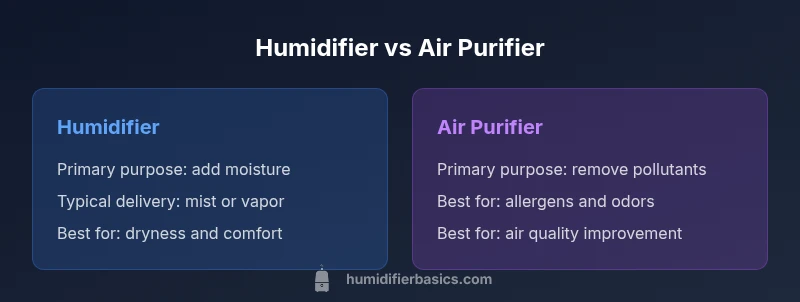
At a glance, the difference between a humidifier and air purifier is simple: a humidifier adds moisture to dry indoor air to improve comfort, while an air purifier filters out airborne contaminants to improve air quality. They target different problems—dryness versus pollutants—and many households will benefit from knowing when to use each, or when to consider a device that combines both functions. According to HumidifierBasics, recognizing the primary indoor-air issue you’re facing is the first step to choosing the right equipment.
Difference between a humidifier and air purifier: what they do and why it matters
The difference between a humidifier and air purifier is not just about size or price—it's about the problem you're trying to solve in your home. A humidifier adds moisture to dry air to improve comfort and reduce symptoms of dryness, while an air purifier removes airborne pollutants to improve respiratory comfort and reduce allergens. According to HumidifierBasics, understanding these differences helps homeowners target the right issues rather than chasing a single gadget that does not address your primary concern. In practice, many rooms suffer from both dryness and poor air quality, but treating the root cause requires clarity about which device to prioritize. In this article, we dissect the two technologies, explain how they work, and provide practical guidance for choosing the right solution for your space.
The health and comfort implications of humidity vs air quality
Humidity and air quality influence comfort, health, and even the way devices perform. Low indoor humidity can cause dry skin, throat irritation, and crackling lips, while high humidity can foster mold growth and dust mite activity. Air quality concerns center on fine particles, allergens, odors, and gases that may irritate the lungs or trigger allergies. The difference between a humidifier and air purifier becomes clear when you map symptoms to outcomes: humidity affects how you feel physically, whereas air quality affects what you breathe. When you study this relationship, you’ll see why many homes benefit from both approaches in tandem, especially in seasons with dry heating or heavy pollen exposure. Throughout this guide we’ll refer to practical thresholds for humidity and for air quality indicators in a general sense, so you can evaluate products and decide which features you need.
Humidifier types and how they deliver moisture
Humidifiers come in several delivery methods, each with different implications for comfort and maintenance. Evaporative humidifiers use a wick or filter and a fan to evaporate water into the room. Warm-mist models heat water to produce steam, which can feel soothing but may require more care to avoid safety risks. Cool-mist devices—often ultrasonic or impeller-based—produce a fine mist without heat, typically running more quietly and with lower energy use. Ultrasonic humidifiers use high-frequency vibrations to create a mist, which can produce a noticeably quiet operation and compact form factors. Regardless of type, the core goal is to raise ambient humidity to a comfortable level, helping skin, sinuses, and nasal passages feel more at ease. Importantly, water quality matters: mineral residues can disperse as white dust or leave a film on surfaces, especially in hard-water areas.
Air purifier filtration and purification methods
Air purifiers work by drawing room air through filters and other purification media to trap particles and reduce odors and gases. The most common technology is a true HEPA filter, which captures a large percentage of very small particles. Some purifiers include activated carbon filters to adsorb odors and volatile organic compounds (VOCs), while others may incorporate ionizers, UV-C lamps, or photocatalytic oxidation as supplementary methods. Effective air purifiers target particles like dust, pollen, and smoke, as well as certain gases depending on filter media. The result is cleaner air and reduced exposure to irritants, which can help with allergies and asthma. It’s important to select a purifier with appropriately sized filters for the room—and to maintain them regularly for optimal performance.
Real-world considerations: space, noise, energy, and maintenance
Choosing between a humidifier and an air purifier also depends on practical constraints. Room size, placement, and ventilation affect how well a device works. Noise matters for bedrooms or nurseries; some units operate at whisper-quiet levels, while others may be noticeable at night. Energy use varies by model and mode, with some devices offering energy-saving features or auto-detection of humidity or air quality levels. Maintenance is a key factor: humidifiers require regular tank cleaning and mineral control, while purifiers require periodic filter changes and occasional internal cleaning. Budgeting for ongoing maintenance helps ensure you actually benefit from the device rather than letting it degrade over time.
How to compare devices: essential features and criteria
When evaluating a humidifier, consider tank size, coverage area, humidity output (often measured in gallons per day or equivalent), ease of cleaning, noise, and whether it has built-in humidity sensors. For air purifiers, look at CADR (clean air delivery rate) ratings, true HEPA certification, room-size compatibility, energy use, filter replacement costs, and maintenance ease. If you live in a dry climate or use central heating, you may prioritize a humidifier that fits your room size and has a simple water-fill system. If you battle seasonal allergies or smoke exposure, prioritize a purifier with a strong filtration train and effective odor control. In some homes, a single device with both functions is worth considering, though you should evaluate whether it truly meets the primary need without compromising performance.
Common myths and misconceptions
A common misconception is that any device labeled as an air purifier also reduces humidity, or that a humidifier automatically purifies air. In reality, humidifiers add moisture, while purifiers tackle particles—though some units attempt to combine features. Another myth is that more filters always equal better performance; in practice, the overall effectiveness depends on proper sizing for the room, correct filter types, and regular maintenance. Misunderstanding these distinctions can lead to overpaying for features you don’t need or under-serving the room with a device that is too small or maintenance-heavy. The goal is clarity: pick the device that solves your specific problem and maintain it well.
Decision framework: when to buy humidifier, air purifier, or both
Identify your primary indoor-air issue. If the space feels dry, a humidifier is a natural choice. If you notice persistent dust, pollen, odors, or smoke-related irritation, an air purifier is more appropriate. If you have both problems—dry air and pollutants—a two-device approach or a single unit that combines functions may be the best fit. Consider room size, noise tolerance, and budget, then balance upfront costs with ongoing maintenance. For some households, a controlled, multi-step approach (humidification in dry months and purification year-round) yields the most reliable results. Always verify device ratings align with your room’s square footage and occupancy patterns.
Safe use, maintenance, and best practices
To maximize safety and effectiveness, follow manufacturer instructions for cleaning schedules and water quality. Use distilled or demineralized water where possible to minimize mineral buildup in humidifiers. Change purifier filters on the recommended cycle to prevent reduced airflow and poorer performance. Keep humidity within a comfortable range to avoid mold growth, and ensure good room ventilation to support both humidity and air quality goals. Regular checks and routine maintenance help protect your family and extend the life of the devices.
Comparison
| Feature | Humidifier | Air Purifier |
|---|---|---|
| Primary purpose | Add moisture to dry air for comfort | Remove particles and improve air quality |
| Main mechanism | Adds water vapor or mist to air | Filters air using filters and purification media |
| Ideal room conditions | Dry, stuffy air that feels uncomfortable | Polluted air with dust/pollen/odors |
| Maintenance needs | Water tank cleaning, mineral buildup, refills | Filter changes and occasional cleaning |
| Price range | $25-150 | $60-350 |
| Best for | Comfort and moisture balance | Allergen and pollutant reduction |
What's Good
- Humidifiers improve perceived comfort by adding moisture to dry air
- Air purifiers reduce exposure to common indoor pollutants and allergens
- Both devices can be affordable options for improving home air quality
- Many units offer additional features like sensors and auto modes
Negatives
- Humidifiers can promote mold or bacteria growth if not cleaned properly
- Air purifiers do not affect humidity, so they won't help with dryness
- Some combos exist but may underperform compared with dedicated devices
- Ongoing maintenance costs for filters and replacements
Choose based on the primary indoor-air issue: dryness or contaminants.
If dryness is the main problem, prioritize a humidifier. If pollutants or odors are the concern, prioritize an air purifier. In many spaces, a combination approach yields the best overall air quality and comfort.
FAQ
What is the primary difference between a humidifier and an air purifier?
A humidifier adds moisture to dry air to improve comfort, while an air purifier removes airborne pollutants to improve air quality. They address different problems, and many homes benefit from understanding which is the priority.
A humidifier adds moisture to dry air, while an air purifier cleans the air of pollutants. The main difference is what problem you’re solving.
Can a single device do both humidification and purification effectively?
Some models combine both functions, but performance varies. Look for independent controls, true HEPA filtration, and credible humidity output. If both issues exist, a dedicated setup or a high-quality combo unit may be worth it.
Yes, there are combo units, but check how well they perform each function before buying.
Do humidifiers purify the air as well?
Humidifiers primarily add moisture and do not filter particles. Purifiers target pollutants; choosing one device to do both requires a model designed for combined performance.
Humidifiers add humidity, they don’t clean air. For purification, you need an air purifier or a combo unit designed for it.
How should I decide for a small apartment?
Evaluate whether dryness or indoor air quality is the bigger concern in the space. In small apartments, a compact purifier may address allergies and odors, while a small humidifier can help if the air feels dry.
In a small space, pick the device that tackles your main issue first and ensure it fits the room.
What maintenance is required for these devices?
Humidifiers need regular tank cleaning and mineral control; purifiers require periodic filter changes and occasional cleaning of the body. Follow manufacturer guidelines for best results.
Keep tanks and filters clean and replace parts on schedule for best results.
Are there safety concerns I should be aware of?
Yes. Never run a humidifier with stagnant water, and keep devices away from walls to prevent mold growth. Use distilled water when possible. For purifiers, ensure proper placement and avoid blocking airflow.
Safety first: keep things clean, dry, and properly placed, and follow the manual.
The Essentials
- Assess your home’s main issue before buying.
- Humidifiers target comfort; purifiers target air quality.
- Consider a device with both functions if you have multiple problems.
- Regular maintenance is essential for effectiveness.
- Choose by room size, noise tolerance, and energy use.