Purifier vs Humidifier: A Practical Guide to Indoor Air Quality
A thorough, analytical comparison of purifiers and humidifiers for home air quality. Learn how each device works, when to use them, maintenance essentials, and a practical setup plan from HumidifierBasics.


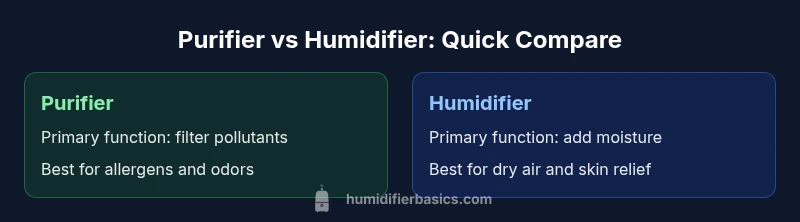
Purifier vs humidifier isn't a one-size-fits-all choice. A purifier cleans the air by trapping particles, while a humidifier adds moisture to dry rooms for comfort. Your best option depends on your main concern: reducing dust, pollen, and odors, or alleviating dryness and irritated airways. HumidifierBasics helps homeowners tailor a plan by clarifying each device's role and how they work in real homes.
Purifier vs Humidifier: Core Roles in Indoor Air Quality
Grounding the discussion in practical terms helps homeowners decide where to spend time and money. A purifier and a humidifier address different problems: one targets pollutants, the other moisture. According to HumidifierBasics, most homes struggle with either too-dry air or too-polluted air, not both at once, so clarity about each device's core role matters. The HumidifierBasics team found that many households overlook the fact that a purifier does not add humidity, while a humidifier does not remove fine particles efficiently without filtration. When you hear 'purifier vs humidifier' in a shopping aisle, you're seeing two complementary tools rather than a direct substitute. In this guide, we outline how each device works, typical benefits, and practical checks for performance, cost, and safety. By understanding these differences, homeowners can tailor a setup that fits climate, season, and household needs.
How They Work: Filtration vs Humidity Addition
Purifiers pull air through filters that capture particles using HEPA media, carbon for odors, and sometimes ionizers. The result is cleaner air and reduced exposure to pollen, dust, smoke, and pet dander. Humidifiers introduce moisture by emitting water vapor, mist, or steam, raising indoor relative humidity (RH). The outcome is more comfortable skin and nasal passages, but humidifiers can become a source of mineral dust or microbial growth if not cleaned. The devices also differ in energy use, noise, and maintenance routines. In short, a purifier improves air cleanliness; a humidifier improves comfort by moisture. For a typical home, both devices can be used in tandem but at different times of day or in different rooms depending on season and occupancy. This section lays out the essential operating differences so you can map a real-world plan for your space.
Environmental Indicators: When Humidity Helps
Maintaining indoor humidity within the recommended range (roughly 30-50% RH) helps with skin, throat comfort, and reducing static electricity. Humidity also protects wood furniture and musical instruments from cracking, and can ease symptoms for people with certain respiratory conditions. However, excessively high humidity invites mold and dust mite growth, so it's important to monitor RH with a reliable gauge. If you live in a dry climate or experience winter heating, a humidifier can provide noticeable relief. Humidifier use should be paired with moisture-sensitive monitoring and a plan to cycle devices as needed, especially in shared living spaces where multiple occupants may have different comfort baselines. HumidifierBasics analysis shows dryness spikes in winter in many homes, underscoring the need for adaptable strategies rather than a one-device-only approach.
Environmental Indicators: When Purifiers Help
Air quality problems often show up as persistent dust, pollen, odors, smoke, or moldy environments. An air purifier reduces exposure to fine particulates (PM2.5 and smaller) and can help people with allergies, asthma symptoms, or sensitivity to odors. Purifiers vary by room size, filtration stage, CADR, and energy use; choosing a model that matches the room and your goals is critical. For households near wildfire events or with high traffic, strong filtration and a properly sized purifier can meaningfully improve daily comfort. It's also important to note that purifiers do not replace mechanical ventilation; they clean the air that passes through filters, not the air that remains stagnant in corners.
How They Impact Comfort and Health
Dry air can irritate nasal passages, throat, and skin; moisturized air feels more comfortable and reduces static. Clean air reduces coughing triggered by dust and allergens and can improve sleep for sensitive individuals. The interaction between humidity and filtration matters: higher humidity can affect filter performance and microbial growth, while dry air can hinder mucosal barriers. In practice, many households benefit from scheduling purifier use during high pollen seasons or after cooking odors, and humidifier use during dry winter spells. The two devices should be balanced for steady comfort rather than extreme conditions. The combined effect of cleaner air and proper humidity often translates into fewer nighttime interruptions and more consistent daytime comfort, especially in bedrooms and living rooms.
Maintenance and Safety Considerations
Regular cleaning and filter replacement are essential for both devices. Purifiers require periodic filter changes according to the manufacturer’s schedule, along with keeping fans clear of dust. Humidifiers demand frequent cleaning to prevent mineral buildup and microbial growth; using distilled or demineralized water and replacing any filters or wicks helps. Always follow safety guidelines: don't run a humidifier in an enclosed space with inadequate airflow, avoid over-humidifying, and ensure the purifier's outlet is free of obstructions. In shared spaces, label devices to prevent accidental interference. If you notice musty odors or visible mold around the unit, pause use and service immediately. With attention to routine maintenance, these devices become reliable allies in winter and allergy seasons.
Room-by-Room Guidance: Bedroom, Living Room, Nursery
Bedrooms often benefit from a quiet purifier and a compact humidifier, particularly in dry climates. A purifier reduces airborne allergens during nighttime and improves sleep quality. For nurseries, prioritize low-noise models and sealed filtration to avoid disturbing infants. In living rooms, you may opt for larger purifiers and mid-sized humidifiers to balance air cleanliness and comfort. Consider placement that keeps units away from direct drafts and away from walls to ensure optimal air mixing. Tailor device selections to occupancy patterns: if you spend evenings in the living room, a purifier there helps; if you spend nights in a dry bedroom, a humidifier helps. The goal is steady, comfortable air without hotspots of humidity or unfiltered air.
Using Both: A Practical Setup Plan
Develop a seasonal plan that aligns with climate and allergies. In spring and fall, prioritize purifier use when pollen is high and odors are common; in winter, focus on humidity to counter dry air while using air filters for ongoing cleanliness. If budget allows, pair a compact purifier with an appropriately sized humidifier in the main living area, or run separate devices per room. Automation features such as humidistats and timer schedules can help maintain consistent conditions. Finally, document a simple maintenance calendar so you or other household members know when to clean, replace filters, and empty water tanks.
Practical Pitfalls and Quick Wins
Common mistakes include overestimating the impact of a single device, neglecting maintenance, and underestimating the energy costs of running multiple appliances. Quick wins include using distilled water in humidifiers, choosing HEPA-rated purifiers for allergen control, and pairing devices with a hygrometer to monitor RH and PM2.5. By focusing on real-room conditions rather than generic recommendations, you can achieve predictable comfort and air quality improvements. The HumidifierBasics team emphasizes careful planning, routine checks, and a staged approach to avoid buyer's remorse.
Comparison
| Feature | Purifier | Humidifier |
|---|---|---|
| Primary function | Filters particles and pollutants | Adds moisture to the air |
| Best use case | Allergen reduction and clean air | Dry air relief and comfort |
| Maintenance | Filter changes, regular sensor checks | Regular cleaning, mineral buildup prevention |
| Noise level | Typically low to moderate | Usually quiet on ultrasonic cores; evaporative can be louder |
| Energy use | Moderate (fan-assisted filtration) | Low to moderate (depends on model) |
| Price range | $60-$600 | $30-$200 |
| Best for | Allergies, households with odors or smoke | Dry environments, winter comfort |
What's Good
- Targets distinct indoor air issues (air cleanliness vs humidity)
- Seasonal versatility—adjust use by season
- Can improve sleep and overall well-being when used appropriately
- Broad model options across budgets
Negatives
- May require two devices for simultaneous needs
- Ongoing maintenance and filter costs
- Risk of humidity or mold issues if misused
Year-round air quality often improves most with both devices, used strategically.
Purifiers address particulates and odors while humidifiers tackle moisture. For many homes, a combined approach—with careful maintenance and room-specific use—delivers the most noticeable comfort and health benefits. The HumidifierBasics team recommends assessing seasonal needs and starting with one device, then adding the second if practical.
FAQ
Can a purifier replace a humidifier?
No. A purifier does not add humidity. If you have dry air, you still need a humidifier. Each device targets a different problem.
No—the purifier doesn't add humidity. If you have dry air, you still need a humidifier.
Should I buy a purifier and humidifier at the same time?
If budget allows, yes. Prioritize based on your biggest problem, and many homes benefit from having both for different rooms or seasons.
If you can, get both. Prioritize based on your biggest problem and season.
What features matter most in an air purifier?
Look for HEPA filtration, CADR, appropriate room size, and reasonable replacement costs. A well-matched purifier performs best over time.
HEPA, CADR, room size, and cost matter most.
Can humidifiers spread mold or bacteria?
Yes, if not cleaned regularly or if water quality is poor. Regular cleaning and using distilled water reduces risk.
Yes, but regular cleaning and distilled water help reduce the risk.
What about energy costs?
Most models are energy-efficient, but check wattage and features like auto-off. Run-time planning helps manage costs.
Check wattage and auto-off features to manage energy use.
The Essentials
- Identify your top indoor air quality priority.
- Humidifiers relieve dry air, especially in winter.
- Purifiers reduce particulates, pollen, and odors.
- Consider a combined setup for year-round comfort.
- Prioritize regular cleaning and filter changes.