Is a Humidifier the Same as an Aroma Diffuser? A Practical Comparison
This guide explains how humidifiers and aroma diffusers differ in function, maintenance, and use cases, with practical guidance for improving home air quality.


Is a humidifier the same as an aroma diffuser? The short answer is no. A humidifier's primary goal is to increase moisture in dry indoor air, while a diffuser disperses essential oils for fragrance. This guide explains the key differences, overlaps, and how to choose based on humidity needs or aromatherapy goals.
What is a Humidifier vs Aroma Diffuser?
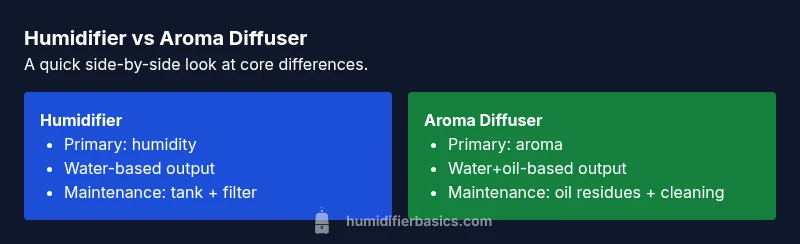
Is humidifier and aroma diffuser the same? Not exactly. A humidifier's primary goal is to increase moisture in dry indoor air, improving comfort, reducing static, and easing throat irritation. An aroma diffuser disperses essential oils to create fragrance and, for some users, a sense of relaxation. The HumidifierBasics team notes that both devices use water, but their core purpose, maintenance needs, and safety considerations differ. Understanding these distinctions helps you avoid buying a device that won't meet your main objective. In practice, you'll choose based on whether you want humidity, scent, or both in a controlled way. For most households, the best approach is to separate those functions and use a device built for each job, unless you opt for a hybrid product with clear performance specs. The key is to match device capability to your space and routine, rather than chase a single gadget that promises everything. Humidity targets vary by climate and season—winter heating dries air, increasing demand for moisture. Aroma diffusers require regular cleaning to prevent oil residue and sustain fragrance quality. If you search for is humidifier and aroma diffuser the same, you’ll find similar questions, but the accurate answer remains: separate devices deliver clearer results and safer operation.
This block establishes the foundational distinction between two common indoor appliances, focusing on function, safety, and practical decision-making. It introduces the key question, uses the exact keyword phrase in context, and sets expectations for the rest of the article. HumidifierBasics is referenced to align with brand authority and reader trust.
Comparison
| Feature | Humidifier | Aroma Diffuser |
|---|---|---|
| Primary function | Increase indoor humidity | Disperse essential oils for scent |
| Output type | Water vapor to raise RH | Aromatic mist for fragrance (and minor humidity impact) |
| Water source / reservoir | Tank with water, may include filters | Water reservoir with oil cup or pad |
| Maintenance frequency | Regular cleaning to prevent mold/mineral buildup | Regular cleaning to prevent oil residue |
| Best room size | Small to large spaces depending on model | Small to medium spaces for noticeable scent |
| Noise level | Low to moderate depending on model | Low to moderate depending on model |
| Price range (USD) | $20-200 | $10-90 |
| Oil compatibility | Not oil-compatible (unless designed for humidification) | Designed for oils; use with recommended oils only |
| Best for | Humidity improvement in dry climates | Aromatherapy and ambient fragrance |
What's Good
- Clarifies which device fits your goal
- Prevents misuse and damaged components
- Supports informed budgeting
- Encourages proper maintenance by device type
Negatives
- Hybrid devices can blur lines and require careful evaluation
- Maintenance regimes differ and may feel complex
- Over-reliance on fragrance can irritate sensitive occupants
Humidifier and aroma diffuser are not the same; choose based on humidity need vs. aromatherapy goal.
Noting distinct primary functions helps optimize comfort and air quality. For most homes, separate devices meet specific needs, while hybrids exist but require careful evaluation.
FAQ
Are humidifiers and aroma diffusers interchangeable?
Usually not. They have different primary goals: humidity versus fragrance. Some hybrids exist but buyers should verify which function they care about most and read the product specs.
Usually not interchangeable; they have distinct purposes. Check the product specs for the primary function.
Can you use essential oils in a humidifier?
Generally not unless the device is explicitly designed for oils. Oils can damage non-oil-safe humidifiers and create residue or mold risks.
Not unless the device is built for oils. Using oils in a regular humidifier can cause damage.
Do aroma diffusers humidify the air?
Diffusers can add a little humidity, but they are not reliable for humidity control. They are intended for fragrance diffusion rather than climate management.
They add some moisture but aren’t a substitute for humidity control.
What should I consider before buying a hybrid device?
Look for clear performance specs showing both humidity and aroma capabilities, read user reviews about real-world results, and verify oil compatibility and cleaning requirements.
If you want both, read the specs carefully and check user reviews.
How should I clean humidifiers and diffusers?
Follow the manufacturer’s instructions. Humidifiers need regular tank cleaning and distilled water; diffusers require regular oil reservoir cleaning to prevent buildup.
Clean per the manual; regular maintenance keeps them working well.
Is it safe to diffuse oils around pets or children?
Some essential oils can irritate or harm pets or sensitive individuals. Diffuse with caution, use milder oils, and keep devices out of reach from children and pets.
Be careful with oils around kids and pets; start with milder options.
The Essentials
- Identify your primary goal: humidity or scent.
- Avoid treating diffusers as humidity devices.
- Plan maintenance around device type.
- Consider space size when choosing a device.
- Hybrid devices exist—verify performance before buying.