Difference Between a Humidifier and a Diffuser: Practical Analysis
An analytical comparison of humidifiers and diffusers, detailing how each device affects humidity, aroma, safety, and maintenance to help homeowners and renters choose confidently.


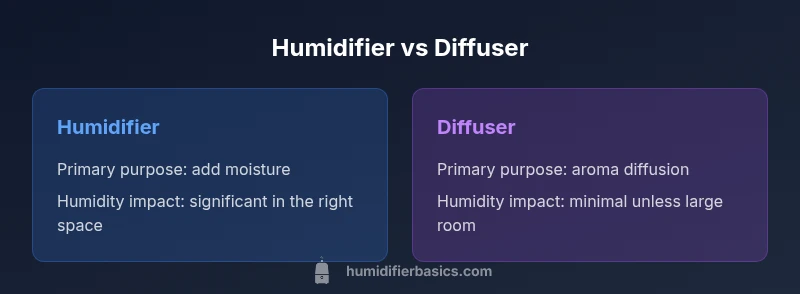
The difference between a humidifier and a diffuser is the core function each device serves: a humidifier adds moisture to the air to improve comfort and health in dry spaces, while a diffuser disperses essential oils for scent and potential aromatherapy benefits. For most homes, choose a humidifier when you need to raise indoor humidity, and opt for a diffuser when you want fragrance with minimal impact on overall humidity. Understanding this distinction helps homeowners tailor room comfort without overcomplicating their setup.
What is a Humidifier?
According to HumidifierBasics, choosing between devices begins with understanding the core problem you aim to solve. The difference between a humidifier and a diffuser becomes obvious when you look at the primary goal: humidifiers add moisture to indoor air to combat dryness that can cause irritated airways, cracked lips, or static electricity. They come in several designs, including ultrasonic (silent and energy-efficient), evaporative (air draws through a wick), and warm-mist or steam models (heating water to release vapor). In practice, a humidifier elevates humidity levels in a room, measured as relative humidity, with the goal of achieving a comfortable range (roughly 30–50% relative humidity in many homes). When used correctly, a humidifier can improve comfort, sleep quality, and respiratory ease in winter months. A key caveat is mineral dust from hard water, which may settle as white dust; using distilled or demineralized water can mitigate this issue. The HumidifierBasics team notes that proper maintenance is essential for safe operation and effective humidity control. The primary objective of this device is moisture, not aroma, and that distinction informs every maintenance decision and placement choice. The practical takeaway remains straightforward: if the season or room humidity is too low, a humidifier is often the most reliable tool for restoring comfort without introducing fragrances or oils into the air.
What is a Diffuser?
A diffuser is designed to disperse essential oils into the air for aroma and potential therapeutic effects, rather than to substantially raise humidity. Diffusers operate using ultrasonic vibration or nebulization to convert essential oils into a fine mist that scents a room. They are typically compact, require less water, and emphasize scent diffusion over moisture delivery. While some diffusers do contribute a small amount of humidity, their primary role is not to manage indoor humidity. For households seeking mood-enhancing scents, improved focus, or relaxation, a diffuser can be a powerful addition. It’s important to use high-quality essential oils, follow manufacturer guidelines for dilution, and ensure adequate ventilation to avoid overwhelming a space with fragrance or causing respiratory irritation. As with humidifiers, regular cleaning to prevent oil residue buildup is essential to maintain performance and reduce the risk of mold or bacterial growth in reservoirs. The HumidifierBasics guidance emphasizes choosing a diffuser that matches room size and oil safety considerations for pets and children.
Key differences in function and purpose
The most obvious distinction between a humidifier and a diffuser is the function they perform: moisture delivery versus aroma diffusion. A humidifier’s primary purpose is to elevate ambient humidity to a comfortable range, which can ease nasal congestion, dry skin, and irritation in dry climates or heated homes. A diffuser’s main purpose is to disperse essential oils for fragrance and potential therapeutic effects, though it can add some humidity in small spaces. Beyond purpose, consider scale and maintenance: humidifiers typically require larger water reservoirs, more frequent cleaning to prevent mold and mineral buildup, and monitoring to avoid over-humidification. Diffusers demand less water, simpler cleaning, and regular oil replacement. From a safety perspective, both devices must be kept clean and free of mold; diffusers add the caution of oil exposure, while humidifiers introduce mineral dust risks if unfiltered water is used. In terms of room suitability, humidifiers excel in bedrooms and living areas during dry seasons, while diffusers fit compact spaces like offices or bathrooms where scent is desired without a humidity spike. This section highlights the core criteria to weigh when assessing which device aligns with your goals.
How humidity and aroma interact with room size
Room size plays a critical role in how much impact a humidifier or diffuser can have. A humidifier is generally more effective in larger rooms, but you still need to match the device’s output to the space to prevent over-humidification. In smaller rooms, a compact humidifier can sufficiently raise humidity, but you must monitor humidity levels with a hygrometer to avoid condensation and mold risk. A diffuser, by contrast, should be chosen with room size in mind: strong diffusers in small spaces can overwhelm occupants, while larger areas may require multiple units or longer diffusion times to achieve a pleasant balance. Always consider ventilation as a factor; good air exchange reduces the chance of pockets of high humidity or heavy fragrance concentrations. The HumidifierBasics framework urges readers to think about the practical needs—whether you seek moisture, scent, or a combination—and to align device choice with lifestyle patterns, room use, and seasonal changes.
Maintenance, safety, and best practices
Maintenance is a shared responsibility for both humidifiers and diffusers, but the emphasis differs. For humidifiers, regular cleaning to remove mineral buildup and biological growth is essential, especially if you use hard water or small rooms with poor airflow. Run clean water cycles, replace filters if applicable, and sanitize monthly to minimize mold and bacteria. Safety guidelines from HumidifierBasics stress never using water that contains impurities and avoiding over-humidification, which can foster mold growth and dust mites. For diffusers, cleaning the reservoir and replacing reeds or filters as recommended by the manufacturer prevents residue buildup that could alter aroma or cause inconsistent diffusion. Oils should be used according to dilution guidelines to avoid skin or respiratory irritation, and you should ensure pets and children are not exposed to strong or inappropriate scents. In both cases, using a room-size appropriate device and monitoring humidity and fragrance intensity improves outcomes and reduces health risks. Always consult manufacturer instructions for maintenance specifics and safety warnings.
Practical decision framework for choosing in different rooms
Choosing between a humidifier and a diffuser depends on room function, occupants, and comfort goals. For bedrooms and nurseries with dry air, a humidifier that supports quiet operation and filters for mineral dust is often best, aiming for a target humidity around 40–50% when possible. For living rooms or study areas where a gentle aroma may improve mood or focus without altering air quality, a diffuser placed away from direct contact with walls and furnishings is appropriate. In bathrooms or spa-like spaces, diffusers can provide a refreshing scent without introducing excess moisture, while a controlled humidifier may still be used in colder months if the goal is to combat dryness. If you want both moisture and scent, consider devices designed to work in tandem with proper scheduling and safety practices, or use separate devices for each function to avoid cross-interference. The key is to measure outcomes with humidity readings and subjective comfort levels to determine what combination offers the most consistent benefits.
Common myths and misuses
Many homeowners assume that any mist means effective humidification, which is not always true. A diffuser’s mist should never be relied upon to fix dry air; its oils can irritate sensitive individuals or pets if used improperly. Another common myth is that more mist equals better health; excessive humidity can promote mold and dust mites, worsening indoor air quality. Some people think diffusers sanitize the air with oils, but most essential oils do not disinfect air at typical household concentrations. In contrast, humidifiers may create a healthier environment when used correctly, but only with clean water and routine maintenance. Finally, some users believe they can substitute a diffuser for a humidifier in all situations; in reality, these devices address different needs. The HumidifierBasics approach emphasizes using the right tool for the problem and verifying outcomes with simple measurements like a hygrometer and practical observations of comfort and scent levels.
Authority sources and further reading
For readers seeking external guidance, trusted sources on indoor air quality and humidity can provide additional context. The Environmental Protection Agency (EPA) maintains practical guidelines on indoor air quality and humidity management, including how humidity affects respiratory health and comfort. The Occupational Safety and Health Administration (OSHA) offers information about indoor air quality standards in workplaces that are often applicable to home environments as well. For broader health implications and consumer guidance on air quality, major publications from recognized health organizations can provide helpful context. These sources are complementary to the HumidifierBasics guidance and can help readers make informed decisions about device use and maintenance.
Authority sources (overview)
- https://www.epa.gov/indoor-air-quality-iaq
- https://www.osha.gov/indoor-air-quality
- https://www.lung.org
Comparison
| Feature | Humidifier | Diffuser |
|---|---|---|
| Primary purpose | Add moisture to air to improve comfort and health | Disperse essential oils for aroma and potential therapeutic effects |
| Humidity impact | Can significantly raise room humidity with proper sizing | Minimal impact on humidity; mainly fragrance, not moisture |
| Maintenance | Requires regular cleaning to prevent mold/mineral buildup; filter changes for some models | Requires regular reservoir cleaning; oil residue management |
| Best room scenarios | Dry environments, winter months, bedrooms, living rooms | Small, scent-focused spaces like offices or bathrooms |
| Typical price range | $20-$150 depending on size and features | $15-$60 for many consumer diffusers |
What's Good
- Humidifiers improve comfort in dry climates and can alleviate nasal irritation
- Diffusers provide aroma and mood benefits without heavy humidity changes
- Both devices, when properly maintained, contribute to perceived air quality and wellness
- Compact diffusers and quiet humidifiers fit many homes and apartments
Negatives
- Humidifiers can foster mold or mineral dust if not cleaned or filtered properly
- Diffusers offer limited humidity control and may irritate sensitive individuals if oils are used improperly
- Oils may interact with pets or cause respiratory irritation in sensitive people
- Over-humidification can create mold risk if humidity targets are not monitored
Humidifier A is best for moisture needs; diffuser B excels for scent and mood-enhancement
Choose a humidifier when you need meaningful humidity improvements, especially in dry rooms. Choose a diffuser when fragrance and aromatherapy are the priority, keeping oil safety and room size in mind.
FAQ
What is the difference between a humidifier and a diffuser?
A humidifier adds moisture to the air to increase humidity, improving comfort and reducing dryness. A diffuser disperses essential oils into the air for fragrance and potential aromatherapy, with little impact on overall humidity unless used in a large device. The main distinction is function: moisture delivery versus scent diffusion.
A humidifier adds moisture to the air, while a diffuser disperses essential oils for fragrance. The key difference is humidity versus aroma, so choose based on whether you need moisture or scent.
Can a diffuser significantly humidify a room?
Generally, diffusers provide minimal humidity and are not designed to correct very dry air. If you need measurable moisture, rely on a humidifier and use a diffuser only for scent in appropriate spaces.
Diffusers mainly spread scent and barely change humidity, so rely on a humidifier for real moisture.
Are humidifiers safe around kids and pets?
Humidifiers can be safe when used with clean water, proper cleaning, and appropriate humidity levels. Oils and minerals can cause issues for sensitive individuals or pets, so monitor space and follow manufacturer guidelines.
Keep humidity in check and clean the unit regularly; be mindful of oils if pets are present.
What maintenance is required for these devices?
Regular cleaning is essential for both devices to prevent mold, bacteria, and residue buildup. Replace filters as recommended, and use distilled water for humidifiers to minimize mineral dust.
Clean weekly, replace filters as prescribed, and use clean water to keep devices safe.
Which should I choose for a bedroom?
If the goal is comfort and sleep quality in dry months, a humidifier is typically the better choice. If you want a calming scent without changing humidity, a diffuser can be suitable in smaller bedrooms with careful oil use.
For dry rooms, prefer a humidifier; for fragrance-only needs, a diffuser works in smaller spaces.
Is it safe to use essential oils in a humidifier?
Most humidifiers are not designed for essential oils and can be damaged by them. If you want scent, use a diffuser designed for oils, or check your humidifier’s oil compatibility if it supports fragrances.
Only use oils in diffusers or check compatibility if your humidifier is oil-friendly.
The Essentials
- Choose moisture over fragrance for dry spaces
- Use diffusers for aroma, not humidity control
- Maintain devices to prevent mold and residue
- Match device size to room and monitor humidity