Humidifier or Diffuser: A Practical Comparison for Home Air Quality
A practical, data-informed comparison of humidifiers and diffusers, covering use cases, safety, maintenance, and room guidance to help homeowners choose option for comfort.


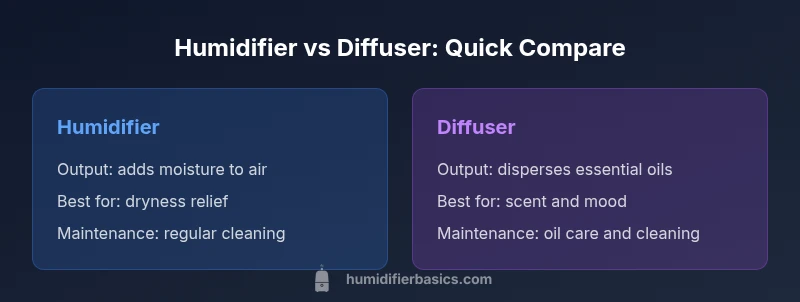
Humidifier or diffuser choices hinge on your goal: humidity versus aroma. A humidifier adds moisture to dry indoor air—helpful for skin, throat comfort, and winter dryness. A diffuser disperses essential oils to create scent and mood, with limited impact on humidity. For many homes, using both—humidifier in dry rooms and diffuser for ambiance in living areas—offers balanced comfort. According to HumidifierBasics, define the objective first to pick the right tool.
Core Differences Between Humidifier and Diffuser
Humidifiers and diffusers occupy two different corners of the indoor air-management spectrum. A humidifier's primary job is to add moisture to the air, raising relative humidity (RH) to comfortable levels during dry seasons or in regions with forced-air heating. By contrast, a diffuser primarily disperses essential oils suspended in water into the room, creating scent and potential aromatherapy benefits rather than meaningful changes in humidity. This distinction matters because it affects how you use each device, what you should expect in terms of air feel, and how you maintain them to prevent issues like condensation, mold, or oil buildup.
From a safety perspective, a humidifier that runs continuously at high humidity can create a welcoming environment for mold and dust mites if not cleaned properly. A diffuser that uses essential oils should be selected with care, considering any sensitivities among household members or pets. In short, this is not a case of which device is better overall; it’s about matching the right tool to the goal you’re pursuing: moisture versus aroma and ambiance. According to HumidifierBasics, clarity on intent will save time and money and reduce headaches later.
Humidifier Types and How They Work
Humidifiers come in several core styles, each with distinct output mechanics and maintenance needs. Ultrasonic models produce a fine cool mist using high-frequency vibrations, typically quiet and energy-efficient. Warm-mist units boil water to create steam, delivering a comforting warmth but raising energy use and, in some setups, posing a scald risk if not placed carefully. Evaporative humidifiers use a wick or filter to pass air over moistened pads, naturally limiting output based on ambient conditions. The choice among these depends on room size, desired noise level, and whether you prefer visible mist or a more discreet approach. Remember to monitor RH with a hygrometer and avoid exceeding about 50% to minimize mold and dust mites. For many households, a compact ultrasonic humidifier is a reliable default for bedrooms and living rooms. As highlighted by the HumidifierBasics team, starting with a clear target humidity helps tailor your purchase and setup.
Diffuser Styles and Oils: What You Need to Know
Diffusers come in several flavors: ultrasonic diffusers, nebulizing diffusers (which do not use water and rely on pure essential oils), reed diffusers (which rely on absorption through reeds), and evaporative diffusers (less common indoors). The most popular choice is the ultrasonic diffuser, which creates a cool mist and blends with water and oils. Oils are selected for aroma, therapeutic potential, and sensory experience; however, some individuals may react to certain essential oils, and pets may be sensitive to particular scents. Always use high-quality, pure oils and follow dilution guidelines. Never assume every diffuser can tolerate every essential oil; read product specs and consult health considerations for your household. The HumidifierBasics guidance emphasizes starting with a safe, small oil trial and increasing exposure gradually while observing any irritations.
Safety and Health Considerations for Humidifier Use
Humidity levels indoors directly affect comfort and health. The recommended indoor RH typically ranges from 30%–50%, with adjustments based on climate and season. Running a humidifier to push RH above 50% can promote mold growth and dust mite proliferation, negating the benefits. Regular cleaning is essential: empty the tank daily, rinse, and dry to prevent microbial growth; mineral buildup from hard water can disperse into the air as dust. If you have allergies or asthma, choose models with built-in filtration or use distilled water to minimize contaminants. The HumidifierBasics approach advocates a simple routine: measure RH, maintain a clean reservoir, and replace or descale components as needed to sustain safe, comfortable air quality.
Safety and Health Considerations for Diffuser Use
Diffusers introduce essential oils into the air, which can enhance scent and mood but carry considerations. Some oils may irritate the skin, eyes, or airways, especially for children, pregnant individuals, or those with respiratory conditions. Pets, particularly cats and birds, can be sensitive to certain oils or accumulate residues in fur and habitats. Always diffuse in well-ventilated areas and follow the recommended number of drops per session. Choose oils with clear labeling, and rotate scents to prevent desensitization. If irritation occurs, discontinue use and wash the diffuser and surfaces nearby. The HumidifierBasics guidance recommends erring on the side of caution with oil choices and limiting diffusion duration in sensitive spaces.
Practical Scenarios: When to Use Each Device
In bedrooms or spaces prone to dryness, a humidifier helps relieve dry skin, throat irritation, and static electricity, particularly during winter or in arid climates. In living rooms or home offices, diffusers excel at creating a calming atmosphere, supporting relaxation, focus, or mood-enhancement through scent. For households with allergies, humidifiers can aid nasal comfort if humidity is kept balanced, while diffusers should be chosen with oils known to be non-irritating. If you want both functions, place the humidifier in dry zones and a diffuser in common areas, ensuring distinct zones to avoid oil mist entering the humidifier intake. The HumidifierBasics team notes that planning by room and objective prevents cross-effects and optimizes comfort.
Maintenance and Best Practices for Longevity
Regular maintenance extends the life and performance of both devices. For humidifiers, use distilled water to reduce mineral buildup, clean weekly, and replace filters as recommended by the manufacturer. Empty and dry reservoirs when not in use to prevent mold. For diffusers, clean after each use, ensure water levels are appropriate, and replace pads or wicks as needed. Store oils in a cool, dark place and clean diffuser surfaces to prevent oil residue. A consistent routine—weekly cleaning, monthly filter checks, and prompt addressing of odors or visible residue—helps maintain air quality and device longevity. The HumidifierBasics guidance emphasizes this routine as the simplest path to reliable performance.
Cost, Energy, and Value: What to Expect
Initial costs vary: basic humidifiers can start at a modest price point, with larger or feature-rich models rising accordingly; diffusers span a similar range, with more complex diffusion systems costing more upfront. Ongoing costs include electricity and water for humidifiers and essential oils for diffusers. Energy use largely depends on model and runtime, but most units are energy-efficient when operated within recommended humidity targets. From a value perspective, humidifiers deliver ongoing humidity benefits, while diffusers offer mood and fragrance enhancements. HumidifierBasics analysis suggests evaluating total cost of ownership over 1–2 years to determine which device best meets your needs and budget.
How to Combine Humidity and Aromatics Responsibly
If you want both effects, separate devices are the safest approach. Do not diffuse oils directly into a humidifier, as oils can degrade components and alter mist composition. Place diffusers away from sleeping areas if scent sensitivity is a concern, and avoid diffusing near heat sources or electronics. Maintain humidity around 40–50% to balance moisture with diffusion comfort. Establish a diffusion schedule that limits continuous exposure, especially in rooms occupied by children or pets. The HumidifierBasics philosophy favors thoughtful planning and regular checks to ensure both devices contribute positively to air quality and well-being.
Comparison
| Feature | Humidifier | Diffuser |
|---|---|---|
| Output type | Moisture in air (humidity boost) | Aromatic mist with essential oils |
| Primary benefit | Humidity management and comfort | Mood enhancement and fragrance |
| Water source & usage | Reservoir water; humidity output varies by model | Water with essential oils; limited humidity impact |
| Maintenance | Regular cleaning to prevent mold and mineral buildup | Regular cleaning; replace pads or oils as needed |
| Ideal room size | Medium to large spaces for humidity control | Small to medium rooms for aroma |
| Noise level | Low to moderate depending on model | Typically quiet; diffusion is low-noise |
| Safety considerations | Mold risk with high humidity; temperature varies by type | Oil sensitivity; rotation of oils; avoid pets with certain oils |
| Best for | Dry air relief and mucosal comfort | Aromatherapy and ambiance |
What's Good
- Moisture benefits for dry air and respiratory comfort
- Aromatherapy and mood-enhancement options with diffusers
- Flexible options across room sizes and budgets
- Wide availability of models and accessories
- Clear maintenance routines and water-clarity features available
Negatives
- Risk of mold or bacteria if not cleaned properly
- Oil use may irritate sensitive individuals or pets
- Over-humidification if not monitored or properly sized
- Ongoing costs for oils and filter replacements in some models
Humidifier wins for humidity control; diffuser wins for aroma and ambiance; most homes benefit from using both where appropriate.
If your priority is moisture, choose a humidifier and monitor humidity levels. If aroma and mood are your goal, a diffuser is the better tool. In many homes, a combined setup, with distinct zones for humidity and diffusion, offers balanced comfort and atmosphere.
FAQ
Can I use essential oils in a humidifier?
No. Most humidifiers are not designed to handle essential oils and doing so can damage the unit and release oil residues. Oils are best used in a dedicated diffuser. If you want aromatherapy alongside humidity, run a separate diffuser in a different room or at a safe distance.
Avoid putting essential oils in a humidifier. Use a separate diffuser for oils to protect the device and keep indoor air safe.
Is it safe to diffuse oils around pets?
Pets can be sensitive to certain oils, and some oils may cause respiratory or skin irritation. Diffuse in well-ventilated areas, avoid direct exposure to pets, and research specific oils before use. If anyone in the home has allergies or a pet with diagnosed sensitivities, consult a vet or physician and consider using a diffuser with a low-risk oil regimen.
Some essential oils can irritate pets; diffuse in a centralized, well-ventilated area and monitor pets for any signs of distress.
What humidity level should I target in my home?
Aim for a relative humidity in the range of 30% to 50%, depending on the season and climate. Avoid pushing humidity higher than 50% for prolonged periods, which can promote mold growth. Use a hygrometer to track RH and adjust your humidifier accordingly.
Keep indoor humidity between 30% and 50% using a hygrometer and adjust humidity with your humidifier.
Can I diffuse oils directly in a humidifier reservoir?
No. Oils can degrade the humidifier’s components and alter mist output. Always separate diffusion from humidification. Use a dedicated diffuser for oils and keep it away from the humidifier's intake and electronics.
Do not add oils to a humidifier; use a separate diffuser and keep devices apart.
What maintenance tasks are essential for longevity?
Regular cleaning is essential for both devices. Empty and rinse tanks daily, perform a deeper clean weekly, and descale mineral buildup as needed. Replace filters or pads per the manufacturer’s schedule and use distilled water when possible.
Clean the devices regularly, descale mineral buildup, and follow each model's filter schedule.
Which is better for a small bedroom?
A small humidifier is typically a better fit for a bedroom to address dryness and nasal comfort, while a diffuser can provide soothing scents in the same space if oils are used with care. If you value both, place each device in its own zone to avoid cross-effects and ensure safety.
In small bedrooms, use a compact humidifier for moisture; a diffuser can be used separately for fragrance.
The Essentials
- Define your primary goal: humidity vs aroma.
- Monitor indoor humidity to avoid mold and dust mites.
- Prefer distilled water for humidifiers to reduce mineral residue.
- Choose oils carefully and consider pet sensitivities.
- Use separate devices for humidity and diffusion to maximize safety and effectiveness.