Difference Between Humidifier and Aroma Diffuser
Explore the difference between humidifiers and aroma diffusers. Learn how each device works, their best use cases, safety tips, and maintenance guidance to choose the right home air-care solution.


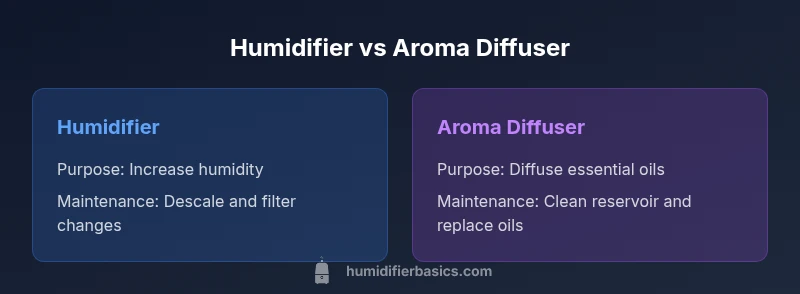
Humidifiers and aroma diffusers serve different air-care needs. A humidifier adds moisture to the air, which can ease dry skin and congestion, while an aroma diffuser disperses essential oils for scent and potential therapeutic benefits. Use the right device for your goal to avoid mixing functions or over-humidifying. Understanding the difference helps homeowners and renters make safer, more effective choices.
The difference between humidifier and aroma diffuser
The phrase "difference between humidifier and aroma diffuser" captures a simple reality: these devices target different aspects of indoor air quality. According to HumidifierBasics, most households benefit from recognizing the distinct roles of each device before buying. A humidifier is designed to add moisture to dry indoor air, which can relieve dry skin, throat irritation, and nasal congestion in winter months. An aroma diffuser, by contrast, focuses on scent delivery and aroma therapy using essential oils. While some models may scatter a light mist, their primary purpose is not to raise humidity but to disperse fragrance. This distinction matters for setting expectations, choosing placement, and selecting compatible room conditions. In practice, you should evaluate your goals—humidity improvement, fragrance enhancement, or a combination that remains carefully controlled. The HumidifierBasics team found that mismatching devices to goals often leads to over-humidification, oil residue on furniture, or inconsistent scent distribution. With clear goals and correct placement, these tools can contribute to comfort, mood, and air quality without creating new issues.
From a safety perspective, it is important to separate use-cases: use a humidifier where humidity levels are needed and a diffuser where scent is desired. If you want both functions, consider devices that are clearly designed for dual use and, crucially, avoid running essential oils in a device that is not rated for them. This reduces the risk of mineral buildup, allergies, or pet-related hazards. The HumidifierBasics analysis shows that most households achieve the best outcomes by prioritizing the primary objective and selecting a dedicated product for the secondary objective, rather than forcing one device to perform both roles. In short, understand the difference between humidifier and aroma diffuser, pick the right tool for the job, and you’ll enjoy better comfort with fewer maintenance surprises.
How a Humidifier Works
A humidifier introduces water vapor into a room to raise ambient humidity. Common types include ultrasonic, evaporative, and steam humidifiers. Ultrasonic models use a high-frequency vibrating disk to turn water into a cool mist, which quickly increases moisture without heat. Evaporative units rely on a wick or filter soaked with water and a fan that evaporates moisture into the air. Steam humidifiers boil water to create warm mist for rapid humidity boosts, but they consume more energy and pose higher burn risks if not kept away from children. Regardless of type, humidifiers should be paired with a hygrometer to monitor relative humidity and prevent over-humidification, which can promote mold growth if unchecked. Maintenance hinges on regular filter changes (where applicable), descaling, and using distilled water to minimize mineral deposits. For homeowners and renters seeking relief from dry air, a properly sized humidifier can be a practical investment with tangible comfort benefits.
Aroma diffusers take a different route. They disperse essential oils into the air to create a scented environment. Diffusers can use ultrasonic technology to generate a fine mist that carries fragrance without dramatically altering humidity, though some models may contribute a small amount of moisture. The key factors are selecting high-quality essential oils, following manufacturer dilution recommendations, and ensuring your space is suitable for scent diffusion (consider pets, kids, and sensitivity to fragrances). When used correctly, diffusers can enhance mood, promote relaxation, and improve perceived air quality without the same environmental moisture load as a humidifier. The HumidifierBasics team emphasizes choosing oils and diffusers that align with safety guidelines and personal health considerations.
If you’re unsure which device to choose, start by listing the room’s needs: Is dryness the primary concern, or is scent enhancement the main goal? For living rooms and bedrooms with winter dryness, a humidifier may provide direct comfort. For small spaces where fragrance without significant humidity is desired, an aroma diffuser can be ideal. In mixed-use spaces, consider a dedicated humidifier for humidity control and a separate diffuser for occasional fragrance in well-ventilated areas. Proper evaluation reduces the risk of over-humidification, scent fatigue, or driver conflicts between devices. By keeping the focus on the goal and avoiding overlap, you’ll optimize comfort and air quality while simplifying maintenance.
Practical Setup and Placement
Placement matters for both devices. A humidifier should sit on a flat, water-safe surface away from walls and furniture to prevent moisture damage and mold growth. Position the unit so mist can disperse evenly, but avoid aimed direct spray onto textiles or electronics. Diffusers should be placed in rooms where fragrance will be appreciated, away from direct exposure to occupants who may be sensitive to essential oils, and away from pets that could react adversely. For safety, never mix essential oils that could be irritating with a humidifier not rated for oils, and make sure to use the appropriate water source (distilled water is commonly recommended to minimize mineral buildup). Regular cleaning is essential for both devices: rinse daily and perform a thorough weekly clean according to manufacturer instructions.
Maintaining Indoor Air Quality: A Balanced Approach
To maintain healthy air quality, combine device use with environmental controls such as proper ventilation, regular cleaning, and humidity monitoring. The goal is to avoid becoming overly dependent on any single tool. For example, humidity between 30% and 50% is generally comfortable in many homes, but this range can vary by climate and personal preferences. If you notice condensation on windows, damp odors, or mold growth, reduce humidity or remove the humidifier from the space. Conversely, if you notice dry skin, throat discomfort, or static electricity, a humidifier may be warranted. For fragrance-related concerns, limit essential oil diffusion to rooms where people spend substantial time and rotate scents to avoid adaptation. The HumidifierBasics team recommends tracking usage and outcomes to refine your setup. A clear, goal-driven approach helps you balance humidity and scent without compromising indoor air quality.
Safety, Cleaning, and Longevity Tips
Regular maintenance extends the life of both devices. For humidifiers, clean the tank weekly, replace filters as recommended, and use distilled water to reduce mineral buildup. For diffusers, clean the water reservoir and replace diffused oils after several weeks to prevent residue and bacterial growth. Always unplug devices before cleaning, avoid leaving water in reservoirs for extended periods, and store them in a cool, dry place when not in use. If you have pets, especially birds or fish, consider safer diffusion practices or consult a professional for guidance. By committing to routine maintenance and mindful usage, you maximize comfort and reduce health risks associated with improper operation.
Quick-Start Decision Tree
- Are you primarily aiming to add moisture to the air? If yes, choose a humidifier. - Are you looking to introduce a pleasant scent or essential oils? If yes, choose a diffuser. - Do you need both, but in separate spaces? Use two devices in different rooms to avoid cross-effects. - Do you have pets or sensitivities? Check product safety and consult a veterinarian or allergist if needed. This structured approach helps you avoid common mistakes and aligns your purchase with your real needs.
Comparison
| Feature | Humidifier | Aroma Diffuser |
|---|---|---|
| Primary purpose | Increase room humidity for comfort and health | Diffuse essential oils for fragrance and mood |
| Moisture impact | Significant impact on relative humidity when used correctly | Minimal humidity change; mainly air carries scent |
| Typical maintenance focus | Descaling, filter changes, and water quality management | Cleaning reservoir and preventing oil residue |
| Safety considerations | Monitor humidity to avoid mold; use appropriate water | Avoid oil exposure to sensitive individuals; ensure room ventilation |
| Best environments | Dry climates or rooms with low humidity | Smaller rooms or spaces where fragrance is desired |
What's Good
- Clear, goal-focused guidance on using two different devices
- Helps prevent misuse and potential health issues
- Supports targeted improvements in humidity or fragrance
- Promotes safe operation with maintenance guidance
Negatives
- Might require purchasing two devices for full functionality
- Overlooked scenarios where a single device is marketed for dual use
- Maintenance can be time-consuming for multiple devices
Choose based on the primary air-care goal: humidity or fragrance.
If humidity is your main need, a humidifier is the reliable choice. If scent and diffusion are the priority, use an aroma diffuser. For both needs, consider separate devices to avoid functional conflicts and ensure optimal performance.
FAQ
What is the main difference between a humidifier and an aroma diffuser?
The main difference is purpose: humidifiers add moisture to the air to improve comfort and health in dry spaces, while aroma diffusers disperse essential oils to create fragrance and potential mood benefits. They influence air differently and should be used for their intended functions.
Humidifiers add moisture to dry air, while diffusers spread essential oils for scent and mood. Use each for its primary job to avoid issues.
Can an aroma diffuser humidify a room?
Most aroma diffusers contribute little to humidity and are not a reliable method for humidification. If humidity is a goal, use a dedicated humidifier and reserve the diffuser for scent diffusion as a separate task.
Diffusers aren’t reliable humidifiers; use them for scent and rely on a humidifier for moisture.
Are there devices that combine both functions?
There are devices marketed as humidifier-diffusers, but performance can vary. When considering a dual-function unit, verify that it clearly lists both functions, has safe oil usage guidelines, and provides independent controls or scheduling to prevent conflicts.
There are combo devices, but check that they clearly support both functions and have safe usage guidance.
Is diffusion safe around pets?
Some essential oils can irritate pets or cause adverse reactions. Always consult a veterinarian and use pet-safe oils in well-ventilated spaces. Never diffuse oils in confined areas with curious pets that may ingest or inhale large amounts.
Some oils aren’t safe for pets. Check with a vet and diffuse in open, ventilated spaces.
How do I clean both devices properly?
Regular cleaning is essential. Rinse reservoirs, wipe exterior surfaces, and follow manufacturer instructions for descaling and filter changes. Use distilled water where possible to reduce mineral buildup and odor.
Clean weekly, rinse everything, and use distilled water when possible.
What humidity range should I aim for?
A comfortable indoor humidity level typically falls between 30% and 50%. Use a hygrometer to monitor and adjust devices to maintain the range suitable for your climate and health needs.
Aim for about 30–50% humidity; monitor with a hygrometer.
What should I consider when choosing a room for diffusion?
Choose rooms where fragrance will be enjoyed but where occupants are not sensitive to essential oils. Ensure good ventilation and avoid diffuse oils in bedrooms around sleeping children without oversight.
Pick well-ventilated rooms where fragrance is welcomed and safe for everyone.
Are there maintenance tips that apply to both devices?
Yes. Regular cleaning, proper water quality, and following manufacturer guidelines apply to both. Prevent mineral buildup, replace filters as needed, and store devices properly when not in use.
Clean regularly, use clean water, and follow the manual for both devices.
The Essentials
- Identify your primary goal: humidity vs fragrance
- Use dedicated devices to avoid overlap and maintenance headaches
- Monitor humidity to prevent mold and ensure comfort
- Follow safety and cleaning guidelines for longevity
- Consider room size and occupant sensitivities when choosing