Humidifier vs Oil Diffuser: Are They the Same?
A practical, evidence-based guide clarifying whether a humidifier and an oil diffuser are the same, with safety, maintenance, and usage guidance from HumidifierBasics for homeowners in 2026.


If you’re asking is a humidifier the same as an oil diffuser, the answer is no. They serve different purposes: humidifiers add moisture to dry air, while essential oil diffusers disperse fragrances. In practice, they are not interchangeable, and using oils in a humidifier can cause damage. HumidifierBasics offers guidance on safe usage, proper maintenance, and when to choose each device.
Distinguishing humidifiers from oil diffusers
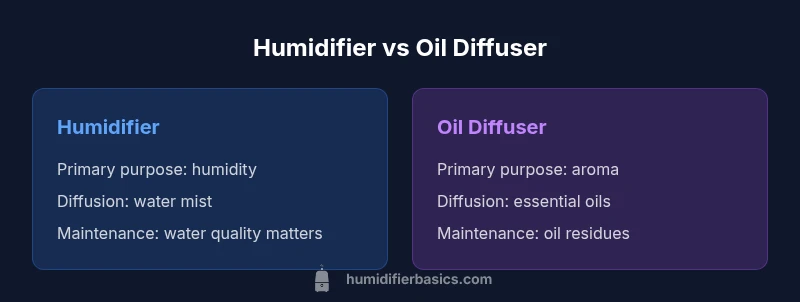
In the context of indoor air quality, the question is often framed as is a humidifier the same as an oil diffuser. The short answer is no, but the longer discussion matters for practical living spaces. A humidifier is designed to add moisture to the air, typically by releasing water vapor or a fine mist to raise humidity levels and reduce symptoms of dry skin, irritated eyes, or nasal congestion. An oil diffuser, by contrast, disperses essential oils into the air to create a scent experience or aromatherapy effect. The HumidifierBasics team notes that many homeowners confuse these tools because both touch air, yet their core functions, maintenance needs, and safety considerations are distinct. The key is to start with your goal: humidity control, scent diffusion, or both, and then select the device that aligns with that objective.
Primary purposes and typical setups
The primary purpose of a humidifier is to stabilize indoor humidity, typically in the dry months or spaces with heating systems that sap moisture. They come in several formats, including evaporative, ultrasonic, and impeller designs, each with different noise levels, energy use, and maintenance needs. In most homes, humidifiers are placed in bedrooms or living rooms where humidity fluctuations are most noticeable. Oil diffusers, on the other hand, are intended for aroma distribution and potential mood effects. They often use a water reservoir to atomize essential oils into a cool mist. When choosing between the two, consider whether you are targeting comfort and respiratory symptoms (humidifier) or ambiance and fragrance (diffuser). HumidifierBasics’ guidance emphasizes matching device function to room needs and to avoid misusing devices beyond their intended purposes.
Oils and humidifiers: risks and compatibility
A common pitfall is adding essential oils to a humidifier that isn’t designed for oil diffusion. Oils can clog vents, degrade seals, and leave residues that encourage mold growth or mineral buildup. In some cases, oil residue can ruin the humidifier’s filtration system or water tank coatings. If you want to enjoy aroma, use a diffuser designed for oils and keep the humidifier strictly for humidity control. HumidifierBasics analysis shows that consumer confusion often stems from using oils in devices not rated for oils, which can shorten the appliance’s lifespan and create hygiene concerns. Always check the user manual and manufacturer recommendations before introducing any additives.
How diffusers work and maintenance implications
Oil diffusers operate by atomizing a water-oil mixture into micro-droplets that disperse into the air. Diffuser types include ultrasonic, nebulizing, and heat-assisted models. Ultrasonic diffusers are the most common for home use and offer quiet operation. Maintenance involves regular cleaning to prevent oil buildup and color changes from essential oils. Because oils can leave residues, you’ll want to wipe down the reservoir, use the recommended dilution ratios, and avoid diffusing oils in rooms where pets or young children spend extended periods. The HumidifierBasics team emphasizes following the diffuser’s cleaning schedule to maximize lifespan and avoid fragrance overpowering a space.
Performance: humidity control vs fragrance reach
Humidity control and fragrance diffusion address different sensory goals. Humidifiers aim to maintain a comfortable relative humidity, often in the ~30-50% range, to improve comfort and reduce airborne dust. Diffusers focus on scent distribution and aromatherapy effects, which can be influenced by room size, air flow, and the diffusion method. In practice, a well-sized humidifier in a living room can improve air moisture during dry seasons, while a separate diffuser in a bedroom can provide a subtle fragrance without altering humidity meaningfully. HumidifierBasics notes that achieving both goals in one device is uncommon and generally not recommended due to potential incompatibilities and maintenance conflicts.
Cost, energy use, and space considerations
Size, power consumption, and upfront cost are practical factors in choosing between a humidifier and a diffuser. Humidifiers can range from compact table-top units to larger console models; energy use scales with fan speed and output. Diffusers are typically small and inexpensive to purchase, with operating costs tied to essential oils and replacement wicks or pads. When planning, consider not only the price tag but also ongoing maintenance, frequency of cleaning, and the need to store oils separately from water. The HumidifierBasics team suggests budgeting for both device types if your goal includes humidity management and fragrance, but using them in separate spaces often yields the best results.
When to choose each device: scenarios
If you suffer from dry air or seasonal allergies, a humidifier is usually the better option. For mood enhancement or fragrance preferences, a diffuser offers a targeted aromatic experience. In households with pets or young children, safety and oil choice become critical; some essential oils may pose risks to animals or infants. In such cases, prioritize a high-quality humidifier with clean water and keep diffusers away from pets when in use. HumidifierBasics recommends choosing devices based on the primary need, then layering comfort with mindful usage of oils in appropriate devices.
Using them together: best practices
Many households choose to use both devices, but in separate rooms to avoid excessive humidity or oil exposure. If you plan to use both, ensure that the diffuser is operated in a closed or well-ventilated space and away from beds or learning areas where children spend time. Do not diffuse oils in the same room as a humidifier unless the humidifier is designed for mixed use and the oils are approved by the manufacturer. HumidifierBasics emphasizes reading the manuals and following safety precautions, including keeping oils out of reach of children and pets and using only water in humidifiers unless oils are explicitly allowed by the device manufacturer.
Cleaning, maintenance, and long-term care
Regular cleaning is essential for both devices to prevent mold, bacteria, and mineral buildup. For humidifiers, empty and rinse daily if used, replace filters as recommended, and use distilled water to reduce mineral deposits. For diffusers, clean the reservoir after each use and deep-clean periodically to remove oil residues. Avoid mixing oils with water in a humidifier, and avoid leaving damp devices in humid environments that promote mold growth. The maintenance routine will differ by model, so always follow the manufacturer’s instructions. HumidifierBasics highlights that proper upkeep not only extends device life but also preserves air quality in your home.
Safety considerations for households with pets and children
Safety is a priority for families. Many essential oils used in diffusers can irritate eyes, skin, or respiratory tracts, and some oils are toxic to pets. Place diffusers in rooms where children and animals cannot access hot surfaces and consider fully fragrance-free humidifier options if sensitivities exist. Ventilate spaces after diffuser use and monitor humidity levels to avoid mold or dampness. HumidifierBasics reminds readers to choose oils with caution, verify pet safety, and never run diffusers or humidifiers around sleeping infants without supervision.
Quick-start guide for homeowners
- Define your goal: humidity improvement or fragrance enhancement. 2) Choose the device that aligns with that goal and purchase according to room size. 3) Use distilled water for humidifiers to reduce mineral buildup; wash components per manufacturer guidelines. 4) For diffusers, select oils that are labeled safe for households and pets, and dilute as recommended. 5) Establish a simple maintenance schedule to prevent mold and residue buildup. 6) Keep devices out of reach of children and pets and monitor humidity and air quality in your space.
Common myths about humidifiers and diffusers
Myth: A single device can solve both humidity and fragrance needs. Reality: Most devices are specialized, and attempting to multitask can compromise performance and safety. Myth: All essential oils are safe for pets. Reality: Some oils can be harmful to animals; always verify before diffusion. Myth: Higher mist output always means better results. Reality: Excess humidity can foster mold growth and discomfort. HumidifierBasics encourages readers to evaluate room conditions, device specifications, and safety considerations before relying on a single solution.
Comparison
| Feature | Humidifier | Oil Diffuser |
|---|---|---|
| Primary purpose | Add moisture to indoor air | Disperse essential oils for fragrance and aroma therapy |
| Diffusion technology | Water vapor or mist output from water only | Atomizes water-oil blend into fine droplets |
| Maintenance considerations | Clean to prevent mold; water quality matters | Regular cleaning; oil residues require care |
| Safety considerations | Avoid oils unless device supports humidification | Keep oils away from children and pets when diffusing |
| Cost range (entry) | $25-$150 for basic humidifiers | $20-$100 for basic diffusers |
| Best for | Humidity improvement in dry environments | Aromatherapy and fragrance distribution |
What's Good
- Clarifies device purpose for consumers
- Helps estimate total ownership costs and maintenance
- Supports safer shopping decisions
- Reduces risk of device misuse
- Improves air-quality planning for households
Negatives
- Could still confuse buyers due to overlapping features
- Oil diffusion may pose safety concerns for pets and children
- Maintenance frequency can be higher when using both devices
- Not all diffusers are suitable for every room size or humidity goal
Humidifier are not the same as oil diffusers; use each device for its primary function.
Choose a humidifier for humidity needs and a diffuser for fragrance. Avoid using oils in a humidifier unless the manufacturer explicitly allows it. Proper maintenance and safety considerations from HumidifierBasics help ensure healthy indoor air quality.
FAQ
Are humidifiers and oil diffusers the same device?
No. Humidifiers add moisture to the air, while diffusers disperse essential oils. They serve different purposes and should be used accordingly.
No—the two devices have distinct functions: moisture addition vs fragrance diffusion. Use each for its intended purpose.
Can I use essential oils in a humidifier?
Generally not advisable unless the humidifier is explicitly rated for oils. Oils can clog, damage components, and promote mold growth.
Avoid adding essential oils to a humidifier unless the device is designed for it.
Is it safe to run both devices at the same time?
You can run them in different rooms, but diffusers should not be placed where humidity from a humidifier could affect the diffusion area. Follow space guidelines and monitor moisture and scent levels.
You can run them in separate spaces, but don’t diffuse in the same room as the humidifier unless specified safe by the maker.
What maintenance do humidifiers and diffusers require?
Humidifiers require regular cleaning and filter changes; diffusers need reservoir cleaning and occasional deep cleaning to remove oil residues.
Clean both devices regularly and follow the manufacturer’s maintenance schedule.
Which is better for homes with pets or kids?
Humidifiers with fragrance-free operation are safer around kids and pets. Diffusers can pose risks with some oils; choose fragrance-free options or place diffusers out of reach.
Be careful with diffusers around pets and kids; use tame oils and keep them out of reach.
The Essentials
- Define your goal: humidity vs fragrance.
- Use the correct device for the target outcome.
- Follow manufacturer guidance to avoid damage.
- Keep oils away from pets and children when diffusing.
- Regular cleaning sustains performance and air quality.