Cool Mist vs Warm Mist Humidifiers: Which Is Better?
Explore the differences between cool mist and warm mist humidifiers, focusing on safety, performance, maintenance, and cost to decide which is better for your home.


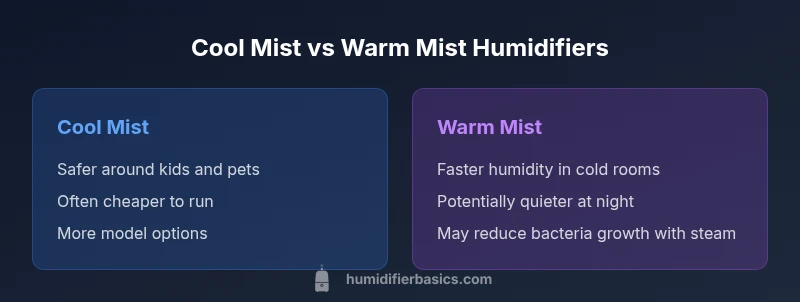
Cool mist and warm mist humidifiers both add humidity, but they differ in safety, speed, and upkeep. Cool mist is generally safer around kids and pets and typically cheaper to run, while warm mist can deliver quicker humidity in cold rooms and may feel more comfortable during winter. Your choice hinges on safety, climate, and how much maintenance you’re willing to handle.
What is the Difference Between Cool Mist and Warm Mist Humidifiers?
If you’re trying to answer is cool mist or warm humidifier better, you’ll want to compare how each type handles water, heat, and air output. Cool mist humidifiers disperse water droplets without heating, using either evaporation or ultrasonic vibration to create a fine mist. Warm mist models boil water to produce steam, then release that steam into the room. The result is different in feel, safety implications, and maintenance demands. This section lays out the core distinctions so you can frame your decision around your home’s layout, occupants, and comfort preferences. Throughout this guide we’ll reference real-world scenarios homeowners face, like a child in the home, an open-concept living space, or a bedroom that needs steady humidity without excess noise. The bottom line: the choice is driven by safety, climate, and how much upkeep you’re prepared to perform.
How Humidity is Generated: Cooling vs Heating Methods
Humidity generation is the practical kernel of the cool mist vs warm mist decision. Cool mist units rely on two primary mechanisms: evaporative (a wick filter wicks water into the airstream, then fans disperse humidity) or ultrasonic (a vibrating diaphragm creates a cool mist without heat). Warm mist units heat water to create steam, which cools as it mixes with room air. The heating element means warm mist humidifiers typically deliver a faster initial humidity spike in cool-room conditions. However, this speed comes with higher energy use and a potential burn risk if the device is knocked over or touched by curious hands. In real homes, the effectiveness also hinges on room size, open doorways, and existing airflow patterns, which can amplify or dampen the perceived humidity rise.
Safety Considerations in Real-World Homes
Safety is a central differentiator between the two types. Cool mist humidifiers generally present a lower risk of burns since there is no hot surface or heated water. This is especially important for households with young children or curious pets. Warm mist units boil water, producing steam that can cause burns if tipped or mishandled. On the flip side, steam can help suppress the growth of some bacteria when the water is boiled, but only if the device is kept clean and filled with fresh water. In drafty spaces, warm mist can feel more comfortable because it adds heat to the room more quickly, potentially reducing the temptation to overfill or run longer cycles to achieve the same humidity level. Cleaning becomes crucial for both types to prevent mineral buildup and ensure healthy air quality.
Speed of Humidity Rise and Room Size Impact
The pace at which humidity rises depends on the type and the room. Warm mist units can elevate humidity faster in cold, dry environments due to the steam they emit, which can be advantageous in quick relief from dry skin or coughing during winter. Cool mist models may take longer to reach higher humidity levels but tend to maintain a steadier output over time in larger spaces. Room size matters a great deal: a single-zone living room or bedroom will respond differently than an open-concept floor plan. For the same wattage and tank size, a smaller room may reach target humidity with a cool mist sooner than a larger space, while a cold climate may benefit from the rapid initial boost of warm mist. This nuance matters for renters and homeowners who need predictable, stable humidity without frequent topping off.
Maintenance, Cleaning, and Mineral Buildup
Maintenance is a practical lens through which to compare these humidifier types. Cool mist units often rely on filters, wicks, or ultrasonic membranes that trap minerals and contaminants; these components require regular cleaning, filter changes, and occasional replacement. If you use tap water, mineral buildup can cause white dust or reduced efficiency, which makes cleaning more frequent. Warm mist units reduce some mineral issues because steam leaves minerals behind in the water reservoir, but their heating element and interior surfaces can still accumulate mineral deposits and scale. In both cases, following manufacturer guidance for descaling, water quality (distilled vs. tap water), and filter replacement dramatically affects performance and longevity. A consistent cleaning routine protects air quality and ensures the devices operate as designed over the long term.
Energy Use, Cost, and Long-Term Savings
Across models, energy usage varies with the heating element in warm mist units, which generally leads to higher energy consumption than cool mist devices. Initial purchase price also tends to be higher for warm mist units, though costs vary by brand and feature set. Long-term operating costs depend on your local electricity rates, how often you replace filters, and how frequently you run the unit. In temperate climates, a cool mist humidifier may save money over time since it relies on fans and filters rather than a heating element. Conversely, during very cold months, warm mist may deliver humidity faster, potentially reducing the total hours of operation needed to reach comfortable levels. The key is to balance upfront costs with ongoing energy expenses and maintenance commitments.
Noise, Odor, and Air Quality
Noise and air quality considerations influence day-to-day comfort. Ultrasonic cool mist devices can be very quiet, which is attractive for bedrooms and home offices. Evaporative cool mist models generate a gentle fan noise that some users notice more than others. Warm mist humidifiers are often relatively quiet when the heating element is idle, but the boiling process can introduce a soft hiss or bubbling sound depending on water level and design. Odor and taste also come into play: mineral content in water can lead to dust or taste differences if the reservoir isn’t cleaned regularly. When considering air quality, it’s not just humidity level that matters; filtration and water quality contribute to the overall experience and the perceived cleanliness of the indoor environment.
Water Quality, Distilled Water, and Mineral Management
Water type matters for both designs. Distilled or demineralized water can dramatically reduce mineral deposits and the white dust that sometimes accompanies humidifier use, particularly with cool mist devices. Tap water is usually acceptable for many households, but minerals in hard water can clog components, reduce efficiency, and require more frequent cleaning. Warm mist units may accumulate mineral deposits inside the reservoir and steam pathway if hard water is used, so regular descaling is important. If you are sensitive to minerals or want to minimize white dust, plan for water treatment options or rely on high-quality filters. This is a practical area where small changes in water quality can yield noticeable improvements in performance and air quality.
Seasonal Use: Winter vs Summer Scenarios
Seasonality plays a significant role in choosing between cool mist and warm mist. In winter, indoor air tends to be dry, and either unit can help; warm mist may provide faster comfort in a chilly room, while cool mist keeps the environment safer for children. In summer, humidity management may peak, and evaporative cool mist devices can be effective without introducing heat. For homes with compromised air quality, a humidifier that integrates with existing air purifiers and uses replaceable filters can offer a more holistic approach to indoor air quality. Understanding your home’s seasonal humidity patterns will improve the odds of selecting a device that maintains consistent comfort year-round.
Safety Best Practices for Homes with Kids or Pets
If children or pets are present, safety considerations should guide your choice. Cool mist humidifiers typically present a lower burn risk and are easier to place in hazard-free zones. Warm mist devices, while efficient in some climates, require careful placement away from reach and careful handling when filling or cleaning to avoid scalding. Regardless of type, keep units on stable surfaces, prevent tip-overs, and use the recommended water type. Regular maintenance reduces the chance of mold or bacterial growth, which can impact air quality and health. A thoughtful setup—considering outlet location, cord management, and proximity to furniture—helps integrate humidity control into daily life without creating new hazards.
Common Myths and Misconceptions
Many myths surround cool mist vs warm mist humidifiers. A common belief is that warm mist is inherently safer because it uses steam; in reality, the risk depends on how the device is used and maintained. Another misconception is that all cool mist units are loud or inefficient; modern models have variable fan speeds and noise-reduction features. Some buyers assume that heating water automatically purifies the air; however, safety and hygiene depend more on filter quality and water cleanliness than on heat alone. Debunking these myths requires looking at real-world usage, energy considerations, and consistent maintenance practices rather than relying on generalizations.
How to Choose: Quick Decision Guide
This section provides a practical framework for deciding which type to buy. Start by evaluating safety needs: if you have young children or curious pets, a cool mist unit may be preferable due to lower burn risk. Next, consider climate: in consistently cold rooms, warm mist can deliver humidity faster, while in milder climates, cool mist may suffice. Finally, assess maintenance capacity: if you’re comfortable with regular filter changes and descaling, you can optimize performance in either type. A balanced decision also accounts for noise tolerance, energy costs, and water quality. When in doubt, we recommend renting a model to test performance in your space or using a humidistat to track humidity levels and ensure you don’t over-humidify. This empirical approach helps you avoid common mistakes and aligns with long-term comfort goals.
Comparison
| Feature | Cool Mist Humidifier | Warm Mist Humidifier |
|---|---|---|
| Water heating | No heating; relies on evaporation/ultrasonic | Heats water to produce steam |
| Safety risk | Lower risk of burns; safer around kids/pets | Burn risk due to hot water/steam; handle with care |
| Humidity delivery speed | Typically slower to start; steady humidity | Often faster initial humidity due to steam |
| Maintenance | Filter/wick/ultrasonic care; mineral buildup possible | Heating element and steam pathway require cleaning; mineral buildup possible |
| Energy use | Generally lower energy use | Higher energy use due to heating |
| Best room type | Bedrooms, living spaces; safety-focused homes | Cold climates; rapid humidity needs |
| Water type | Tap water OK with filtration; distilled water preferred | Distilled water recommended to limit mineral buildup |
What's Good
- Lower burn risk for households with children or pets
- Typically lower upfront cost and energy use
- Widely available with many model options
- Cool mist often requires less maintenance for heating components
- Quieter operation in many ultrasonic models
Negatives
- Potential mineral dust without proper filtration
- Cool mist units can be noisier due to fans in some models
- Warm mist carries burn risk and requires careful placement
- Higher upfront cost and energy use for some warm mist units
- Heating water can affect water taste and room temperature
Choose based on safety priorities and climate: cool mist for safer, cost-effective humidification; warm mist for faster humidity in cold environments, with a caveat on burn risk.
If safety and cost are your top concerns, cool mist is usually the better default. If you live in a drafty, very cold space and need rapid humidity, warm mist can be advantageous, provided you manage the safety risks and perform regular maintenance.
FAQ
What is the main difference between cool mist and warm mist humidifiers?
Cool mist humidifiers disperse water without heat, either via evaporation or ultrasonic vibrations. Warm mist humidifiers boil water to emit steam, which can humidify rooms quickly but carries a burn risk. Your decision depends on safety, climate, and maintenance willingness.
Cool mist uses no heat, safer around kids. Warm mist uses steam, faster but with burn risk. Choose based on your safety and climate needs.
Are cool mist humidifiers safer around children?
Typically yes. Since cool mist devices don’t heat water, there’s no hot surface or steam. Proper placement and cleaning are still important to prevent mold or mineral dust.
Yes, they’re generally safer for homes with kids, but you still need good cleaning habits.
Can warm mist humidifiers help with colds or congestion?
Warm mist can feel comforting for congestion due to steam, but evidence is mixed. The vapor may ease nasal passages temporarily, though both types can alleviate dryness when used correctly.
Steam can feel soothing for congestion, but it’s not a guaranteed cure.
Which is cheaper to run, cool mist or warm mist?
In general, cool mist models cost less to run because they don’t heat water. Warm mist units consume more energy due to the heating element, which adds to monthly costs over time.
Cool mist usually costs less to operate, especially over the winter months.
Do I need distilled water for either type?
Distilled or demineralized water reduces mineral deposits and white dust for both types. Tap water is acceptable for many users, but hard water increases maintenance.</questionShort>
Distilled water minimizes mineral buildup in both types.
How should I clean my humidifier to avoid mold?
Follow the manufacturer’s cleaning schedule. Regularly empty, rinse, and dry the tank, clean filters or wicks, and descale if you notice mineral buildup to prevent mold and bacteria growth.
Clean it regularly and dry it fully to keep the air clean.
The Essentials
- Assess safety needs before buying to protect kids and pets
- Consider climate: cold rooms favor warm mist for speed; milder climates favor cool mist for consistency
- Use distilled water to minimize mineral dust and improve efficiency
- Regular cleaning and filter maintenance extend device life and air quality
- Employ a humidistat to maintain optimal indoor humidity consistently