Humidifier Warm vs Cool Mist: A Practical Comparison for 2026
Compare warm and cool mist humidifiers for safety, energy use, maintenance, and real‑world use cases. HumidifierBasics analyzes which type best fits winter dryness, kids, and pets in 2026.


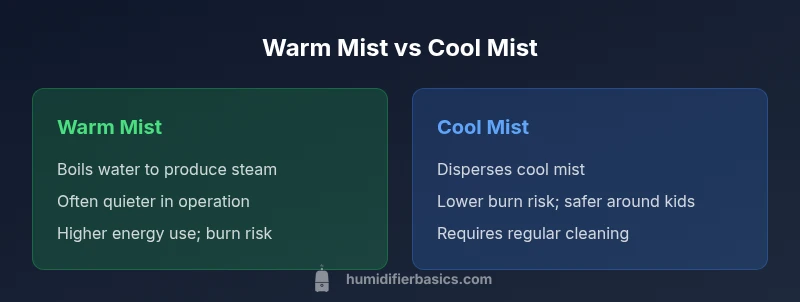
Warm-mist and cool-mist humidifiers both add moisture, but they suit different needs. Warm mist boils water for a steam-like output, while cool mist relies on ultrasonic or fan-based dispersion. For most homes, cool mist is the safer, more versatile option; warm mist can be preferred in very dry winters if safety and energy allow.
Understanding the Core Difference Between Humidifier Warm vs Cool Mist
Choosing between humidifier warm vs cool mist shapes how you experience humidity in the home. The core distinction lies in how moisture is generated and delivered: warm mist humidifiers boil water to produce steam, delivering a warmer, often thicker mist, while cool mist units disperse fine droplets using ultrasonic vibration or a small fan. This fundamental difference affects safety, energy use, maintenance, and comfort in dry rooms. According to HumidifierBasics, the method of generation matters not only for achieving target humidity but also for how a space feels when winter air is particularly dry. The HumidifierBasics team found that many households overlook the impact of water quality and cleaning frequency when evaluating these options. As you read this guide, keep in mind your family’s layout, ages, pet situation, and climate, because those factors largely determine which type is best. This article lays out the practical tradeoffs and a decision framework you can apply tonight.
How Humidity Output Differs: Warm vs Cool Mist in Real Homes
Humidity output depends on the design and the environment. Warm mist tends to feel more humid due to the steam-like output, which can raise humidity faster in very dry spaces. Cool-mist models distribute moisture through air currents or ultrasonic waves, which often require larger surface area or higher fan speed to achieve the same perceived humidity. In spaces under 200 square feet, both types can work well with proper placement; in larger rooms, you’ll likely need multiple units or a larger-capacity model. A crucial takeaway from HumidifierBasics analysis shows that the ratio of airflow to room size matters more than mist type alone. Pair either type with a hygrometer to track actual humidity and prevent over-humidification, which can promote mold growth or condensation on windows.
Safety Considerations for Homes with Kids and Pets
Safety considerations differ notably between warm and cool mist. Warm mist units boil water, which creates a burn risk if tipped or accessed by curious children or pets. For households with toddlers or curious cats, cool mist options are generally safer, particularly those with sealed reservoirs and restricted spout exposure. However, cool mist units can accumulate mineral dust and require regular cleaning to prevent bacteria and mold growth. To minimize risk, choose models with auto-shutoff when the tank is empty, keep units well away from reach, and consider distilled water when possible to reduce mineral buildup. HumidifierBasics recommends implementing a simple safety checklist before running any humidifier in a living area with children or pets.
Energy Use and Running Costs: What to Expect
Energy use is a practical consideration. Warm mist humidifiers heat water to boiling, which demands more electricity and can raise utility bills in colder months. Cool mist devices rely on fans or ultrasonic vibrations, which often consume less power and provide flexible operation. If you live in a climate that requires continuous humidification during winter, the cumulative energy difference can be significant. Practically, you’ll want to balance energy cost with comfort. HumidifierBasics analysis suggests focusing on units with safety features, automatic shutoff, and efficient motors to minimize running costs over time while maintaining desired humidity levels.
Maintenance and Cleaning Requirements: Keeping It Hygienic
Maintenance is the cornerstone of reliable humidification. Warm mist units may seem simpler because steam can reduce some mineral buildup, but they still require regular tank cleaning to prevent mineral deposits and bacteria. Cool mist devices, especially ultrasonic ones, can harbor mold if not cleaned regularly, and mineral residue can scatter into the air if you don’t use distilled water or appropriate filters. A consistent cleaning schedule—emptying and drying tanks between uses, weekly wipe-downs, and periodic filter changes—prolongs device life and maintains air quality. HumidifierBasics emphasizes a simple routine: rinse the reservoir, scrub with mild detergent, dry completely, and replace pads or filters on schedule.
Water Quality, Mineral Dust, and Odor Considerations
Water quality affects both mist types. Tap water carries minerals that can leave white dust and encourage mineral buildup in tanks and coils. Using distilled or demineralized water minimizes this issue, while a weekly cleaning routine reduces biofilm formation. Some users report faint mineral odors with certain tap waters; switching to distilled water or using appropriate cartridges can mitigate this. In addition, consider adding a mild cleaning solution (as directed by the manufacturer) every few weeks. This reduces mineral residue and improves air quality over time.
When Warm Mist Excels: Specific Use Cases
There are scenarios where warm mist can be advantageous. In very dry, cold climates, the warmer output can feel more soothing on chapped lips and dry skin. The steam-like mist may also help loosen nasal congestion more effectively for some users. However, the higher energy use and burn risks must be weighed, especially in homes with small children or pets. If you choose warm mist, select models with robust safety features, place them away from high-traffic zones, and monitor humidity levels with a hygrometer.
When Cool Mist Excels: Specific Use Cases
Cool mist humidifiers shine in households with children or pets due to reduced burn risk and easier placement flexibility. They are broadly compatible with a wider range of water sources and often have more options for variable output and noise levels. Regular cleaning becomes essential to prevent microbial growth, but with careful maintenance, cool mist units can deliver reliable humidity without the safety concerns of boiling water. For allergy-prone households, clean air becomes the priority, and a cool-mist unit paired with distilled water and a proper filtration strategy can be especially effective.
Practical Setup Tips, Placement, and Troubleshooting
Placement matters. Position humidifiers on a hard, flat surface away from direct airways, doors, or windows to avoid condensation on walls. For multi-room homes, consider a central humidifier for whole-house setups or use multiple rooms with strategically placed units. Monitor humidity with a hygrometer; aim for 40–60% most of the time. If you notice condensation on windows or a mildewy smell, reduce output or increase ventilation. Troubleshooting steps include checking for leaks, ensuring the reservoir seals properly, cleaning mineral buildup, and replacing filters as recommended by the manufacturer.
Decision Framework: Use-Case Scenarios to Help You Decide
In a small apartment, cool mist may be the safer, more adaptable option, especially when children are present. In a dry region with minimal ventilation, warm mist can provide faster perceived humidity, but you must manage safety and energy costs. For a family with pets and heavy daily use, a well-maintained cool-mist unit with distilled water and routine cleaning often provides the best balance of safety, maintenance, and performance. Use our decision framework to map your space size, climate, safety needs, and maintenance willingness against the two mist types. HumidifierBasics recommends choosing a model with clear humidity readouts and automatic shutoff to simplify ongoing operation.
Common Mistakes to Avoid and How to Optimize Humidity Levels
Avoid running a humidifier at maximum level 24/7; humidity should be carefully managed to prevent mold growth. Don’t neglect water quality—tap water minerals can accumulate quickly in either type. Avoid placing units directly on wood or electronics to prevent moisture damage. A simple hygrometer helps verify you stay in the 40–60% comfort zone. Regular cleaning, filter changes, and using distilled water when possible are the three practical steps across both mist types to optimize humidity healthily and safely.
Comparison
| Feature | Warm Mist Humidifier | Cool Mist Humidifier |
|---|---|---|
| Safety considerations | Boils water; higher burn risk if tipped or accessed by children/pets | Lower burn risk; safer around kids/pets when used properly |
| Energy usage | Higher energy use due to boiling water | Lower energy use in many models, especially newer ultrasonic units |
| Maintenance | Regular cleaning; mineral buildup possible; some odor concerns | Regular cleaning required to prevent mold/bacteria; mineral dust possible without distilled water |
| Noise/operation | Generally quiet, boiler-like hum; some models audible when heating | Often very quiet; fans or ultrasonic discs can produce light noise |
| Output control | Steam-like output; consistent humidity is model-dependent | Fine mist control with adjustable output in many models |
| Best use | Winter comfort in very dry climates; safety precautions needed | Households with kids/pets; versatile, easy maintenance |
| Price range | $40–$150 | $25–$100 |
What's Good
- Potential for rapid humidity relief with warm mist in very dry spaces
- Cool mist generally safer around children and pets
- Wide model availability across budgets and features
- Regular cleaning reduces mold and mineral buildup in both kinds
Negatives
- Warm mist uses more energy and has burn risk if mishandled
- Cool mist requires consistent cleaning to avoid bacteria and mineral dust
- Natural mineral dust may be visible if using hard water without a filter
- Effectiveness depends on room size and placement rather than mist type alone
Cool mist humidifiers are the more versatile, safer default choice for most homes; warm mist can be preferred in very dry winters with strict safety controls.
For most households, choose cool mist for safety and maintenance ease. If you have extreme winter dryness and can manage safety, warm mist can offer faster perceived humidity, but monitor energy use and cleanliness.
FAQ
What is the difference between warm-mist and cool-mist humidifiers?
Warm-mist humidifiers boil water to create steam, which feels warmer and can help with perceived humidity. Cool-mist humidifiers disperse a cool mist via ultrasonic or fan mechanisms and are generally safer around children and pets. The choice depends on safety, energy use, noise, and maintenance preferences.
Warm mist boils water for steam, cool mist disperses a cool mist; safety and maintenance drive your choice.
Is warm-mist safer around kids and pets?
Warm-mist units carry a burn risk due to hot water and steam, so they require careful placement and supervision in homes with kids or curious pets. Cool-mist units typically present lower burn risk but need regular cleaning to prevent microbial growth.
Warm mist can burn if mishandled; cool mist is usually safer for households with children or pets.
Do warm-mist humidifiers kill germs?
Some warm-mist units may reduce certain germs through the heating process, but this is not a substitute for cleaning and using clean water. Regular maintenance remains essential for both mist types.
Heating doesn’t replace cleaning; keep water clean and maintain the unit.
Can I use tap water or distilled water in a humidifier?
Distilled or demineralized water minimizes mineral buildup and dust. Tap water is common but can leave mineral deposits and odors; using filters or cleaning more often helps. Always follow the manufacturer’s water guidance.
Distilled water reduces mineral issues; tap water is common but may require more maintenance.
What humidity level should I aim for at home?
Aim for 40–60% relative humidity in living spaces. Use a hygrometer to monitor levels and adjust your humidifier output to maintain that range without causing condensation or mold risk.
Keep humidity around 40–60% for comfort and air quality.
Which type is best for allergy relief?
Allergy relief depends on air quality management more than mist type alone. Regular cleaning, HEPA or equivalent filtration, and appropriate water quality help reduce mold spores, dust, and other irritants in either mist type.
Clean air matters more than mist type; maintain filters and cleaniness.
The Essentials
- Choose cool mist for safety and low-maintenance use
- Use distilled water to minimize mineral dust in both types
- Keep humidity between 40–60% with a hygrometer for health and comfort
- Regular cleaning is essential to avoid mold and bacteria in any humidifier
- Consider space size and safety needs before selecting warm or cool mist