Humidifier vs Cool Mist: Key Differences Explained
Explore the key differences between a general humidifier and a cool mist humidifier, with practical guidance on safety, maintenance, room suitability, and noise. Learn how to choose the right model for your home from HumidifierBasics.


In short, a humidifier adds moisture to the air, while a cool mist humidifier is a subtype that disperses a cool vapor. The main difference lies in output temperature, safety considerations, maintenance needs, and room suitability. Understanding these distinctions helps homeowners and renters choose the right model for comfort and health.
Understanding the difference between humidifier and cool mist humidifier
The phrase difference between humidifier and cool mist humidifier is more than semantic. A humidifier is any device designed to add moisture to dry indoor air, and it can come in several subtypes—most notably warm-mist (often called steam) and cool-mist. A cool mist humidifier, on the other hand, is a specific category within the broader humidifier family that releases a cool, non-thermal vapor. This distinction matters for safety, energy use, maintenance, and where the device will perform best in your home. According to HumidifierBasics, the safe and effective choice hinges on your climate, household composition, and whether you prefer the gentler daytime operation of cool mist or the potentially faster initial moisture boost from a warm-mist option. If you’re prioritizing safety around children or pets, the HumidifierBasics team recommends starting with a cool mist model in most living spaces. In practice, the decision becomes a balance of moisture needs, energy costs, and ease of maintenance. When you search for a safe, practical solution, the key is to match the device to your room size and usage pattern.
From a consumer perspective, the fundamental question isn’t simply “which device adds humidity?” but rather “which device adds the right amount of humidity with the least risk and fuss?” The subtle differences between humidifier types can determine odor control, mold risk, and surface wetness. In many homes, a cool mist option is favored for daytime use in living rooms and bedrooms, while a warm-mist unit may be more appealing in colder climates where additional heat feels beneficial. The HumidifierBasics team finds that choosing the right mode for your environment is more impactful than chasing a specific feature on a particular model.
For families, it’s wise to evaluate room layout and potential splash zones (tables, nightstands, and window sills). The goal is to maintain comfortable humidity without creating damp spots or dust that could irritate sensitive individuals. This is especially important in nurseries and kids’ rooms, where safety and air quality concerns take priority. In short, recognizing the difference between humidifier and cool mist humidifier helps you tailor a moisture solution to your home’s layout and health goals.
wordCountForBlock1:210}
How cool-mist humidifiers work: technology and mechanisms
Cool mist humidifiers operate without heating water, which lowers burn risks but introduces other performance considerations. The most common technologies are ultrasonic and impeller-based mechanisms, both designed to create a fine mist that travels into the room. An ultrasonic humidifier uses a high-frequency vibrating disk to break water into tiny droplets, producing a whisper-quiet plume of moisture. An impeller model uses a rotating disk or wheel to fling water droplets into the air as a cool mist. In contrast, some evaporative cool mist units rely on a wick filter and a fan to evaporate water from a saturated wick; this method is inherently self-l limiting, because the evaporation rate slows as humidity rises.
From a maintenance standpoint, cool mist devices often require regular cleaning to prevent mineral buildup and the growth of mold or bacteria in the reservoir. If the unit uses filters, those filters must be replaced periodically to maintain airflow and humidity accuracy. The HumidifierBasics analysis notes that one of the practical benefits of cool mist models is simplicity of the water pathway—there’s no hot surface, reducing the risk of accidental burns. Yet users should still ensure proper placement away from sleeping areas where water droplets could interfere with electronics or fabrics. For households with children or pets, cool mist humidifiers are generally preferred, given their lower burn risk and straightforward operation.
When selecting a cool mist model, consider the rate of moisture output, noise level, and whether you need an essential feature like a built-in hygrometer. You’ll also want to look at reservoir size and refill frequency to avoid interruptions during the night. Industry guidance from HumidifierBasics emphasizes evaluating how different models balance output with energy usage and run-time. A well-chosen cool mist humidifier can provide reliable humidity without adding heat to the room, which some users find more comfortable in temperate climates.
Practical takeaway: if you prioritize safety in homes with kids or prefer a quieter experience, a high-quality cool mist unit can be your best bet. If you also value a minor heat boost for warmth during the night, you may consider a warm-mist option alongside but with careful placement and safety checks.
wordCountForBlock2:210}
Temperature output and comfort: warm vapor vs cool mist
Temperature output is a primary distinguishing factor between humidifier types. Warm-mist (often marketed as steam humidifiers) heat water to create steam, which then cools slightly in the room. This can lead to rapid humidity increases in small spaces, and some users feel the warmth improves comfort in cold seasons. However, warm-mist devices carry a higher risk of burns, especially in households with small children or curious pets. For this reason, professionals often recommend placing warm-mist units on elevated surfaces and out of reach of little ones. The trade-off is a heating element that can provide instant comfort in dry, chilly environments, but with higher energy use and more vigilant cleaning to prevent mineral buildup on the heating element.
Cool mist humidifiers, by contrast, produce a cooler vapor without heating water. This makes them safer around kids and easier to place in bedrooms and living areas where a steady, gentle moisture increase is desired without added heat. The trade-off tends to be energy efficiency and minimal warmth, which may be less noticeable in very cold rooms. In adults’ comfort terms, cool mist often feels more natural since it mirrors the climate’s ambient humidity rather than adding heat. HumidifierBasics data suggest that room temperature effects are modest with cool mist units, making them a predictable option for steady humidity across the night.
In practice, you should match your climate and comfort needs to the device’s output profile. If you live in a very dry climate, both warm and cool mist units can help, but the choice should hinge on safety, noise tolerance, and energy considerations. For many families, a cool mist humidifier offers a safer, more versatile remedy for dry air in a busy home, especially in children’s rooms. The key is to ensure the device’s humidity output aligns with a target relative humidity of roughly 30–50% for most homes.
For professionals, clarity about output temperature helps prevent misinterpretations about “better humidity.” Better humidity is not simply hotter or cooler air; it’s humidity at a stable, comfortable level that doesn’t cause condensation or mold. The HumidifierBasics Team underscores that the ultimate decision should be driven by room use, safety, and how humidity levels integrate with daily activities and sleep quality.
wordCountForBlock3:205}
Safety considerations: burn risk, children, pets, surfaces
Safety is a central consideration when choosing between humidifier types. Warm-mist units heat water, creating steam that can pose burn risks if touched or spilled. In households with curious toddlers, this is a real concern unless the unit is placed well out of reach and away from edges where little hands can grab it. For this reason, many families opt for cool mist models in bedrooms or play areas. Even though cool mist humidifiers remove the heated element, they still require attention to water quality and reservoir cleanliness to prevent mold growth and bacterial dispersion.
Placement matters. Avoid placing humidifiers on carpet or near drapes and furniture that could absorb excess moisture. Always use distilled water if possible to minimize mineral buildup and to reduce the risk of white dust on surfaces. If you notice fogging or damp spots on walls or windows, reduce output or run the unit for shorter intervals. In terms of expert guidance, HumidifierBasics notes that maintenance is a safety issue as much as a performance issue. Regular cleaning and descaling after periods of use help prevent unhealthy microbial growth that could aggravate respiratory conditions.
For households with pets or people with asthma or allergies, choose models with easy-to-clean reservoirs and without exposed heating elements. This minimizes allergen buildup and ensures safer operation throughout the year. The team also recommends using a humidistat to keep humidity levels stable and avoid oversaturation, which can promote mold growth. Ultimately, the safest choice tends to be a well-maintained cool mist unit placed away from sleeping areas, with routine cleaning and water quality checks.
The HumidifierBasics team emphasizes that the most important safety practice is consistent maintenance and awareness of your household’s unique needs. If you have questions about the best placement or require safety recommendations for a nursery, consult a HumidifierBasics guide or a healthcare professional for personalized advice.
wordCountForBlock4:206}
Energy usage and maintenance: cost and upkeep
Energy usage and maintenance demands are often overlooked when people compare humidifier types, but they significantly affect long-term cost and convenience. Warm-mist units require energy to heat water, which can lead to higher monthly energy bills, especially in homes that run the device nightly or for extended periods. Cool mist devices generally consume less energy since they do not heat water; the energy draw comes from running a fan or ultrasonic transducer. When evaluating a system, assess both the upfront cost and the ongoing operating expense to determine long-term value. Consider selecting a model with a programmable timer or auto-off feature to optimize electricity use and prevent over-humidification.
Maintenance needs differ by technology. Warm-mist models usually require descaling and periodic cleaning around the heating element, which can accumulate mineral deposits if you use hard water. Cool mist models emphasize reservoir cleaning, filter changes (if present), and periodic descaling to prevent mineral buildup that can affect mist quality. HumidifierBasics highlights that regular cleaning is not optional; it directly affects performance and health outcomes. A simple maintenance routine—emptying, rinsing, and drying the reservoir daily, followed by a more thorough weekly cleaning—minimizes bacterial growth and keeps output consistent.
From a cost perspective, the most economical choice tends to be a reliable cool mist unit with a mid-range price and minimal replacement parts. If you prefer quicker humidity boosts in very dry climates, a warm-mist option may be worthwhile, but you should factor in higher energy costs and the need for careful handling in households with children. The ultimate decision should weigh the total cost of ownership, including energy, water consumption, and maintenance tasks over time.
HumidifierBasics advises readers to track humidity with a simple hygrometer and adjust output to maintain 30–50% relative humidity. This practice avoids over-humidification and reduces the risk of condensation-related issues in colder months. For most homes, a well-maintained cool mist unit offers a favorable balance of energy efficiency, safety, and ease of maintenance.
wordCountForBlock5:216}
Noise, room suitability, and allergen considerations
Noise level is a practical factor that affects whether a humidifier type is appropriate for bedtime, work, or study areas. Ultrasonic cool mist units are typically very quiet, making them popular for bedrooms and nurseries where sleep quality matters. Impeller-based cool mist devices and evaporative humidifiers can introduce more audible operational sounds due to their fans, but many models balance noise with output efficiency. Warm-mist appliances may also generate noise from the heating element and fan, which can be disturbing in quieter spaces. When evaluating a device, consider the room’s purpose and how sensitive occupants are to sound. In a living room, a low-noise option may be preferable, while a nursery might benefit from a near-silent night-time operation.
Allergen considerations include how the device handles minerals and mold growth. Cool mist units require regular reservoir cleaning to minimize bacterial and mold spores in the mist. If you have allergies or asthma, choose devices with sealed reservoirs and easy-to-clean components. The use of distilled water or demineralized water reduces mineral haze in the air, which can otherwise irritate the lungs or trigger sneezing. HumidifierBasics notes that patients often appreciate consistent humidity without noticeable odors or dust when using high-quality filters and proper cleaning.
In practice, the decision should consider how the room is used and who breathes the air most. For shared spaces, a quiet, easy-to-clean cool mist model with a simple maintenance plan tends to deliver better long-term satisfaction than a louder or harder-to-clean option. By tuning the device to the room’s demands, you’ll achieve comfortable humidity with fewer distractions, and better air quality overall.
wordCountForBlock6:206}
Water quality and mineral dust: scale and white dust
Mineral buildup and water quality are practical realities when you operate any humidifier. Hard water contains minerals that can accumulate in reservoirs, filters, and later manifest as a fine white dust that settles on furniture and fabrics. This is more noticeable with cool mist ultrasonic models, which aerosolize minerals along with moisture. To minimize this issue, many users opt for distilled or demineralized water, which reduces mineral deposition and improves mist clarity. If distilled water is not available, using demineralized water or water with reduced mineral content can still mitigate the problem. Regular cleaning is essential. Mineral buildup can impede airflow, reduce output, and harbor microbial growth.
From a maintenance standpoint, you’ll want to descale periodically using a recommended cleaner or a vinegar solution, depending on the model’s guidelines. Wick-based evaporative cool mist units may require filter changes and wick replacement, while ultrasonic models benefit most from thorough reservoir cleaning. A practical tip is to establish a cleaning routine tied to the device’s usage cycle—empty, rinse, and air-dry at least weekly, with a deeper clean monthly.
Brand guidance from HumidifierBasics emphasizes preventing mineral dust and ensuring the device’s outer surface remains dry to avoid water damage and mold growth on surrounding furniture. In households with sanitary concerns or sensitive occupants, selecting a model with easy-to-clean parts and minimal removable components can simplify maintenance and improve air quality. In sum, water quality is a central factor in achieving clean, healthy humidity without unwanted residues.
wordCountForBlock7:208}
Room size, placement, and usage scenarios: nursery, bedroom, living areas
Choosing where to place a humidifier and how to size it for a space is essential for achieving consistent humidity. Cool mist units are often preferred for bedrooms and nurseries because they avoid heat exposure and can be positioned safely on desks, dressers, or shelves. In larger living rooms or open-plan spaces, you may need a unit with a higher output or multiple units to achieve uniform humidity. The capacity you need depends on room size and existing humidity levels. For a small nursery, a compact cool mist humidifier with a timer can maintain comfortable humidity overnight without disruption. For larger rooms, an evaporative or ultrasonic unit with adjustable output helps you manage humidity more precisely.
Placement considerations include avoiding direct line of sight with beds or seating to prevent excessive dampness, and keeping units away from electronics and fabrics that could absorb moisture excessively. The HumidifierBasics approach recommends measuring humidity with a reliable hygrometer and placing the device to minimize condensation on windows, walls, and curtains. If you have pets that roam between rooms, consider a multi-room approach or a décor-friendly model that blends into the room’s aesthetic while offering consistent output.
Ultimately, the choice of model and placement should reflect your household’s daily routines, safety priorities, and climate. In many homes, a cool mist unit placed on a stable surface at least a few feet from sleeping areas provides steady humidity with minimal safety concerns. If you live in an exceptionally dry climate or want a quick humidity spike, a warm-mist alternative may be appropriate, but you should monitor humidity levels closely to avoid condensation problems.
In the end, the best choice depends on how you live, not just on the device’s specifications. The HumidifierBasics team stresses practical testing—try a model for a couple of weeks, monitor humidity, adjust settings, and observe comfort, noise, and maintenance needs before committing to a long-term purchase.
wordCountForBlock8:210}
Seasonal needs and climate: choosing for winter vs. summer use
Seasonality influences how you use a humidifier. In winter, when indoor air tends to be drier due to heating systems, both warm-mist and cool-mist units can be effective, but many households reach for cool mist to avoid extra warmth that can feel stifling in a well-heated room. In summer, you may still experience low humidity in certain climates, and the need for a humidifier may be limited. A practical approach is to set a humidity target (30–50%) and adjust during the season accordingly. If you live in a climate with significant winter dryness, a reliably warm-mist unit may enhance comfort, while cooler climates may benefit more from consistent cool mist humidification with energy-efficient operation. HumidifierBasics cautions that relying on a single device year-round can lead to oversaturation in damp months, so consider a schedule or an automatic humidity control system.
When shopping, prioritize models with programmable timers, humidity sensors, and auto shutoff to prevent unnecessary operation. Consider a device’s compatibility with air quality standards and whether it integrates with existing HVAC systems or standalone room units. The goal is to maintain a comfortable indoor climate across seasons without creating moisture problems or mold risk. The brand’s guidance is clear: tailor your humidification plan to the weather patterns, occupancy, and room-specific needs rather than chasing a one-size-fits-all solution.
By understanding climate-driven usage, homeowners can select a humidifier type that aligns with seasonal patterns, energy efficiency, and daily routines. A thoughtful approach reduces maintenance burden, extends appliance life, and supports healthier indoor air quality across the year. HumidifierBasics reinforces this as part of a practical, ongoing strategy for home humidity management.
wordCountForBlock9:211}
Common mistakes and guardrails: placement, hygiene, and safety
Even the best humidifier can fall short if used incorrectly. Common mistakes include placing devices on carpets, near heat sources, or in high-traffic areas where spills or bumps can occur. Always place humidifiers on hard, level surfaces and away from outlets to minimize water exposure to electrical components. A frequent error is neglecting cleaning, leading to mineral buildup, mold, or bacterial growth in reservoirs. Adopting a regular cleaning schedule—emptying, rinsing, and drying the reservoir daily, with a deeper clean weekly—significantly reduces health risks. For models with filters, changing them according to manufacturer guidance prevents reduced airflow and ineffective humidification.
Another pitfall is over-humidifying a room. Excess humidity can promote mold growth and damage walls and furniture. Use a hygrometer and monitor readings to keep humidity within the recommended range (roughly 30–50%). If a room remains damp or if condensation is visible, reduce output or move the device to a less humid area. For households with kids, pets, or elderly occupants, visible safety concerns—hot surfaces, cords within reach, and water spills—should be addressed by securing the device and using habit-based reminders.
In sum, the practical guardrails are straightforward: choose a safe model, place it wisely, maintain it regularly, and regulate humidity with a standard device to avoid overexposure. The HumidifierBasics team notes that these steps minimize health risks and maximize comfort, turning a humidification device into a reliable ally for year-round indoor air quality.
wordCountForBlock10:210}
Comparison
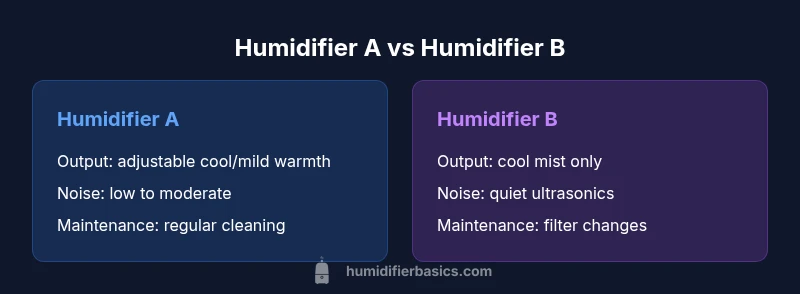
| Feature | Humidifier (generic) | Cool mist humidifier |
|---|---|---|
| Output temperature | Can be warm or cool depending on model | Always cool vapor |
| Mechanism | Evaporative, ultrasonic, or heated options (for warm-mist) | Ultrasonic or impeller-based with fans; some evaporative types use a wick |
| Safety considerations | Burn risk with warm-mist; place away from kids | Lower burn risk; still avoid spills and water exposure |
| Energy usage | Moderate to high if heating water | Typically energy-efficient; powered by fan/ultrasonic |
| Maintenance needs | Descaling near heating element; wick filters in some models | Regular cleaning; mineral buildup prevention; filters if present |
| Best for | General moisture needs; climate and safety guide choice | Smaller rooms, safety-focused households, quiet operation |
What's Good
- Clear distinction helps with decision-making based on safety and climate
- Cool mist options reduce burn risk around children and pets
- Wide range of models and prices are available
- Maintenance focuses on cleaning and mineral buildup prevention
Negatives
- Warm-mist variants carry burn risk; careful placement required
- Cool mist models can be noisier due to fans or ultrasonics
- Some models require filters or descaling, adding ongoing costs
- Hard water can cause mineral dust if distilled water isn’t used
Cool mist humidifiers are generally safer for households with kids, while warm-mist options suit colder climates.
Choose cool mist for safer operation and easier placement, especially in nurseries or bedrooms. Warm-mist can offer rapid humidity in dry winters but requires careful safety practices and more energy. Overall, matching room conditions and maintenance capacity is key.
FAQ
What is the difference between a humidifier and a cool mist humidifier?
A humidifier adds moisture to the air; a cool mist humidifier is a subtype that releases a cool vapor. The main differences lie in output temperature, safety, maintenance, and ideal room use.
A humidifier adds moisture to the air. A cool mist humidifier is a safe, non-heated option that releases a cool mist. The choice comes down to safety, maintenance, and where you’ll use it most.
Is a warm-mist humidifier safer for children than a cool-mist unit?
Warm-mist units heat water to produce steam, which can pose burn risks to children. Cool mist units have no heating element, reducing burn risk but still require careful placement and maintenance.
Warm-mist humidifiers heat water, which can burn kids if touched. Cool mist units don’t heat water, but you should still place them safely and keep them clean.
How loud are humidifiers, and does that affect choosing?
Noise levels vary by technology. Ultrasonic cool mist units tend to be very quiet, while evaporative models with fans can be louder. Warm-mist units may also have noticeable fan noise.
Most cool mist humidifiers are quiet, but some evaporative models can be a bit noisier. If you’re sensitive to sound, choose a quiet ultrasonics-based model.
Should I use distilled water in a humidifier?
Using distilled or demineralized water minimizes mineral buildup and white dust. Hard water increases scaling and can affect air quality and device performance.
Yes, distilled water helps reduce mineral dust and keeps your device cleaner longer.
How often should I clean a humidifier?
Clean your humidifier at least once a week and more often if you notice residue or musty odors. Descale as recommended by the manufacturer to prevent mold growth.
Clean it weekly, or more often if you notice residue. Descale when needed to keep it safe.
Is humidification important for nurseries?
Humidification can help with dry air-related discomfort in nurseries, but safety and easy cleaning are essential. Choose a model with a sealed reservoir and simple maintenance.
Humidifiers can help in nurseries, just pick a safe, easy-to-clean model and maintain it well.
The Essentials
- Define your space needs before buying
- Prioritize safety in households with children and pets
- Prefer cool mist for low burn risk and easy placement
- Regular cleaning is essential for all humidifiers
- Use distilled water to minimize mineral dust and residue