Humidifier vs Purifier vs Diffuser: A Practical Comparison
Explore the differences between humidifiers, purifiers, and diffusers. This analytical guide helps homeowners choose the right device for humidity, air quality, or scent, with practical tips for safe and effective use.


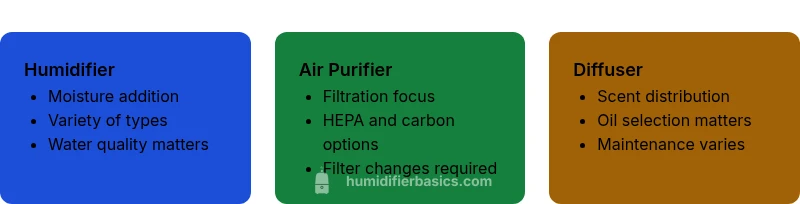
According to HumidifierBasics, the three devices serve distinct goals: a humidifier adds moisture to dry air, an air purifier removes contaminants, and a diffuser disperses scents or essential oils. For most homes, your first priority—comfort, clean air, or fragrance—will guide your choice. This comparison clarifies when to use each device and how they interact in shared spaces.
Defining the Trio: Humidifier, Purifier, Diffuser
Humidifier, purifier, and diffuser are common home devices, but they are not interchangeable. A humidifier increases relative humidity by releasing water vapor into the air. A purifier, often equipped with a filter or electrostatic mechanism, aims to reduce airborne particles, odors, and sometimes gases. A diffuser disperses essential oils or fragrance molecules into the space. Understanding these core roles helps you avoid buying a device that won’t solve your core problem. According to HumidifierBasics, the distinction matters because each device targets a different aspect of indoor air quality and comfort. That said, many homes benefit from using more than one device to address multiple needs, but careful planning is essential to avoid redundancy or conflicting effects.
The Primary Goals: Humidity, Clean Air, or Scent
Identifying your primary objective is the first step in choosing among humidifier, purifier, or diffuser. If your space routinely feels dry—cracked skin, static electricity, or chapped lips—a humidifier can restore comfortable moisture levels. If you notice lingering dust, odors, or seasonal allergies, a purifier might help by reducing particulates. If you want a gentle aroma or mood-enhancing fragrance, a diffuser can be a simple, targeted solution. HumidifierBasics emphasizes starting with a single goal to avoid over-purchasing and to simplify maintenance; you can layer devices later if needed, but plan placements and interaction rules first.
How Each Device Works: Technologies and Mechanisms
Humidifiers come in several types: ultrasonic, evaporative, and warm-mist variants. Ultrasonic units vibrate water into a fine mist, evaporative models use a wick/filter to evaporate water, and warm-mist devices boil water to release steam. Air purifiers commonly rely on HEPA filters, activated carbon for odors, and sometimes pre-filters or ionizers. Diffusers use ultrasonic vibration or nebulizing methods to disperse essential oils into micro-particles for inhalation and scent distribution. Each mechanism has different implications for noise, energy use, and maintenance. Understanding these basics helps you anticipate what to expect during daily use and how to care for the device over time.
Air Quality Implications: Humidity vs Contaminants
Humidity level and air cleanliness influence how comfortable and healthy a space feels. A humidifier can mitigate dryness that irritates skin and respiratory passages, but excessive humidity can encourage mold growth if not managed. Purifiers can reduce fine particles, pollen, and some gases, which may alleviate allergy symptoms and improve overall air freshness. Diffusers, while pleasant and mood-enhancing, do not improve humidity or clean air; they primarily provide scent distribution. According to HumidifierBasics analysis, using these devices in concert requires attention to balance: high humidity with a strong purifier can be beneficial, but too much moisture can undermine air quality in unexpected ways.
Maintenance, Cleaning, and Durability
Maintenance needs differ by device type. Humidifiers require regular tank cleaning, mineral buildup checks, and periodic replacement of any demineralization cartridges to prevent white dust. Purifiers rely on filter replacements and occasional deep cleans to maintain airflow and filtration efficacy. Diffusers need regular cleaning to prevent oil buildup and mineral deposits that can clog the mechanism. A realistic maintenance plan includes a weekly quick-clean for all devices, plus monthly checks of filters, seals, and water sources. Planning this maintenance helps extend device life and protects indoor air quality over time.
Noise, Energy, and Space Considerations
Most diffusers operate quietly, making them ideal for bedrooms or study spaces. Humidifiers vary in noise level depending on the type and fan speed; ultrasonic units tend to be the quietest, while evaporative models may generate a soft hum as the wick works. Purifiers often introduce more noticeable noise due to fans, especially at higher purifications modes. Energy use scales with motor activity and heating coils in warm-mist devices. Space planning matters: compact rooms may benefit from single, multi-functional devices, while larger rooms may require multiple units or a larger purifier for adequate coverage.
Safety and Use Guidelines for Shared Living Spaces
Safety considerations apply to every device. Keep humidifiers away from walls to prevent condensation and mold; use distilled or demineralized water to minimize mineral deposits. Replace purifiers’ filters as recommended by the manufacturer and avoid running multiple devices in direct contact with the same air stream, which can cause unintended interactions. For diffusers, follow essential oil safety guidelines, especially around children, pets, and respiratory sensitivities. The HumidifierBasics team emphasizes reading manuals carefully, avoiding oil concentrations that could irritate eyes or lungs, and ensuring good room ventilation when using any fragrance device.
Feature Comparison
| Feature | Humidifier | Air Purifier | Diffuser |
|---|---|---|---|
| Primary purpose | Humidity addition | Air cleaning (particles, odors) | Aromatherapy/fragrance distribution |
| Best for | Dry air relief in living spaces | Allergen reduction and odors | Mood and scent enhancement |
| Common technologies | Ultrasonic/evaporative/warm-mist | HEPA + carbon filters | Ultrasonic nebulizing or vibration |
| Maintenance frequency | Weekly cleaning; mineral checks | Filter replacement every 6-12 months (typical) | Regular cleaning to prevent oil buildup |
| Noise level | Low to moderate (varies by type) | Moderate (with fan speed) | Low to very quiet (ultrasonic) |
| Price range (rough) | $30-$300 | $60-$500 | $10-$60 |
| Best for | Moisture balance in dry climates | Clean air in high pollutant or allergen-prone settings | Scent and mood-focused spaces |
| Safety considerations | Water quality, mold risk with excess humidity | Filter maintenance, safe placement | Oil safety, avoid spills and skin contact |
What's Good
- Clarifies distinct roles to avoid buying the wrong device
- Helps set realistic expectations for humidity, air quality, and scent outcomes
- Encourages a safety-first maintenance approach
- Supports budget-aware decisions by outlining costs and upkeep
- Promotes flexible, staged setups when needs evolve
Negatives
- Three devices can create decision fatigue if goals aren’t defined
- Ongoing maintenance and energy use add to total ownership cost
- Diffusers require oil handling and cleaning that may bother sensitive individuals
- Purifiers do not affect humidity, limiting single-device solutions for moisture issues
Choose based on your primary goal: humidity, air cleanliness, or scent; for many homes, a targeted humidifier plus purifier pairing offers the best overall air quality.
Prioritize your space needs—moisture control for dryness, filtration for allergens, or fragrance for mood. If you face multiple issues, start with one focused device and layer in others as needed, mindful of maintenance and room dynamics.
FAQ
What is the main difference between a humidifier, purifier, and diffuser?
The humidifier adds moisture to the air, the purifier removes contaminants, and the diffuser disperses essential oils or fragrances. Each device targets a distinct aspect of indoor air quality and comfort, so choosing based on your primary need yields better results.
Humidifiers add moisture, purifiers clean air, and diffusers spread scent. Pick the device that matches your main goal to improve comfort and air quality.
Can I use a diffuser in a bedroom with a humidifier or purifier?
Yes, you can, but manage scent concentration and ensure devices are placed so that fragrances don’t irritate occupants or pets. Avoid placing diffusers directly near sleeping areas if sensitive individuals are present.
Yes, but keep diffusers away from immediate sleeping areas and use calm concentrations.
Do diffusers affect air quality or humidity?
Diffusers primarily disperse aroma molecules and do not significantly change humidity or air contaminant levels. They should not be relied on for moisture control or air purification.
Diffusers don’t clean air or adjust humidity; they mainly spread scent.
What factors should I consider when buying?
Room size, noise levels, maintenance costs, water quality, and safety considerations (children or pets) are crucial. Think about how you’ll use the device and where it will be placed.
Think about room size, noise, maintenance, water quality, and safety before buying.
Are there safety concerns with humidifiers or purifiers?
Yes. Regular cleaning prevents mold, mineral buildup, and bacterial growth. Use distilled water, replace filters as recommended, and follow manufacturer guidelines for placement and operation.
Yes—clean regularly, use clean water, and keep away from kids and pets.
Is one device enough for a whole home?
Single-room devices are common for targeted needs. Whole-home systems exist but may require professional installation and integration with ventilation. Consider your climate and home layout when planning.
Usually not; most homes use a combination of devices or a whole-house system for uniform coverage.
The Essentials
- Define your primary goal before buying
- Expect different maintenance for each device
- Balance humidity and filtration to avoid conflicting outcomes
- Diffusers are for scent, not air cleaning or humidity control
- Plan placement to optimize effectiveness and safety