Cold vs Warm Humidifiers: A Practical Comparison for Home Humidity
A practical, data-driven comparison of cold-mist and warm-mist humidifiers, covering safety, maintenance, energy use, and ideal home scenarios for 2026.


The choice between cold-mist and warm-mist humidifiers comes down to safety, maintenance, and room needs. Cold-mist units are generally safer around kids, while warm-mist units boil water for added purity but pose a burn risk and higher energy use. In practice, consider room size, cleaning cadence, and local tap-water quality to decide which works best for your home.
Understanding humidifier cold vs warm
When evaluating humidifier cold vs warm, it is crucial to weigh safety, maintenance, and room conditions. The HumidifierBasics team found that the choice often comes down to how you use the device and who shares the space. In general, cold-mist units use no heat and disperse a fine mist, while warm-mist units boil water to create vapor. This fundamental difference sets the stage for practical contrasts in safety, energy use, and cleaning needs.
In this guide, we break down the core distinctions and common myths. We also outline how to size a unit for your room and how water quality influences performance. By the end, you'll see which category aligns with your priorities, whether you want minimal upkeep, or warmer, cozier air during dry winters. The discussion keeps real-world scenarios front and center, helping homeowners and renters apply the right humidifier cold vs warm choice in their homes.
How Warm-Mist Humidifiers Work
Warm-mist humidifiers, also called vaporizers, heat water to boiling and release steam into the room. The heating element helps kill many microbes in the water, which can reduce the perceived risk of bacterial growth between cleanings. Because the mist is warm, it can feel more comforting in dry, cold rooms and may help with sore throats or cough symptoms in some people. However, the heating process consumes more electricity and adds a burn risk, especially in households with curious children or pets. In practice, warm-mist devices tend to have fewer visible deposits from minerals, since the heat can reduce mineral carryover, though the water must be clean enough to boil. If you’re sensitive to odors, you might notice a slight warmth in the air that some users actually prefer on chilly evenings.
From a practical standpoint, a warm-mist humidifier can be advantageous in very dry climates or during winter when heating systems pull moisture from the air. It is essential to place it away from high-traffic areas and to monitor the surface temperature to prevent accidental contact with hot elements. This section lays out how the heating element promotes reliability in humidity delivery while acknowledging the trade-offs in energy demand and safety.
How Cool-Mist Humidifiers Work
Cool-mist humidifiers rely on a fan or ultrasonic vibration to disperse a mist at ambient temperature. Because there is no heating, they use less electricity than warm-mist models, and there is no burn risk, making them popular for families with children. Ultrasonic cool-mist units produce a very fine mist, while evaporative models pull air through a wick filter to add moisture. Both variants require regular cleaning to prevent mold, bacteria, and mineral buildup from tap water, and in areas with hard water you’ll notice mineral dust that settles on furniture if you don’t use distilled water or a quality filter. Temperature stability in the room may feel slightly cooler with a cool-mist unit, which is a factor in warmer climates or summer months. Overall, cool-mist humidifiers provide strong humidity control with flexible attachment options, but cleaning cadence and water type matter more here than with warm-mist units.
Ultimately, cool-mist devices excel in safety and lower energy consumption, which makes them a practical default in many homes. The core caveat is ongoing maintenance and the potential for mineral dust if you rely on tap water.
Safety Considerations for Each Type
Safety is a major dimension in deciding between cold-mist and warm-mist humidifiers. Warm-mist units present a burn hazard if a child or pet can reach the heating element, and the exterior surfaces can get hot. For households with toddlers or high foot traffic, this risk is non-trivial. Cold-mist models eliminate the heat-related hazard, but they can spray fine droplets into the air that may irritate sensitive eyes for extremely close contact. Both types can harbor bacteria inside water tanks if not cleaned regularly. Use a hygrometer to track humidity levels and avoid over-humidifying, which promotes mold and dust mites. Always follow manufacturer instructions for water quality, cleaning intervals, and safe placement away from walls and sleeping areas. If you rely on Vicks or medicated inhalants, ensure compatibility with your humidifier type and consult product guidelines.
Maintenance and Cleaning Frequency
Maintenance drives performance for both cold-mist and warm-mist machines. No matter the type, you should empty, rinse, and dry tanks daily or every other day to prevent stagnation. Weekly deep clean with a mild vinegar solution or dedicated cleaner helps dissolve mineral build-up and kill residual microbes. Hard water increases scale, particularly in warm-mist devices where minerals can form in the heating chamber. Check filters monthly and replace as recommended by the manufacturer. Ensuring a consistent cleaning routine reduces odors and improves output. Regular maintenance also extends the device’s life and preserves air quality in the room.
Humidity Control and Room Sizing
The amount of moisture a humidifier can deliver depends on room size and air exchange rate. Warm-mist units often feel more effective in smaller spaces where humidification needs are intense, while cool-mist units can cover larger areas with multiple devices or larger fans. To achieve a comfortable humidity range (generally around 40-60 percent), you’ll need to match device output to room volume, doorways, and draft patterns. If you live in a multi-room home, consider multiple smaller units versus a single large unit connected to a humidistat. Understanding the interplay between air currents and humidity helps prevent over-humidification and reduces the risk of mold growth.
Energy Use and Running Costs
Energy costs are a practical differentiator between cold-mist and warm-mist humidifiers. Warm-mist devices heat water to boiling, which adds energy consumption that can be noticeable during the heating season. Cold-mist humidifiers use far less energy because they rely on fans or ultrasonic vibration. In the long run, this can translate into meaningful savings, especially in larger living spaces or continuous-use scenarios. Beyond electricity, consider filter or wick replacements and mineral-agnostic options, as these impact ongoing maintenance expenses. Your ultimate choice should balance energy efficiency with the desired humidity outcome and comfort level.
Noise, Comfort, and User Experience
Noise levels vary by model and technology. Ultrasonic cool-mist units tend to be quiet but may produce a high-frequency hum that some people notice. Evaporative cool-mist models are typically louder due to the fan, though modern designs have reduced this burden. Warm-mist vaporizers generally run quietly, but the heating element can create a soft heating sound and warm surfaces. Comfort is a personal factor: some people prefer the cooler mist of a night-time cool-mist unit, while others enjoy the warmth and perceived air quality improvements of a warm-mist device. In bedrooms or nurseries, prioritize low-noise models and consider a humidistat with a night mode.
Water Quality and Mineral Emissions
Mineral content in water affects both types of humidifiers. Tap water often contains minerals that can leave white dust on surfaces, especially with cool-mist ultrasonic models. Using distilled water or water with a lower mineral content can minimize this issue, though it adds cost. Warm-mist units may exhibit mineral buildup in the heating chamber if scales are allowed to accumulate, potentially impacting performance. A regular cleaning schedule and appropriate water choice help maintain clean output and reduce residue. If you have very hard water, filter-equipped or distilled-water strategies become more attractive for both types.
Use Case Scenarios: When to Pick Which
In modern homes, the decision often comes down to safety, space, and lifestyle. If you prioritize child- and pet-safety, a cool-mist model with proper cleaning and a humidity monitor is typically a good default. If you are in a dry climate and want a strong, tangible sensation of warmth in winter, a warm-mist device may feel more comfortable despite higher energy use. For allergy-prone households, regular cleaning and water quality control are critical in either category. Your personal health goals, maintenance tolerance, and energy considerations drive the final choice.
Decision Checklist: Quick Path to a Choice
- Check room size and occupancy; larger spaces may benefit from multiple cool-mist units or a larger warm-mist unit. - Assess safety concerns of children or pets around heating elements. - Review local water quality and decide whether distilled water is warranted. - Set up a humidity monitor and stick to a target range to avoid mold or dust mites. - Plan for ongoing maintenance to prevent odors and bacteria growth. This checklist helps translate the abstract differences into a concrete purchasing decision.
Conclusion and Next Steps
Selecting between humidifier cold vs warm is about balancing safety, energy use, and practical needs. By focusing on room size, water quality, and cleaning cadence, you can choose the option that provides comfortable humidity with manageable upkeep. For many households, a well-maintained cool-mist model offers a reliable baseline, while a warm-mist unit serves a niche for those seeking warmth and perceived cleanliness benefits during dry winters. Implement the checklist, monitor humidity, and adjust as seasons change.
Final Note on Humidifier Basics
The HumidifierBasics team recommends starting with a safe, low-cost cool-mist model and adding a humidistat for precise control. If you choose warm-mist, ensure children cannot reach the heater and maintain a strict cleaning routine. Your best long-term outcome is consistent maintenance paired with accurate humidity monitoring to ensure a healthier, more comfortable home.
Appendix: Quick Reference
- Warm-mist: boiling water, more energy, burn risk, potential for fewer mineral deposits but higher maintenance. - Cold-mist: no heat, safer around kids, needs regular cleaning to manage minerals and mold. - Both require humidity control and water-quality attention to avoid mold and dust mites.
Comparison
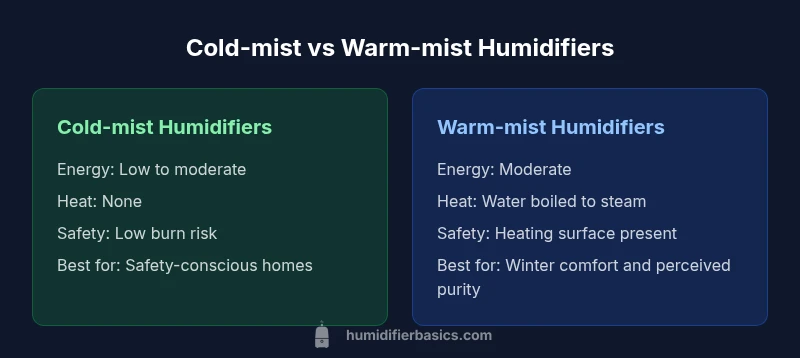
| Feature | Cold-mist humidifier | Warm-mist humidifier |
|---|---|---|
| Water temperature handling | Ambient-temperature mist | Water heated to boiling |
| Safety considerations | No heating element; burn risk low | Heating element; burn risk higher |
| Energy efficiency | Lower energy consumption | Higher energy consumption |
| Maintenance cadence | Frequent cleaning to prevent mineral dust | Regular cleaning; potential mineral buildup in heating chamber |
| Best for | Safety-focused homes and larger spaces with ongoing cleaning | Winter comfort and perceived purity in dry climates |
| Noise level | Typically variable; often quieter without heating | Generally quiet but depends on model and fan |
| Cost range | Lower upfront cost commonly | Higher upfront cost due to heating element and safety features |
What's Good
- Low burn risk with cold-mist models
- Typically lower energy usage
- Strong humidity control with regular cleaning
- Flexible for larger spaces when paired with multiple units
- No heat, reducing fire risk in vulnerable households
Negatives
- Mineral dust may appear with hard water
- Requires consistent maintenance to prevent mold
- Cold-mist may feel less warm or comforting in winter
- Cool-mist requires regular filter/wick replacement on some models
Cold-mist wins on safety and running costs; warm-mist wins on perceived warmth and microbe reduction when water quality is controlled.
Choose cold-mist if safety and maintenance predictability matter most. Choose warm-mist if you prioritize warmth and quick humidity delivery, provided you can manage higher energy use and stricter safety steps.
FAQ
What is the key difference between cold-mist and warm-mist humidifiers?
The main difference is heat: warm-mist devices boil water to create vapor, while cold-mist devices release mist at ambient temperature. This affects safety, energy use, and maintenance. Both types require regular cleaning to prevent microbial growth.
The main difference is heat. Warm-mist boils water, cold-mist does not. Both need regular cleaning for safe use.
Are warm-mist humidifiers safer for homes with allergies?
Allergy outcomes depend more on maintenance and water quality than the mist type. Regular cleaning and using distilled water can help reduce allergen exposure in both types.
Allergy safety depends on cleaning and water quality, not just the mist type.
Can I use tap water in both humidifier types?
You can use tap water in many models, but hard water can lead to mineral buildup and dust. Distilled or demineralized water typically reduces this issue for both types.
Tap water works in many models, but distilled water often helps avoid mineral dust.
Do humidifiers contribute to mold or mold-related odors?
Yes, improper cleaning or excessive humidity can promote mold and musty odors. Monitor humidity with a hygrometer and clean regularly to minimize risk.
Mold is a risk if you don’t clean properly or if humidity stays high.
How often should I clean my humidifier?
Most manufacturers recommend a thorough clean at least weekly, with quick daily rinses between uses. Hard water may require more frequent cleaning.
Clean weekly, rinse daily, and watch for mineral buildup with hard water.
Which humidifier is safer around kids and pets?
Cold-mist humidifiers generally pose fewer burn risks since there is no exposed heating element. Place units out of reach and supervise when possible.
Cold-mist is usually safer near kids; keep the device elevated and out of reach.
The Essentials
- Assess room size before choosing a type
- Prioritize safety in homes with children or pets
- Regular cleaning is essential for both types
- Water quality strongly affects performance
- Use a humidistat to avoid over-humidifying