Are Humidifier and Vaporizer the Same? A Clear Comparison
Explore whether humidifiers and vaporizers are the same, how they work, safety implications, and practical guidance to choose the right device for your home with insights from HumidifierBasics.


They are not the same. Humidifiers add moisture to the air without necessarily using heat, while vaporizers heat water to create steam. This core difference affects safety, energy use, and maintenance. For most homes, a humidifier is the safer, simpler option, with vaporizers offering quicker humidity in small spaces. Understanding the core differences—how they operate, where they excel, and the tradeoffs in noise, cost, and cleaning—helps you decide which device fits your lifestyle.
What are Humidifiers and Vaporizers? Definitions and Core Distinctions
For many homeowners, the question are humidifier and vaporizer the same is common. The short answer is no, they are not identical tools, though they share the goal of increasing indoor humidity. According to HumidifierBasics Team, a humidifier is a broad category of devices designed to add moisture to dry air, while a vaporizer is a specific type of humidifier that uses heat to produce steam. The practical difference matters: heat changes the humidity profile, safety considerations, and the user experience. Humidifiers can rely on cool-mist or warm-mist technology, each with its own pros and cons, and vaporizers fall into the warm-mist family because they boil water to create steam. Both can improve comfort in winter or dry climates, but they do so via different mechanisms. Understanding this distinction helps homeowners pick the right device for a living room, bedroom, or nursery. It also clarifies expectations around noise, mineral buildup, and ongoing maintenance. In this guide we will compare the two side by side, with a focus on real-world usage, safety, and long-term costs. If you’re evaluating based on space, family needs, or budget, this framework will help you decide whether to choose a humidifier or a vaporizer for your home.
How They Work: Mechanics Without and With Heat
Humidifiers add moisture to the air by releasing water as a mist or vapor without necessarily creating steam. Cool-mist models spray a fine mist using a fan to disperse droplets, while warm-mist units warm water to produce steam that cools as it exits the unit. Vaporizers are a subset of warm-mist humidifiers; they boil water to a high temperature and emit steam that mixes with room air. The heat source is the defining parameter; absence of heat means gentler, quieter operation and safer handling; presence of heat means faster humidity delivery but higher burn risk and energy use. In terms of the user experience, the difference is not just technical: it shapes where you place the device, how you clean it, and what water you can use. For instance, some users prefer cool-mist humidifiers in children’s rooms to reduce burn risk, while others opt for warm-mist vaporizers in their own bedroom for quicker relief of dry air sensations. Across both types, mineral content in the water can create white dust or mineral buildup, so many households choose distilled water or a good filtration system. From the perspective of are humidifier and vaporizer the same, this section shows that heat and delivery method are the primary axes of difference.
The Core Differences: Humidity Delivery, Safety, and Maintenance
The most visible differences between humidifiers and vaporizers come down to how they deliver moisture, safety implications, and upkeep. Humidifiers are broader and include cool-mist and warm-mist options, offering flexible humidity control across a room. Vaporizers, by contrast, are a subset of warm-mist devices that rely on boiling water to produce steam. This creates faster humidity changes in a given space but introduces burn risks and higher energy usage. Maintenance load also varies; vaporizers may require more careful cleaning to prevent mineral buildup from the boiling process, while cool-mist humidifiers can accumulate mold if not cleaned regularly. Perceived differences in noise and scent can influence user preference, with some people reporting a stronger mineral smell when mineral-rich water is used. Across both types, choosing the right water source, such as distilled water, reduces mineral residue and fog. Finally, the user experience—touchpoints, ease of use, and filter or wick changes—shapes how consistently you’ll use the device and the quality of the resulting humidity.
Safety Considerations for Homes with Children and Pets
Safety is a central factor when comparing humidifiers and vaporizers. Humidifiers generally pose lower burn risk, particularly cool-mist models, because there is no hot surface or boiling water involved. Warm-mist humidifiers still carry a modest burn risk but typically remain safer when used with proper placement away from curious hands. Vaporizers boil water and emit steam at high temperatures, creating a clear burn hazard for children and pets who might come into contact with the steam or hot surfaces. This risk is amplified in small bedrooms or shared living spaces where supervision may be limited. Beyond burns, both devices can disseminate mold spores or bacteria if they’re not cleaned regularly. Mineral buildup from hard water can lead to poor air quality and odor. To minimize risk, many households rely on distilled water and strict cleaning routines, keep units out of reach of little ones, and favor cool-mist humidifiers for nurseries or bedrooms where safety is paramount.
Cleaning, Maintenance, and Water Quality Impacts on Performance
Maintenance is a constant in the humidifier-vaporizer decision. Regular cleaning prevents mold, bacteria, and mineral buildup that can affect air quality and the device’s efficiency. Cool-mist humidifiers often require more frequent chemical or vinegar-based cleanings to prevent biofilm formation, while warm-mist models can accumulate mineral residue more visibly due to steam condensation. Water quality matters: distilled water minimizes mineral dust and scaling, whereas using tap water can increase the frequency of cleanings and descale cycles. The choice between humidifier and vaporizer also affects maintenance routines—vaporizers may require more frequent checks of the boiling chamber and venting system, while non-heated humidifiers emphasize wick or filter replacement and tank sanitation. As you plan maintenance, consider your household’s schedule, tolerance for cleaning tasks, and whether you prefer a device that requires fewer routine interventions. The aim is to sustain healthy humidity levels without introducing contaminants into the air you breathe.
Energy Use, Noise, and Cost Over Time
Energy efficiency and noise are practical considerations that influence long-term costs and comfort. Vaporizers, which boil water, typically consume more electricity than many cool-mist humidifiers and even some warm-mist units, leading to higher ongoing energy costs especially in rooms kept at steady humidity. Noise varies by model: many cool-mist humidifiers run in near-silent operation, while some warm-mist devices and high-output vaporizers produce more noticeable hum or boil sounds. Price expectations follow the same logic: basic humidifiers are often cheaper upfront, with cost rising for features like built-in hygrometers, multi-room coverage, and integrated filtration. Vaporizers may be more expensive initially due to their heating components, but they can deliver higher humidity quickly in a localized space. When evaluating total cost, also consider maintenance expenses, such as filter replacements, descaling solutions, and the potential need for distilled water. In short, choose based on whether you value lower energy use and quiet operation (typical of many humidifiers) or rapid humidity delivery in a small area (typical of vaporizers).
Room Size, Placement, and Choosing the Right Model
One of the most important practical questions is which device best suits your space. Humidifiers are generally designed to moderate humidity across larger rooms or multiple spaces, especially if they come with a fan-assisted delivery or multiple mist settings. Vaporizers, by design, are well-suited for small to mid-sized rooms where rapid humidity is desirable, but their steam output can create hot spots if positioned too close to walls or furniture. Placement matters for safety and effectiveness: keep units away from walls, curtains, and electrical outlets, and avoid areas where moisture could accumulate on sensitive surfaces. For nurseries and bedrooms, many households opt for cool-mist humidifiers with a sealed water reservoir and simple maintenance routines. In living spaces or home offices with more robust airflow, a low-profile warmer-mist humidifier can distribute humidity more evenly. When you’re trying to decide are humidifier and vaporizer the same, consider the room size, ceiling height, air circulation, and whether you prioritize quiet operation or rapid humidity changes.
Quick Decision Framework: When to Choose Humidifier vs Vaporizer
If you want practical decision steps, start by assessing room size and safety needs. For larger spaces or households with kids and pets, a cool-mist humidifier is often the safer default. If you need rapid humidity in a small space and are comfortable managing a higher burn risk, a warm-mist vaporizer might be appropriate, provided placement is careful and water safety is observed. Finally, consider maintenance willingness: easier-to-clean units with sealed reservoirs may win for busy households. Use distilled water to minimize mineral buildup and always follow the manufacturer’s cleaning schedule. By aligning these factors with your daily routine, you can decide are humidifier and vaporizer the same in practical terms, or if one is clearly the better fit for your home.
Common Myths Debunked and Practical Takeaways
There are several popular myths about humidifiers and vaporizers. A common misconception is that both devices cure respiratory conditions; in reality, they can help alleviate symptoms caused by dry air but do not treat medical conditions. Another myth is that all humidifiers are equally safe for children; safety depends on whether the device uses heat and how it’s placed in a room. The truth is that safest choices often hinge on heat usage, room size, and consistent cleaning. A practical takeaway is to identify your primary goal—noise level, energy consumption, or speed of humidity—and pick a device that aligns with that goal while following best practices for cleaning and water quality. Finally, always check product labels and manufacturer instructions to ensure compatibility with essential oils or other additives.
How to Read Manufacturer Specs and Labels
Understanding the specs can be challenging, but it pays off in choosing the right model. Look for room-size ratings, mist output, filtration requirements, and water type recommendations. Check if the device includes safety features like automatic shut-off when the water is low. Consider maintenance needs, such as filter replacements or descaling cycles. If you’re comparing humidifier vs vaporizer, the presence of a heating element is a central feature that influences energy use, safety, and upkeep. Use this practical checklist to compare models side by side and avoid misaligned expectations when you’re shopping for a new device.
Comparison
| Feature | Humidifier | Vaporizer |
|---|---|---|
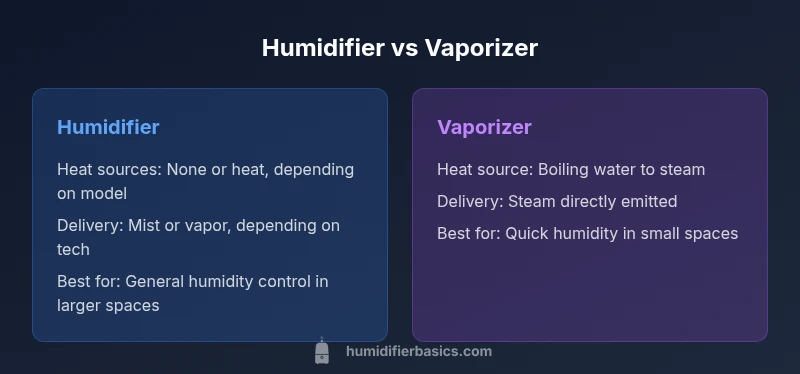
| Heat source | No heat (cool-mist) or heat (warm-mist) depending on model | Boils water to steam (heated) |
| Humidity delivery | Mist or fine droplets dispersed into room | Steam directly released into room |
| Best-use scenarios | General humidity control in larger spaces | Small spaces needing rapid humidity; quick relief |
| Safety considerations | Lower burn risk with cool-mist options | Burn risk due to boiling water; higher energy use |
| Maintenance | Regular cleaning; filter/wick replacements common | Frequent cleaning; mineral buildup management; chamber descaling |
| Water type | Distilled water recommended to reduce mineral dust | Tap water often acceptable but may require more cleaning |
What's Good
- Wide availability and model variety
- Cool-mist options reduce burn risk for households with kids
- Lower upfront costs for many basic models
- Quiet operation in many models
- Flexible placement options for larger rooms
Negatives
- Requires regular cleaning to prevent mold and bacteria
- Vaporizers involve boiling water and carry burn risk
- Heat-based units use more energy and can affect room temperature
- Mineral buildup can occur if using hard water without purification
Humidifier is the safer, more versatile everyday choice; vaporizers can be useful in specific small spaces or when rapid humidity is needed.
For most homes, choose a humidifier to balance safety, maintenance, and long-term costs. Vaporizers may serve niche needs but require careful handling and cleaning.
FAQ
Are humidifier and vaporizer the same?
Not exactly. Humidifiers add moisture without heat (cool-mist or warm-mist options), while vaporizers boil water to steam, delivering humidity quickly but with higher safety concerns.
They’re not the same; humidifiers add moisture without boiling water, while vaporizers boil water to steam.
Which is safer for homes with children?
Humidifiers with cool-mist features are typically safer, whereas vaporizers involve boiling water and can pose burn risks.
Cool-mist humidifiers are usually safer around kids.
Do I need to use distilled water?
Distilled water reduces mineral buildup and fog; many devices tolerate tap water but require more cleaning.
Distilled water helps minimize mineral residue in the tank.
Can I put essential oils in these devices?
Most devices aren’t designed for essential oils unless the manufacturer says so; oils can clog components.
Always check the manual before adding oils.
How should I clean a humidifier?
Regularly empty, rinse, and disinfect with a mild solution per manufacturer guidelines to prevent mold and bacteria.
Clean regularly following the owner’s manual.
Will these devices help with dry skin or congestion?
They can help comfort dry air and congestion when used correctly and sized for the room.
They can help with dry air and congestion when used properly.
The Essentials
- Choose humidifier for general home humidity and safety
- Vaporizers can deliver quick humidity in tight spaces but carry burn risk
- Regular cleaning is essential for both
- Consider room size and placement when selecting a model
- Use distilled water to minimize mineral buildup