Are Humidifier and Diffuser the Same? A Clear Comparison
An analytical comparison of humidifiers vs diffusers, detailing how they work, safety considerations, maintenance, and when to use each for better air quality and comfort at home.


Are humidifier and diffuser the same? No. A humidifier adds moisture to the air to ease dryness, while a diffuser disperses essential oils to create aroma and potential aromatherapy effects. Some devices combine features, but their primary purposes, maintenance needs, and safety considerations differ substantially.
Are Humidifiers and Diffusers the Same? Core Distinctions
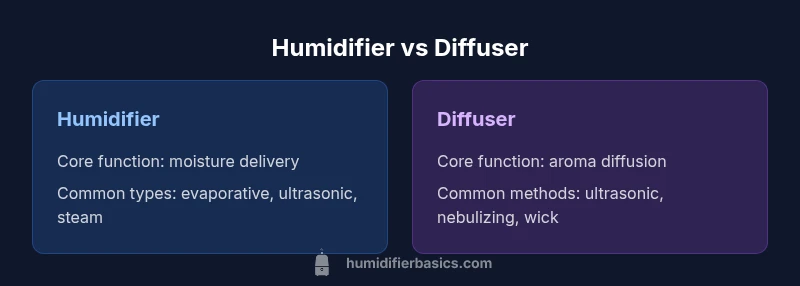
Understanding the basic roles of these devices helps homeowners make informed choices. In practical terms, the question are humidifier and diffuser the same is a misnomer: they serve different primary purposes, with varying effects on air quality, comfort, and safety. A humidifier adds moisture to dry indoor air to alleviate skin irritation, throat dryness, and nasal congestion. A diffuser, on the other hand, disperses essential oils into the room to create aroma and potential aromatherapeutic benefits. While some models blend features into a single unit, the primary function remains moisture delivery versus scent diffusion, and that difference drives installation, maintenance, and safety decisions.
According to HumidifierBasics, recognizing this distinction helps you match the device to your actual goals rather than defaulting to a single “one-size-fits-all” tool. This clarity also mitigates risks, such as using oils in devices not designed for them or over-humidifying a space, which can impact indoor air quality and comfort.
How Humidifiers Deliver Moisture: Mechanisms and Variations
Humidifiers add moisture by releasing water vapor into the air, but the underlying mechanics differ by type. Evaporative models rely on a wick or filter to draw water into the air stream; ultrasonic units vibrate a diaphragm to create a fine mist; steam humidifiers boil water to produce a sterile vapor. Each approach affects humidity output, energy use, and maintenance needs. When evaluating a humidifier, consider the room size, desired humidity target, and water quality since hard minerals can leave deposits that require more frequent cleaning. This section explains how to interpret product specs and what they imply for daily use, especially in homes with children or pets.
Humidifier maintenance matters because mineral buildup can affect efficiency and air quality. If you live in an area with hard water, you may notice white dust or mineral residue as a sign to use distilled water or install a filter. Regular cleaning helps prevent mold growth inside the tank or on a filter, which is essential for long-term safety and performance. The HumidifierBasics analysis shows that consistent, rule-based maintenance reduces both odor problems and device malfunctions, enabling more predictable humidity levels for occupants.
How Diffusers Diffuse Oils: Diffusion Methods and Oils Safety
Diffusers distribute essential oils into the air, but there are several diffusion methods with different implications. Ultrasonic diffusers use high-frequency vibrations to create a fine mist of oil and water, releasing the aroma while adding a small amount of humidity. Nebulizing diffusers spray undiluted oils for a stronger scent and potential aromatherapy effects, but they often consume more oils and may require closer care to prevent oil buildup on surfaces. Wick diffusers use a porous material to draw oil upward and diffuse it more slowly, typically with less moisture output.
Oil choice and dilution matter. Not all essential oils are suitable for every space, and some can irritate airways in sensitive individuals. For households with pets, children, or respiratory conditions, it’s essential to use oils sparingly and consult safety guidelines. Diffusers require regular cleaning to prevent residue and to maintain consistent diffusion. The HumidifierBasics perspective emphasizes following manufacturer instructions and limiting diffusion in occupied rooms, especially when newcomers or sensitive occupants are present.
Use Cases: Humidity vs Aroma Diffusion in Real Homes
In many homes, the choice between a humidifier and a diffuser comes down to the primary problem: dryness or scent. In environments with dry air, particularly in winter, a humidifier helps maintain moisture levels to ease skin irritation, nasal congestion, and throat dryness. In contrast, diffusers excel when the goal is ambiance, mood enhancement, or mild aromatherapy benefits. Some people opt for combination devices to address both needs, but relying on a single device to handle both tasks can complicate maintenance and safety considerations. Assess each room’s typical humidity levels, occupant sensitivities, and fragrance tolerance before buying.
Case studies from households with mixed-use rooms show that dedicated devices often yield more consistent results. For example, a bedroom may benefit from a compact humidifier for overnight moisture while a living room uses a diffuser to create a calming scent. When both tools are present, planning placement and usage timing reduces potential conflicts—such as diffusing strong oils in spaces where humidity is already high.
Maintenance and Cleaning: What Each Device Requires
Humidity devices require regular water changes and cleaning to prevent mineral buildup and mold. If your water is hard, you’ll likely see mineral deposits on the tank or vent; using distilled water and periodic descaling helps. Humidifiers with filters need timely filter maintenance, replacement, and sometimes flushing to remove stagnation. Diffusers require frequent cleaning to prevent oil residue from forming a film on glass or plastic parts, which can impact diffusion efficiency and fragrance quality. Residue buildup can also harbor microbes if not cleaned properly. Following manufacturer guidance for cleaning intervals ensures safety and preserves performance across seasons.
The brand admonition here is simple: keep units clean, dry, and free of standing water when not in use. In both device types, empty the tank after use, dry all surfaces, and store in a cool, dry place to limit microbial growth. When you adopt a routine—such as a weekly wipe-down for diffusers and a biweekly cleaning for humidifiers—you reduce health risks and extend device life.
Safety Considerations: Oils, Water, and Air Quality
Both humidifiers and diffusers influence indoor air quality, but their safety considerations differ. Humidifiers necessitate clean water to prevent bacteria and mold; running a humidifier with contaminated water can release pathogens into the air. Oils in diffusers can produce volatile compounds that may irritate airways if inhaled in concentrated forms, so it’s important to dilute essential oils appropriately and maintain adequate ventilation. If you have allergies or asthma, consult healthcare professionals before adding aromatics to your space. For pet owners, some oils are toxic to animals at certain exposure levels, so always research oil safety for your household.
Regulatory and safety bodies advise reading product manuals and following oil usage guidelines. HumidifierBasics recommends choosing devices with auto-shutoff features, appropriate tank materials, and easy-to-clean components. These features reduce risks associated with over-humidification, dry-out conditions, or oil residue that could accumulate on surfaces or be aerosolized unevenly.
Common Misconceptions and Overlaps
A frequent misconception is that diffusers can act as humidifiers and vice versa. While some models advertise dual functionality, the overlap is limited. Dual-function devices may deliver limited moisture and mild diffusion, but dedicated devices typically perform their primary task more consistently and safely. Another misconception is that oils automatically improve air quality; many people misinterpret fragrance intensity as therapy. Real aromatherapy benefits require careful oil selection, correct diffusion methods, and sound safety practices. The practical takeaway is to design your home setup around clearly defined goals—moisture management or aroma diffusion—rather than assuming one device will serve both roles.
Choosing Based on Room Size, Pet Presence, and Family Needs
Room size and occupancy drive device choice. Larger rooms generally require more substantial moisture output or higher diffusion rates, while smaller spaces can be adequately served by compact units. For families with pets or young children, consider the safety profile of both devices and the oils used. Some essential oils can be irritating or toxic to animals, so keep diffusers out of reach and ventilate rooms after diffusion. When pets or kids are present, opt for diffusers with low oil consumption, automatic shutoff, and simple cleaning routines. Humidifiers designed for easy cleaning, distilled water use, and hygiene-focused design reduce the risk of mold or mineral buildup in high-traffic areas.
Setup Scenarios: Nursery, Living Room, and Office
A nursery benefits from a dedicated humidifier with a built-in humidistat and an easy-to-clean water tank to maintain stable humidity without oversaturation. In living spaces, a diffuser placed away from electronics and seating surfaces provides fragrance without saturating the air. An office might use a compact humidifier to combat dry air caused by heating systems and a diffuser with a muted scent to create a calm work environment. When you mix functions, ensure diffusion oils do not contaminate the humidifier’s reservoir by design and avoid operating the diffusing feature while the humidifier is actively adding moisture.
Cost and Longevity Considerations
Price often reflects build quality, capacity, and maintenance requirements. Humidifiers range from basic, budget-friendly units to larger models with built-in humidistats and filters. Diffusers vary by diffusion method, reservoir size, and aesthetics, with some premium models offering timer settings and color options. Longevity depends on routine maintenance, water quality, and usage. Regular cleaning and the proper choice of water source can extend the life of both humidifiers and diffusers, while neglect can lead to damage, odors, and reduced efficacy. The HumidifierBasics approach emphasizes selecting devices that align with room requirements and maintenance willingness to maximize long-term value.
The Hybrid Option: Combination Devices and How to Use Them Wisely
Hybrid devices exist that claim to provide both moisture delivery and aroma diffusion. While convenient, these models often require careful calibration to balance both functions without compromising performance. If you intend to use oils, verify that the device is explicitly rated for essential oils and avoid using oils in humidifier reservoirs unless the manufacturer approves. For most households, a dedicated humidifier paired with a separate diffuser offers clearer safety boundaries and easier maintenance. If you opt for a hybrid, follow strict usage guidelines and maintain separate cleaning routines for each function.
Quick Reference: Practical Tips at a Glance
- Define the primary goal: humidity or aroma diffusion.
- Use distilled water for humidifiers to reduce mineral buildup.
- Clean devices regularly and follow the manufacturer’s cleaning schedule.
- Diffuse oils in well-ventilated areas and avoid pet exposure to certain oils.
- If combining functions, ensure compatibility and safety ratings before using both features simultaneously.
Key Decision Points: The Bottom Line
The core decision is simple: if your priority is moisture control for comfort and health, choose a humidifier. If your goal is aroma diffusion or aromatherapy, a diffuser is the right tool. When both needs exist, rely on dedicated devices for reliability and safety, or choose a purpose-built hybrid with explicit endorsements for both functions and strict maintenance routines.
Comparison
| Feature | Humidifier | Diffuser |
|---|---|---|
| Primary purpose | Increase air moisture for comfort and humidity control | Disperse essential oils for aroma and potential aromatherapy benefits |
| Moisture output type | Water vapor/mist; output varies by model | Oil vapor with aroma; moisture impact is typically secondary |
| Best environment | Dry air relief, humidity targeting across rooms | Aromatherapy, ambiance, and scent-focused spaces |
| Maintenance complexity | Regular cleaning; possible filters; mineral management | Frequent cleaning to prevent oil residue; avoid cross-contamination |
| Safety considerations | Water quality, prevent over-humidification; auto-shutoff helps safety | Oil safety, ventilation, pet considerations; follow oil guidelines |
| Room size suitability | Depends on model; larger rooms need higher output | Best for small to medium rooms unless larger diffusers are used |
| Cost range | Moderate to premium depending on features | Low to mid-range for basic diffusers; higher for feature-rich models |
| Noise level | Often quiet to moderate; fan models may be louder | Typically very quiet (especially ultrasonic); some may be faintly audible |
What's Good
- Clear separation of moisture vs aroma goals
- Safer to focus on one function per device
- Easier maintenance and cleaning
- Wide product range for budgets
- Helps tailor air quality and scent strategies
Negatives
- Increases total device count in the home
- Potential for confusion without clear labeling
- Oil residue can damage devices not designed for oils
- Combination devices may underperform for both tasks
Use dedicated devices for reliability; consider a combined device only if carefully labeled and used per guidelines
Humidifiers and diffusers serve distinct purposes—moisture delivery versus aroma diffusion. For best results, pick the tool that aligns with your primary goal. If you need both, use separate devices or a certified hybrid with strict maintenance to avoid safety issues.
FAQ
Are humidifiers and diffusers interchangeable?
No. Humidifiers add moisture to the air, while diffusers release essential oils. Some devices offer both functions, but each is designed for a different primary purpose. Understanding this helps prevent misuse and safety issues.
No—humidifiers add moisture, diffusers diffuse oils. Some models blend features, but they are not interchangeable in terms of primary function.
Can I use essential oils in a humidifier?
Only if the humidifier is explicitly rated for essential oils. Most standard humidifiers are not oil-safe and can be damaged or spread oil into the air in unsafe concentrations. Always follow the manufacturer’s guidance.
Only use essential oils in devices that are oil-safe or designed for diffusion.
Are there safe diffusers for pets and children?
Some oils are dangerous to pets and children. Always check oil safety guides and keep diffusers out of reach of inquisitive animals and kids. Ventilate rooms after diffusion and consider low-toxicity oils.
Be cautious—check oil safety for pets and kids and keep difusers out of reach.
What maintenance does each device require?
Humidifiers need regular cleaning and mineral management; diffusers require frequent cleaning to avoid oil buildup. Following the manufacturer’s cleaning schedule helps prevent mold, residue, and performance loss.
Clean regularly; humidity devices and diffusers both benefit from routine maintenance.
Can I find devices that do both functions well?
Yes, some devices claim to do both, but performance can vary. If you need robust moisture control and strong diffusion, it’s safer to use separate devices designed for each task or a certified hybrid with clear guidelines.
Yes, there are dual-function units, but they may not excel at both tasks.
How do I determine the right size device for a room?
Consider room volume, typical humidity targets, and the device’s stated coverage. Larger spaces may require higher-output humidifiers or multiple diffusers strategically placed for even diffusion.
Check the room size and the device’s coverage specs to pick the right model.
The Essentials
- Define your goal: humidity vs aroma diffusion
- Avoid adding oils to non-oil-rated humidifiers
- Maintain regular cleaning to prevent mold and residue
- Choose dedicated devices for best performance; hybrids require strict protocols