Difference Between Humidifier and Vaporizer: A Practical Guide
Learn the difference between humidifier and vaporizer, how each works, their safety considerations, maintenance needs, and practical tips to choose the right device for your home.


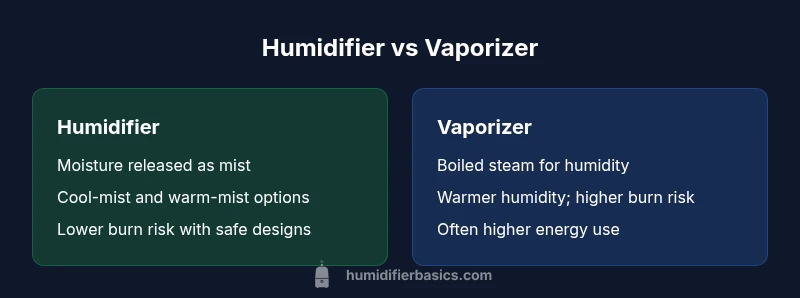
Understanding the difference between humidifier and vaporizer helps homeowners decide which device fits their space. Humidifiers release water vapor into the room, increasing ambient humidity, and come in cool-mist, warm-mist, ultrasonic, and evaporative forms. Vaporizers boil water to produce steam that humidifies the space directly. Each method affects safety, maintenance, and room suitability, so choosing correctly matters for comfort and health.
What is a Humidifier?
A humidifier is a device designed to add moisture to dry indoor air. According to HumidifierBasics, understanding the difference between humidifier and vaporizer helps homeowners decide which device fits their space. Humidifiers release water vapor into the room, increasing ambient humidity. They come in several forms (cool-mist, warm-mist, ultrasonic, evaporative) and can be used in bedrooms, living spaces, or home offices. Benefits include relief from dry skin, nasal irritation, and better overall comfort, especially in dry climates. Safety considerations matter: cool-mist models are typically safer around kids, while hot-water variants carry a burn risk. Maintenance involves regular cleaning to prevent mineral buildup and microbial growth, especially when using mineral-rich tap water. When choosing, match the device to room size, desired mist type, and maintenance preferences, and plan for regular filter changes or descaling as needed.
What is a Vaporizer?
A vaporizer, sometimes called a steam inhaler, heats water to produce steam that is released into the surrounding air. Vaporizers can provide targeted humidity and may feel warmer to the skin, which some users find more soothing for congestion. They typically operate by boiling water inside a sealed chamber and releasing steam through a spout or nozzle. Because the steam is hot, vaporizers carry a higher burn risk if accessed by children or careless pets. Using distilled water can mitigate mineral buildup and ensure cleaner steam. As with humidifiers, regular cleaning is essential to prevent mold and bacteria growth on internal surfaces.
How They Produce Humidity
Humidifiers add moisture to the air by releasing cool or warm mist, depending on the model. Ultrasonic units vibrate a diaphragm to create fine droplets, while evaporative models use a wick and a fan to evaporate water into the room. Vaporizers heat water to produce steam that disperses into the environment. The primary distinction is that humidifiers generally emulsify moisture into ambient air, whereas vaporizers release steam directly into the room with a heat source involved. This affects safety, energy use, and the potential for mineral residue in the air.
Common Technologies: Ultrasonic vs Evaporative vs Steam
Ultrasonic humidifiers use high-frequency vibrations to create a fine mist with minimal noise. Evaporative models rely on a wick filter and a fan to blow air through moistened wicking material, naturally regulating humidity. Warm-mist (steam) vaporizers boil water to generate steam that cools as it leaves the unit, delivering high-temperature moisture and sometimes visible vapor. Each technology has trade-offs: ultrasonic units are quiet and energy-efficient but can release mineral dust if using hard water; evaporative units self-regulate humidity but require regular filter changes; steam vaporizers offer hot moisture but require careful handling around children and pets.
Health and Safety Considerations
Safety is a core factor when choosing between humidifier and vaporizer. Humidifiers with cool-mist output are generally safer for households with kids and pets, reducing the risk of burns. Vaporizers emit hot steam, which can scald if touched, so placement and supervision are crucial. Both devices can spread minerals and microbes if not cleaned regularly or if hard water is used; opting for distilled or demineralized water can help reduce residue. Monitoring indoor humidity levels helps prevent mold growth and dust mite proliferation, which benefit people with allergies or asthma.
Maintenance, Cleaning, and Hygiene
Regular cleaning is essential for both humidifiers and vaporizers to prevent microbial growth. Empty, rinse, and dry the device daily when in use and perform a deeper clean weekly with a mild vinegar solution or manufacturer-recommended cleaner. Mineral deposits are common with tap water, so descaling and using distilled water can mitigate buildup. Replace filters on schedule and inspect seals for cracks. A well-maintained unit not only improves air quality but also extends the device’s life and preserves performance.
Noise, Energy Use, and Operating Costs
In general, humidifiers vary in noise and energy usage based on technology. Ultrasonic and evaporative models tend to be quieter and energy-efficient, while steam vaporizers use more energy due to the heating element. Operating costs include electricity, filter or wick replacements, and water usage. For households seeking a balance of quiet operation and simplicity, a high-quality ultrasonic humidifier with routine cleaning is often a practical choice. If you need intense, fast humidity in a small space, a vaporizer can be effective but requires careful supervision around children.
Use Cases: Bedrooms, Offices, Nursery
Bedrooms benefit from humidifiers that maintain comfortable humidity without excess noise. A nursery may prioritize cool-mist humidifiers for safety, paired with a hygrometer to monitor humidity. Home offices can tolerate a broader range of devices, but noise and maintenance schedules should be considered. In larger living spaces, evaporative or high-capacity ultrasonic models can maintain consistent humidity more evenly. The choice should reflect room size, occupant safety, and typical daily routines.
Choosing Criteria: Room Size, Humidity Needs, and Water Quality
Key decisions include room size, desired humidity level, and the quality of water used. For larger rooms, select a unit with adequate output and coverage. If you have sensitive nasal passages or respiratory conditions, the type of mist (cool vs warm) can influence comfort and safety. Water quality matters: mineral-rich tap water increases residue and may require more frequent cleaning. Filters, descalers, and maintenance intervals should align with your household routine and budget.
Practical Tips for Safe Use
- Place devices on a stable, elevated surface away from edges and direct heat sources. - Use distilled or demineralized water to minimize mineral buildup. - Clean the unit regularly and replace filters as recommended by the manufacturer. - Monitor humidity levels with a hygrometer to avoid over-humidification and mold risk. - Keep hot-mist vaporizers away from children and pets; supervise usage in shared spaces.
Common Myths and Misconceptions
A common misconception is that all moisture devices sanitize the air. While they can improve humidity, they do not replace air filtration or cleansing. Another myth is that hotter steam is always better; in reality, the optimal humidity range depends on room conditions and occupant health. Finally, some claim that more expensive models are always safer; safety depends on correct use, placement, and maintenance.
How to Verify You Need a Humidifier vs Vaporizer
Start with a room-by-room assessment. If you need broad, gentle humidity across a living area and safer operation around kids, a humidifier is typically suitable. If you require targeted humidity in a small area and can manage burn risk, a vaporizer might fit. Consult a healthcare professional if you have household members with severe allergies or asthma. Assess your tolerance for maintenance tasks and water type before purchasing.
Comparison
| Feature | Humidifier | Vaporizer |
|---|---|---|
| Humidity Delivery | Releases mist into room (cool or warm) | Boils water to steam and releases warmth with humidity |
| Safety Profile | Generally safer with cool-mist options; hot-mist models require caution | High burn risk due to exposed hot steam |
| Maintenance | Regular cleaning; mineral buildup risk with hard water | Regular cleaning; more frequent descaling; mineral buildup possible |
| Best For | General room humidification, safer households with kids/pets | Targeted humidity in small areas; perceived warming effect |
| Energy Use | Varies by model; often energy-efficient (especially ultrasonic) | Typically higher due to heating element |
| Water Type | Tap water with occasional filters; distilled water reduces residue | Distilled water recommended to minimize scale and bacteria |
| Common Variants | Cool-mist, warm-mist, ultrasonic, evaporative | Steam vaporizers; some models include aroma options (with caution) |
What's Good
- Improves overall room humidity with broad coverage
- Safer cool-mist options for households with children/pets
- Wide range of models and price points
- Low maintenance options exist for certain technologies
Negatives
- Requires regular cleaning to prevent mold, bacteria, and mineral buildup
- Some models can be noisy or bulky for small spaces
- Steam vaporizers pose burn risks and require strict safety measures
- Hard-water minerals can accumulate without distilled water or proper descaling
Humidifier is generally the better all-around choice for home humidity; vaporizers can be useful for targeted, warmer moisture in small spaces
Choose a humidifier for broad, safer, and easier maintenance in most homes. Opt for a vaporizer only if you need targeted, warmer humidity in a smaller area and you can manage the safety requirements. Consider water quality and cleaning needs in either case.
FAQ
What is the main difference between a humidifier and a vaporizer?
The main difference is how moisture enters the air. Humidifiers release mist (cool or warm) to humidify a room, while vaporizers boil water to produce steam that humidifies directly in the space. Safety and maintenance needs also differ between the two.
The key difference is delivery: humidifiers mist the air, vaporizers steam it. Choose based on room safety and maintenance expectations.
Are humidifiers safer for households with children?
Generally yes, especiallyCool-mist humidifiers reduce burn risk compared to steam vaporizers. However, all devices require supervision around children and proper placement. Regular cleaning remains essential to prevent mold and bacteria.
Yes, cool-mist humidifiers are usually safer for kids, but safety depends on placement and maintenance.
Do vaporizers kill bacteria in the water?
Vaporizers boil water, which can reduce microbes in the steam. This does not guarantee complete sterilization of the device or the room air, so ongoing cleaning is important.
Boiling can kill some microbes, but you still need regular cleaning to prevent buildup.
Can I use essential oils in humidifiers or vaporizers?
Many devices are not designed for essential oils; using oils can damage parts or create air quality issues. If you want fragrance, use devices that specifically support oils or opt for compatible diffusers.
Some devices aren’t built for oils—check the manufacturer’s guidance first.
Which is cheaper to run, a humidifier or a vaporizer?
Costs vary by model and usage. In general, humidifiers with efficient motors and cool-mist designs are cheaper to run than steam vaporizers, which rely on heating elements.
Humidifiers tend to cost less to run than vaporizers because they don’t always need to boil water.
Is a humidifier better for sleep?
For many people, a quiet humidifier can improve comfort and reduce nasal congestion during sleep. The warmth or coldness of the mist and device noise level can influence sleep quality.
Many people sleep better with a quiet humidifier that keeps air comfortable.
The Essentials
- Match device type to room size and safety needs
- Keep water quality high to minimize mineral buildup
- Prioritize regular cleaning to protect air quality
- Humidifiers are typically best for whole-room humidity; vaporizers offer focused, warmer humidity
- Always monitor humidity to prevent mold and condensation risks