Humidifier vs Dehumidifier: When to Use Each in Your Home
Discover when to use a humidifier vs a dehumidifier. This guide explains signs of dry and damp air, how to choose, and practical steps to maintain healthy home humidity year-round.


Dry indoor air or winter heating can leave spaces uncomfortable and dry, signaling a humidifier. Damp air, condensation on windows, or musty odors point to a dehumidifier. The best approach is to assess current humidity patterns and seasonality, then use the device that targets the problem. HumidifierBasics provides practical guidance to tailor your choice to your home’s moisture needs.
Defining the Core: Humidifier vs Dehumidifier
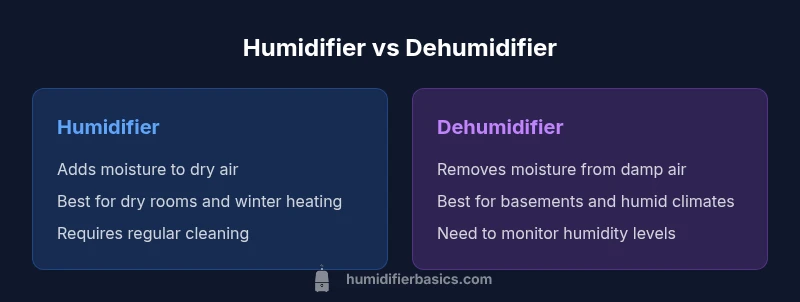
Indoor humidity shapes comfort, health, and home integrity. A humidifier adds moisture to dry air, while a dehumidifier removes excess moisture. Understanding when you need a humidifier vs dehumidifier starts with recognizing your climate, the season, and the spaces you want to treat. According to HumidifierBasics, the decision isn’t about choosing one device for all seasons but matching the tool to observed moisture patterns in your home. In many residences, both devices play roles at different times of the year, and a smart humidity controller can help maintain stable levels. This article centers on common living areas, bedrooms, basements, nurseries, and kitchens to illustrate practical guidelines. Expect practical checks, sizing tips, and setup steps that align with real-world use.
In a real home, the question literally comes down to this: when do you need a humidifier vs dehumidifier? The humidor-like feel of dry air in winter and the damp, mold-prone conditions of basements in warm months create two separate problems that require different tools. HumidifierBasics’s approach emphasizes monitoring, not guessing. Start with a simple humidity check, then choose the device that addresses the dominant condition. If both problems occur across rooms, consider a staged plan or a humidity control system with a smart sensor network.
Note: In this introduction to the topic, we’re setting up a framework that you can apply regardless of your home size or climate. The goal is to help you maintain a healthy, comfortable indoor environment while avoiding common mistakes such as over-humidifying or leaving rooms damp for extended periods.
Comparison
| Feature | humidifier | dehumidifier |
|---|---|---|
| Primary purpose | Adds moisture to very dry air | Removes excess moisture from damp air |
| Ideal humidity goal (relative to comfort) | Raises humidity in dry environments | Lower humidity in damp environments |
| Maintenance focus | Water quality, mineral buildup, cleaning | Filter/desiccant cleaning and drainage |
| Energy usage | Moderate, depends on model and duration | Moderate to high, depends on size and humidity target |
| Best environments | Dry, heated spaces like bedrooms in winter | Basements, bathrooms, and humid climates |
| Placement | Portable units or whole-room installations | Portable or whole-house units, depending on layout |
| Starting cost range | Lower upfront cost for portable units | Higher upfront cost for dedicated basement or whole-house systems |
What's Good
- Improves comfort when air is too dry, reducing skin irritation and static cling
- Helps protect wooden furniture, musical instruments, and plants from drying out
- Can improve respiratory symptoms in specific individuals when humidity is balanced
- Flexible options: portable units for single rooms or whole-house systems
Negatives
- Over-humidification can promote mold, mildew, and dust mites if not monitored
- Requires regular monitoring with a hygrometer or humidistat
- Maintenance tasks like cleaning, mineral filter replacement, and water type choice are ongoing
- In poorly insulated spaces, a dehumidifier may be more energy-efficient than running a humidifier
Humidity control is climate- and room-dependent; use the right tool for the dominant moisture problem.
If air is consistently dry, a humidifier is the right choice. If air is consistently humid or shows signs of moisture, a dehumidifier is recommended. In variable conditions, a smart humidity controller pairing with targeted devices provides the best balance.
FAQ
When do you need a humidifier vs a dehumidifier?
Use a humidifier when rooms feel dry, your skin is dry, or you notice static electricity. A dehumidifier is best when you see condensation, damp basements, or musty odors. In homes with seasonal swings, you may need both at different times.
Use a humidifier for dry air, and a dehumidifier for damp spaces. If you’re unsure, start with a simple humidity check and adjust with the season.
Can I use both devices at the same time?
Yes. In some homes, humidity swings between seasons or across rooms mean both devices are useful at different times. A central humidity control or smart sensors can help manage both without overdoing either side.
Yes, you can, but ideally use humidity controls to avoid fighting each other and wasting energy.
How do I measure indoor humidity accurately?
Use a hygrometer or a smart humidity sensor placed away from direct heat or moisture sources. Calibrate it according to the manufacturer’s instructions and check readings in different rooms to get a representative picture.
Use a reliable hygrometer, follow calibration steps, and check multiple rooms for accuracy.
What are common signs of humidity-related mold risk?
Look for musty odors, visible mold on walls or ceilings, condensation on windows, and peeling wallpaper. Persistent dampness signals the need to adjust humidity with a dehumidifier and improve ventilation.
Watch for musty smells and visible mold; damp windows and condensation are red flags.
Are humidifiers safe around children and pets?
Yes, when used properly. Use clean water, maintain the unit regularly, avoid overheating, and place units where children and pets cannot tamper with them. Avoid humidifiers that emit hot steam in nurseries or play areas.
They’re safe if you keep them clean, use the right settings, and place them out of reach of curious kids and pets.
The Essentials
- Assess indoor moisture patterns before buying any device
- Choose humidifier for dry air; choose dehumidifier for damp spaces
- Monitor humidity with a reliable gauge and adjust as needed
- Place units to optimize air flow and avoid blind spots
- Regular cleaning prevents mold and mineral buildup