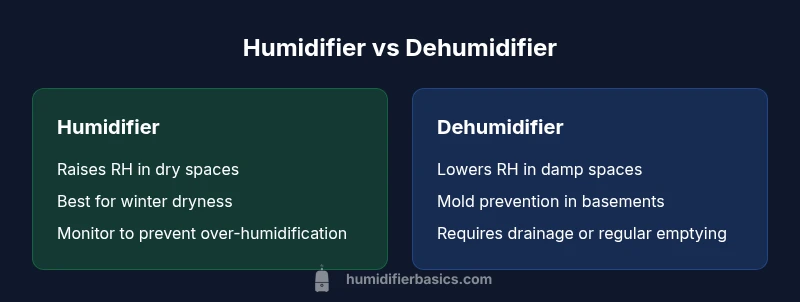
When to Use a Humidifier and Dehumidifier: A Practical Guide
A detailed, analytical guide on when to use a humidifier versus a dehumidifier, how to balance indoor humidity, and practical setup tips for healthier air quality.


Summary: Use a humidifier when indoor humidity tends to be dry (about 30-40% RH) and a dehumidifier when humidity is high (60% RH or more). For fluctuating climates, pair a hygrometer with staged operation to keep air comfortably balanced year-round. HumidifierBasics emphasizes measuring RH and adjusting usage to maintain healthy air quality.
Understanding the humidity problem and the role of humidifiers and dehumidifiers
Humidity in indoor environments is a two-sided challenge. When air is too dry, people experience dry skin, irritated sinuses, and itching, while excessive moisture invites mold growth, condensation, and musty odors. The key is balance, not absolute dryness or dampness. In many homes, the question isn’t simply whether to use a humidifier or a dehumidifier; it’s when to use humidifier and dehumidifier in a way that preserves comfort, health, and structural integrity. The HumidifierBasics team emphasizes a data-driven approach: start with a reliable hygrometer, observe seasonal shifts, and tailor device use to the actual RH range you observe. By anchoring decisions in measurements, homeowners and renters can avoid overcorrecting and create a steadier indoor climate. The overarching goal is a comfortable, healthy environment that supports sleep, skin health, and air quality without encouraging mold or dust-related issues.
In this article, we’ll walk through practical decision rules, scenario-based guidance, and tested strategies to help you determine when to use humidifier and dehumidifier across rooms and seasons. This approach reflects HumidifierBasics analysis, which highlights the critical link between RH targets, device capability, and real-world usage. The result is a clear, actionable framework you can apply in any home. A well-tuned humidity plan reduces seasonal surprises and simplifies maintenance later on.
When you manage humidity well, you protect floors, furniture, and electronics while supporting respiratory comfort for you and your family. It’s not just about comfort; it’s about safeguarding your home from moisture damage and your occupants from dry air symptoms. With the right tools and routines, you can enjoy better air quality all year long and minimize the guesswork involved in humidity control.
metaTagsDensityNoteExtraColumnsNoneToNullAreaNull
wordCountApproximate":178} ,
Comparison
| Feature | Humidifier | Dehumidifier |
|---|---|---|
| Humidity control range | Typically raises RH toward the 30-50% range in dry rooms; performance depends on room size and device | Typically lowers RH toward the 40-60% range in damp spaces; effectiveness depends on space and drainage |
| Best For | Dry climates, heated spaces in winter, dry indoor air | Damp spaces, basements, areas prone to mold or mildew |
| Maintenance frequency | Regular cleaning, reservoir sanitation, filter replacement per model | Regular cleaning, drainage checks, filter or pad replacement per model |
| Energy usage | Moderate to high depending on capacity and settings | Moderate to high depending on capacity and settings |
| Noise level | Varies by model; quieter units exist for bedrooms | Varies by model; compact units often quieter, room for larger models |
| Water considerations | Mineral dust may occur; use distilled water if possible | Mineral accumulation possible; ensure proper drainage or emptying when not in use |
| Best-for-price balance | Good value when you need humidity enhancement and comfort | Good value when you need moisture removal and mold prevention |
What's Good
- Helps restore comfortable humidity levels year-round
- Reduces symptoms of dry air (skin, throat, nasal passages)
- Protects wood furniture and plants by stabilizing RH
- Can improve sleep quality in dry or humid environments
- Provides targeted humidity control for specific rooms
Negatives
- Requires regular maintenance and cleaning to prevent mold or mineral buildup
- Running multiple devices increases energy use
- Overuse can overshoot RH targets if not monitored
- Does not fix underlying moisture problems like leaks or poor insulation
Humidity control is most effective when guided by measured RH and a clear plan.
For dry conditions, a humidifier is appropriate; for damp conditions, a dehumidifier is preferred. In spaces with fluctuating humidity, a smart setup with a hygrometer and staged operation offers consistent comfort and air quality. HumidifierBasics's approach emphasizes monitoring, planning, and gradual adjustments to avoid overcorrection.
FAQ
What is the ideal indoor humidity range to aim for?
Most homes perform best in a comfortable range around 40-50% RH, with a practical tolerance of 30-60% depending on climate and room use. Monitoring RH with a hygrometer helps you stay within this window.
Aim for roughly 40-50% humidity; use a hygrometer to stay within the comfortable range.
Can a single device do both humidification and dehumidification?
Most devices are designed for one primary function. If you frequently experience both dryness and dampness, you’ll likely need separate units or a whole-house system with smart controls to automate transitions based on RH.
Usually you’ll want two devices or a smart system if you have both dryness and dampness.
How do I know when to run a humidifier or dehumidifier?
Use a hygrometer to guide decisions. If RH is consistently below 30-40%, consider a humidifier. If RH is consistently above 60%, a dehumidifier is warranted. Adjust based on room occupancy and activities.
Check RH with a hygrometer; run humidifier if it’s dry, dehumidifier if it’s damp.
Are humidifiers safe for pets and children?
Yes, with proper maintenance and clean water. Avoid mineral dust, keep devices away from pet-accessible areas, and follow manufacturer guidelines for cleaning and filtering to minimize health risks.
They can be safe if you maintain them and use clean water.
Should I use distilled water in a humidifier?
Distilled water reduces mineral buildup and white dust, helping keep indoor air cleaner. If you use tap water, plan for more frequent cleaning to manage mineral deposits.
Distilled water helps reduce mineral dust and buildup.
How often should I replace filters or clean the devices?
Follow the manufacturer’s schedule, but a general guideline is to inspect weekly and clean monthly, replace filters as recommended by the model, and calibrate humidity readings regularly.
Regular maintenance keeps devices efficient and safe.
The Essentials
- Measure RH with a reliable hygrometer before buying
- Target indoor RH of about 30-50% for comfort and health
- Use humidifiers for dryness and dehumidifiers for dampness
- Regularly clean devices to prevent mold and mineral dust
- Consider a staged or automated system for seasonal variability