Humidifier vs Dehumidifier for Colds: A Practical Comparison
Compare humidifiers and dehumidifiers for cold relief with practical guidance, safe usage, and a balanced verdict to help homeowners balance comfort and air quality.


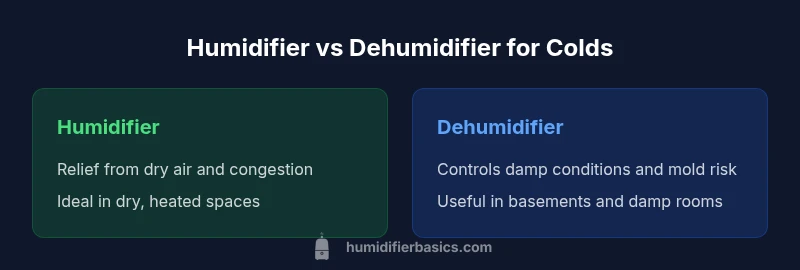
When deciding between a humidifier or dehumidifier for colds, your choice should hinge on room conditions and symptoms. A humidifier adds moisture to ease nasal congestion and throat irritation, while a dehumidifier reduces excess humidity that can promote mold and dust-mite exposure. For illness-focused relief, prioritize humidification in dry spaces and use dehumidification in damp areas to maintain a comfortable, healthier home.
Understanding Humidity and Cold Symptoms
Humidity level in your home influences how your nose, throat, and lungs respond to a cold. Dry air can dry mucous membranes, making coughing and irritation worse; overly damp air can encourage mold and dust mites that aggravate congestion and wheeze. According to HumidifierBasics, moderate humidity supports the body's natural defense by keeping mucus pliable and cilia function intact, which helps clear pathogens more efficiently. This is particularly important during the first days of a cold when nasal passages are swollen. Instead of chasing a single number, think of humidity as a comfort spectrum: too dry, too wet, and symptoms can worsen or linger. Practical cues include noticing whether you wake with a dry throat, if windows fog excessively, or if you notice a musty odor in the basement. For most homes, a stable environment reduces irritation and may shorten discomfort. Always monitor changes in multiple rooms, because outdoor weather, heating systems, and air leakage can create uneven humidity. In winter, central heating dries air quickly; in humid climates, moisture intrusion may raise humidity, feeding fungi. The goal is a healthy, comfortable balance that supports rest and recovery while limiting secondary irritants.
When a Humidifier Helps During a Cold
A humidifier can soothe irritated nasal passages and dry throat by adding moisture to indoor air, which often helps with congestion and cough. Humidifiers come in several styles: ultrasonic (mist is fine), evaporative (wick filter plus fan), and steam/hot-mist (boiling water). Each type has tradeoffs: ultrasonic units are quiet but may disperse minerals if you don't use distilled water; evaporative units are self-regulating to some extent but require regular wick replacement; steam humidifiers provide quick moisture but pose burn risks, especially around children and pets. Safe operation means using clean, cool-mist models for households with kids, avoiding the direct release of steam into sleeping areas, and placing the unit away from walls to prevent moisture buildup on surfaces. Distilled water reduces mineral dust; never add essential oils to devices not designed for them, as this can damage the unit and irritate airways. Humidity increases can feel relieving for nasal passages, but excessive moisture fosters mold and bacteria. In short, a humidifier appropriately used can support comfort during the early stages of a cold, particularly in dry rooms or heated homes, while mindful placement and cleaning prevent unintended side effects. Humidifier usage should be paired with ongoing basic hygiene and rest for best results.
When a Dehumidifier Is Helpful in Cold-Related Contexts
While the impulse is often to humidify during colds, there are times when reducing moisture is beneficial: in spaces with persistent dampness, visible mold, or damp odors, a dehumidifier can lower humidity and limit mold growth that aggravates coughing and chest tightness. Dehumidifiers work by extracting moisture from the air and collecting it in a reservoir or draining it away. They are most effective in poorly ventilated basements, bathrooms, and laundry rooms where moisture tends to accumulate. Using a dehumidifier during illness requires care: excessive dryness can irritate the throat and nose just as damp air can worsen symptoms in some individuals. A unit with an integrated humidistat helps maintain a balanced environment, while routine cleaning prevents mold buildup inside the reservoir and filter. Always place dehumidifiers on a stable surface and away from sleeping areas to minimize noise disruption. For safety, avoid running dehumidifiers in rooms without a proper drainage option and ensure children cannot access the water source. With thoughtful use, a dehumidifier reduces damp-induced irritants that can complicate cold symptoms and slow recovery.
Choosing Between a Humidifier and a Dehumidifier for a Cold
Choosing between a humidifier and a dehumidifier depends on your room’s baseline moisture, the severity of your symptoms, and the presence of damp areas in your home. If you experience dry air—especially in heated spaces—humidification tends to provide symptom relief by softening nasal passages and reducing coughing. If you notice persistent dampness, musty odors, visible mold, or condensation on walls, dehumidification helps limit mold growth and potential fungal irritants. A practical approach is to assess each major living space with a simple hygrometer or by feel: are surfaces damp, are windows sweating, is the air dry at night? A balanced strategy often combines both devices across different rooms: use a humidifier in dry bedrooms or living areas where you sleep, and a dehumidifier in damp basements or bathrooms. For illness-specific guidance, aim to stabilize humidity rather than chase extremes, and adjust the approach as symptoms change. The HumidifierBasics team recommends pairing symptom-focused care with room-specific humidity control to maximize comfort and support recovery.
How to Use Humidifiers Safely During Illness
Humidifiers should be kept clean and free from mineral dust and mold. Use distilled or demineralized water to minimize mineral deposits, and replace water daily in some cool-mist models to prevent bacterial growth. Clean the tank and base at least weekly, following the manufacturer’s instructions, and avoid placing the device directly on carpet or near heat sources. For households with children or pets, opt for cool-mist models to prevent burns, and never leave a steaming unit unattended. Check filters and wick materials regularly—replace as recommended—and ensure adequate ventilation in the room to prevent excess humidity that can promote mold. If you notice a musty odor or visible growth, discontinue use and clean thoroughly before resuming. For added safety, avoid essential oils in devices not designed for them, as oils can degrade plastics and irritate airways for some people. Pair humidifier use with other cold-care measures such as hydration, rest, and over-the-counter relief as appropriate.
How to Use Dehumidifiers Safely in Damp Areas
Dehumidifiers require attention to drainage and placement. Place the unit away from sleeping areas to minimize noise disruption, but ensure it remains accessible for drainage. Empty the reservoir regularly if not using a continuous drain option, and keep the space well-ventilated to avoid over-drying the air. Regularly clean the reservoir, coils, and filters to prevent mold and bacteria buildup—usually every few weeks, depending on usage and room conditions. Do not run a dehumidifier in a non-ventilated space for extended periods; avoid placing it directly against walls or furniture to prevent moisture damage. Use a hygrometer to monitor humidity levels and adjust the setting gradually to avoid sudden changes that could irritate airways. In a damp basement or bathroom, a dehumidifier can reduce mold-related irritants that aggravate coughs and nasal congestion. Always follow the manufacturer’s safety guidelines, particularly around electrical components and water handling.
Practical Scenarios and Quick Setups
In a small apartment bedroom during a cold, a compact, cool-mist humidifier placed on a bedside table can provide targeted relief from dry air at night. In a medium-sized living room with visible condensation, start with a dehumidifier set to maintain a comfortable balance; use a hygrometer to gauge changes over a few days. If your basement has musty odors or damp surfaces, a dehumidifier with a built-in pump or drainage hose is ideal, but ensure the room has ventilation to avoid dry air in living spaces. For families with children, prefer cool-mist humidifiers and keep devices out of reach. In mixed-use homes, a phased approach works well: humidify the bedrooms during illness and dehumidify damp spaces like basements or bathrooms to maintain overall air quality.
Common Mistakes and How to Avoid Them
Common mistakes include over-humidifying, which can promote mold or condensation; running devices continuously without monitoring humidity; neglecting regular cleaning, which leads to bacteria buildup; and using tap water that deposits minerals into the air. Another pitfall is placing units too close to walls or furniture, which can reduce effectiveness and promote moisture damage. Always use a hygrometer to track room humidity and adjust the device accordingly. Finally, avoid relying on a single device for the entire home; different spaces have different moisture needs, so a targeted approach yields better comfort and air quality.
Putting It All Together: A Simple Plan for Colds
Start by assessing your most-used rooms with a simple rule: dry spaces get humidified, damp spaces get dehumidified. In bedrooms and living areas where you sleep, run a cool-mist humidifier to ease congestion and throat irritation. In basements, bathrooms, and laundry rooms where dampness is common, deploy a dehumidifier to curb mold risk. Use distilled water in humidifiers to reduce mineral dust and clean devices weekly. Check the humidity level with a hygrometer, and aim for a stable, balanced environment rather than chasing precise numbers. As symptoms evolve, adjust the setup—more humidification in dry rooms during illness, and more dehumidification where dampness persists after recovery. This balanced, room-by-room strategy supports comfort, reduces secondary irritants, and aligns with practical, evidence-informed guidance from HumidifierBasics.
Comparison
| Feature | humidifier | dehumidifier |
|---|---|---|
| Best for | Relief from dry air and congestion in dry rooms | Control of damp conditions and mold risk in moist spaces |
| Maintenance | Regular cleaning; mineral water preferred; occasional filter/wick changes | Regular cleaning; drain and filter care; some models with continuous drainage |
| Energy use | Depends on model; generally low to moderate | Depends on model; generally low to moderate |
| Best room types | Bedrooms, living rooms in dry climates | Basements, bathrooms, and other damp spaces |
| Safety considerations | Cool-mist preferred for homes with children; avoid direct steam | Ensure drainage or proper placement; monitor for condensation and mold |
| Price range | $50–$150 (typical compact units; price varies by features) | $60–$180 (typical compact units; price varies by features) |
What's Good
- Provides targeted relief for dry air and congestion
- Easy to customize humidity in specific rooms
- Can improve sleep quality during illness
Negatives
- Requires regular cleaning to prevent mold and bacteria
- Overuse can cause mold growth or dry air in other rooms
- Energy use and maintenance vary by model
Balance is Key: Humidifiers are usually better for cold relief, while dehumidifiers are essential in damp spaces.
A practical approach is to humidify dry rooms during illness and dehumidify damp spaces to prevent mold. Use both strategically based on room conditions and symptoms; maintain safe humidity levels and clean devices regularly. The HumidifierBasics team recommends a room-by-room plan for optimal comfort and air quality.
FAQ
Can a humidifier help with a cold?
Yes, a humidifier can ease nasal congestion and throat irritation by adding moisture to dry air. It is not a cure, but it can support comfort and sleep during a cold.
Yes, humidifiers can ease congestion and throat irritation by adding moisture to the air, helping you rest better during a cold.
Is a dehumidifier better for colds?
Dehumidifiers are not typically used for colds themselves, but they are helpful in damp spaces where mold and dust mites may irritate the lungs or sinuses. They’re more about improving overall air quality than treating symptoms directly.
Dehumidifiers help with damp spaces and mold risk, which can affect air quality, but they’re not a primary treatment for cold symptoms.
What humidity range should I aim for in a bedroom when sick?
Aim for a comfortable, balanced humidity in the rooms you spend time in. Avoid extremes; moderate humidity generally supports comfort and recovery without promoting mold or dryness.
Keep humidity balanced in the rooms you use; extremes can irritate airways and promote mold.
Can I use essential oils with a humidifier?
Only if your humidifier is designed for essential oils. Many devices are not and oils can clog components or irritate airways. Follow the manufacturer’s guidance.
Only use essential oils if your humidifier is rated for them; otherwise avoid to prevent damage and irritation.
How often should I clean a humidifier?
Clean the humidifier weekly, and more often if used daily or shared by several people. Regular cleaning prevents bacteria and mold growth.
Clean the humidifier weekly, more often if it’s used daily, to prevent mold and bacteria.
How do I know if my space is too humid or too dry?
Use a hygrometer to monitor humidity. If you notice condensation on windows, musty odors, or damp walls, you may be too humid. If you wake with a dry throat or nasal irritation, it may be too dry.
A hygrometer helps; look for condensation or musty smells as signs of too much humidity, and dry air signs for too little.
The Essentials
- Aim for balanced humidity to support recovery
- Use humidifiers for dry indoor air and congestion relief
- Deploy dehumidifiers in damp spaces to reduce mold risk
- Prioritize regular cleaning and safe water choices
- Monitor humidity with a hygrometer for best results