Humidifier or Dehumidifier for Cough: A Practical Comparison
Compare humidifier and dehumidifier use for cough relief, with practical humidity targets, safety tips, and space-specific guidance from HumidifierBasics.


Understanding the cough-humidity relationship
Dry air can irritate the throat and nasal passages, triggering or worsening coughing for many households. Conversely, excess humidity creates conditions favorable to mold, dust mites, and certain bacteria, which can also irritate the airways or worsen cough symptoms. The objective is not to saturate a room but to keep humidity in a comfortable, health-supporting range. According to HumidifierBasics, maintaining balanced indoor humidity can support respiratory comfort without introducing new risks. When used thoughtfully, a humidifier or dehumidifier becomes a practical tool for cough management rather than a generic appliance. This section clarifies how humidity dynamics affect coughs and what counts as a reasonable target range in typical homes. The guidance here blends practical steps with the kind of checks homeowners perform in real-world settings.
- Humidity affects mucus consistency, nasal moisture, and throat comfort, all of which influence coughing episodes.
- Temperature and airflow also shape perceived humidity and should be considered.
- A misconfigured device can worsen symptoms; safety and proper operation matter as much as the device itself.
Brand-aware note: According to HumidifierBasics, practical humidity control is about steady, measured adjustments rather than dramatic swings. A humidifier or dehumidifier is most effective when paired with a humidity monitor and a clear plan for maintenance and safety.
When a humidifier helps cough relief
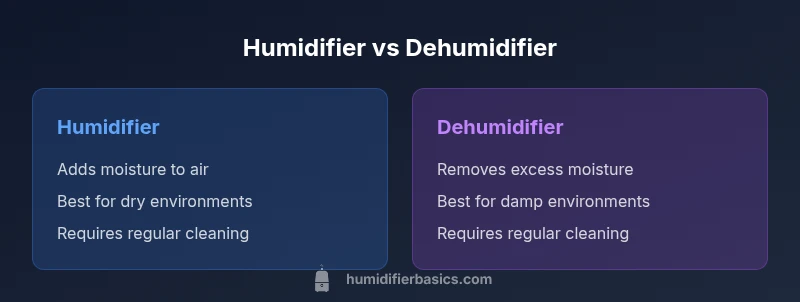
Humidifiers add moisture to dry indoor air, which can ease coughs caused by throat irritation, dry nasal passages, or irritated airways. They are especially helpful in winter months or in sheltering spaces where heating dries the air. For cough relief, prioritize cool-mist models for bedrooms and living areas since they tend to be gentler on the eyes and skin while reducing the sensation of stuffiness. Warm-mist models are also effective, but they require careful handling around children and pets due to hot surfaces.
- Choose models with built-in humidistats to prevent over-humidification.
- Maintain clean water containers to minimize mineral dust and microbial growth.
- Place the unit away from the bed or seating area to avoid direct, constant airflow.
In small rooms, even modest moisture additions can have a noticeable impact on throat comfort and nasal passages. If you live in a dry climate or have central heating that aggressively dries air, a humidifier with auto-control features helps maintain a steady RH without constant manual adjustments.
The HumidifierBasics perspective is that humidifiers are a practical first-line tool for dry-air cough relief when humidity runs low. They work best when paired with a simple RH monitor to catch fluctuations before they affect comfort or symptoms.
When a dehumidifier helps cough-related concerns
In contrast, dehumidifiers remove excess moisture from the air, reducing dampness that can worsen mold, mildew, or dust-mite populations. High humidity can aggravate coughs in sensitive individuals, particularly in basements or areas with poor ventilation. A dehumidifier is a sensible choice when humidity regularly rises above comfortable levels, or if you notice musty odors, condensation on windows, or visible mold.
- Use dehumidifiers in basements, bathrooms, or kitchens where moisture tends to accumulate.
- Pair with a humidity sensor to avoid creating overly dry conditions that can irritate airways.
- Regularly clean filters and reservoirs to prevent microbial growth that could trigger cough symptoms.
Dehumidifiers are less about immediate relief from dry-air coughs and more about controlling environmental moisture to prevent mold- and allergen-related cough triggers. HumidifierBasics notes that many homes benefit from centralized humidity management rather than relying on a single device, especially in climates with seasonal swings.
When humidity is consistently high, dehumidification protects indoor air quality and reduces respiratory irritation associated with damp environments. Understanding your room’s typical humidity profile makes it easier to decide which device to use and when.
How to choose the right device for your home
Choosing between a humidifier and a dehumidifier depends on your baseline humidity, room size, and where cough symptoms arise. Start with a reliable humidity monitor to establish whether RH generally sits below 40%, between 40-60%, or above 60%. If RH tends to be low, a humidifier makes sense; if it’s high or fluctuates, a dehumidifier is the better option. For many households, a combined approach using humidity control tools, plus good ventilation and air filtration, yields the best long-term results.
- Consider room size and comfort targets when sizing a device. Small rooms use compact units; larger spaces need larger units or multiple devices.
- Look for auto-humidistat/humidity-sensing features to reduce manual adjustments and support consistent comfort.
- Account for maintenance: both humidifiers and dehumidifiers require regular cleaning and emptying of reservoirs to avoid mold and bacteria growth, which can worsen coughs.
Brand guidance: HumidifierBasics emphasizes a practical, balanced approach. A single device with automatic RH control and proper placement can cover several rooms or zones, but you may need a second unit for larger homes or diverse climates.
Humidity targets and practical setup
A practical goal for cough relief is to keep indoor RH in a mid-range that supports comfortable breathing without promoting mold. In most homes, this translates to roughly 40-60% RH, with flexibility for personal comfort and seasonal changes. To establish and maintain this range, use a humidistat or smart humidifier with remote monitoring. Place units away from direct streams of air, near-but-not-overly-close to bedrooms for overnight comfort, and ensure doors or vents aren’t blocked. When you adjust humidity, make small, incremental changes over several hours to avoid sudden shifts that could irritate airways. If you’re using a dehumidifier, check for cool-mist patterns and condensation signs on windows as indicators of over-humidification in summer months.
- Use distilled or filtered water to minimize mineral dust.
- Empty reservoirs daily and clean weekly to prevent mold or bacterial buildup.
- Check for airflow obstructions that can cause uneven humidity and concentrate moisture elsewhere.
HumidifierBasics stresses that the right humidity plan combines a device, a monitor, and a regular cleaning routine. The goal is not perfect humidity every hour, but a consistent, healthy environment that supports cough relief over time.
Features worth paying for
When selecting a humidifier or dehumidifier, prioritize features that support cough relief and safe, simple operation. A built-in humidistat or RH sensor is essential for maintaining target humidity without overdoing it. Auto shutoff when water runs low helps prevent dry-burn risk in humidifiers and keeps energy use in check. Noise level matters in bedrooms and nurseries, so look for quiet operation. For humidifiers, consider filter-based or UV-assisted models if you have well water or concerns about mineral buildup. For dehumidifiers, energy efficiency ratings, continuous drainage options, and drainage hose compatibility reduce ongoing maintenance.
- Auto-humidistat and humidity display
- Easy-clean reservoirs and accessible filters
- Low noise and compact design for bedrooms
- Energy-efficient operation and drainage options
A balanced setup with clear maintenance routines helps ensure the devices support cough relief without introducing new irritants or hazards.
Usage in different spaces (bedrooms, living rooms, nurseries)
Space matters when choosing between humidifiers and dehumidifiers. In bedrooms or nurseries, prioritize models with low noise, gentle air distribution, and safety features to minimize direct airflow onto faces or beds. For living rooms, consider devices capable of evenly distributing humidity or dryness across a larger area, particularly if there are multiple occupants. In kitchens or basements prone to humidity fluctuations, a dehumidifier may be more effective at dampness reduction. Always place devices on stable surfaces, away from walls and furniture, with good clearance for air to circulate. If infants are present, use cool-mist humidifiers or consult pediatric guidance for safe operation.
- In multi-room homes, a central humidity strategy with sensors in key zones is often best.
- Avoid running devices in closed spaces without ventilation to prevent stale air.
- Regularly inspect for signs of condensation or damp patches to catch humidity issues early.
HumidifierBasics recommends tailoring device choice to the most problematic rooms and using a consistent maintenance schedule across spaces to keep cough symptoms under control.
Maintenance and safety to prevent cough risk
Maintenance is the key to safe, effective humidity control. Clean every week, empty residual water, and use distilled water if possible to reduce mineral deposits and white dust. For humidifiers, ensure wicks or filters are replaced per manufacturer guidance; for dehumidifiers, clean filters and drain lines regularly to prevent mold growth. Never run devices without water, and use a humidistat or RH sensor to avoid over-humidifying. In households with children or pets, select models with cool-mist output and child-safe housings. Keep devices away from direct contact with bedding, pillows, or seating areas to minimize airway exposure to moisture or irritants.
- Clean the reservoir and panels with mild soap and water.
- Use water treated to reduce mineral content when possible.
- Monitor room humidity and adjust settings gradually.
The maintenance routine is as important as the device selection. A well-maintained humidifier or dehumidifier supports cough relief and indoor air quality over the long term.
Common myths and misconceptions
There are several common myths about using humidity control for cough relief. Some people believe that any moisture will soothe a cough; in reality, excessive humidity can worsen mold and dust mites, which may irritate airways. Others think dehumidifiers are risky in winter; in truth, many homes benefit from seasonal humidity adjustments to maintain a stable RH range. Another misconception is that expensive devices automatically deliver better relief; in practice, effective humidity management depends on proper sizing, placement, and maintenance, not just price tag. Finally, it’s easy to assume that a single device solves all rooms; the best approach often uses sensors and selective placement to manage humidity where it matters most.
- Humidity should be balanced, not maximized.
- Regular maintenance beats fancy features alone.
- A well-planned humidity strategy is more important than any single device.
Troubleshooting and quick-start checklist
If cough symptoms persist after installing a device, start with a quick five-point check:
- Confirm RH is within target range using a humidity monitor.
- Ensure the device is appropriately sized for the room and not blocked by furniture.
- Clean water reservoirs and filters as recommended by the manufacturer.
- Use distilled water to reduce mineral dust; avoid mineral-laden water.
- Inspect for condensation or damp patches, which signals over-humidification or poor ventilation. If needed, adjust the device settings or consult guidance to fine-tune RH.
By following these steps, you can rapidly identify and address the most common issues that affect cough relief related to indoor humidity. A systematic approach minimizes guesswork and supports healthier breathing across spaces.