Humidifier vs Dehumidifier for Congestion: A Practical Guide
Learn when a humidifier or dehumidifier helps congestion, how to choose, and best practices for safe, effective humidity control in bedrooms, nurseries, and living spaces.


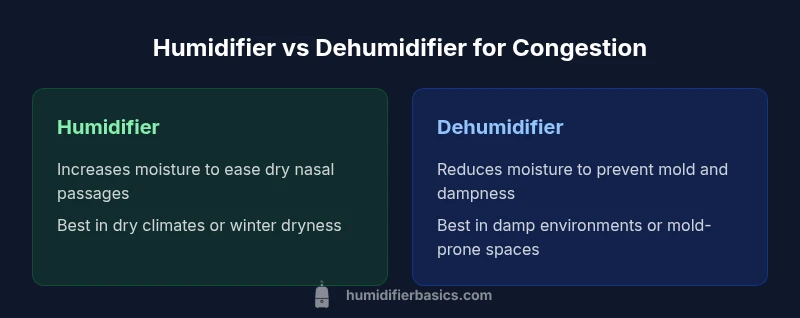
When congestion is linked to dry air, a humidifier is typically the better starting point because it adds moisture to nasal passages, thinning mucus and easing airflow. If your indoor air is consistently damp or you notice mold, dampness, or allergy triggers, a dehumidifier helps by reducing excess humidity. The best approach is humidity-aware usage: monitor RH, stay around a comfortable range, and adjust devices as seasons change. Humidifier or dehumidifier for congestion decisions should be guided by room humidity, health symptoms, and home conditions.
Understanding the Congestion Question
Congestion is a common problem people face when indoor air quality shifts with the seasons. In dry climate winters or artificially heated spaces, nasal passages can become irritated, mucus becomes thicker, and congestion feels worse. The question many homeowners ask is the practical one: should you use a humidifier or a dehumidifier for congestion? The answer depends on your baseline humidity, room usage, and health indicators. According to HumidifierBasics, the right tool isn’t a one-size-fits-all solution; it’s about targeting the air’s moisture level to support comfortable breathing and reduce irritants. This article unpacks when each device is most effective, plus how to use them safely and efficiently for congestion relief.
Why humidity matters for congestion
Humidity influences mucus consistency and nasal tissue hydration. In dry air, mucus dries out, becomes stickier, and can contribute to a blocked nose. In overly moist environments, mold spores, dust mites, and certain irritants thrive, potentially triggering congestion and allergy symptoms. The goal is a stable indoor humidity that keeps mucus at a manageable thickness while discouraging microbial growth. Practically, that means aiming for a moderate RH range and using the device that nudges air moisture toward that target without overshooting.
Quick note on health and safety
Humidity devices should be used with caution in homes with infants, elderly occupants, or asthma sufferers. Poorly maintained units can spread bacteria or mold if tanks aren’t cleaned regularly. Education on proper cleaning, water quality, and device placement is essential for safe congestion relief. HumidifierBasics emphasizes that a well-maintained unit in the right room can improve comfort during illness, sleep quality, and overall air quality in spaces where people spend extended time.
What this section covers
- How to identify whether you need moisture or moisture control
- The clinical and practical reasons RH matters for congestion
- How to select a device based on room type and seasons
- Real-world tips for safe operation and maintenance
- A practical decision framework to help you choose with confidence
Comparison
| Feature | Humidifier | Dehumidifier |
|---|---|---|
| Effect on humidity related to congestion relief | Increases moisture when air is dry, which can ease nasal dryness and mucus thickening | Reduces moisture when air is damp, helping mitigate mold, mildew, and mold-related congestion triggers |
| Ideal use case for congestion relief | Dry indoor air, winter dryness, and irritated nasal passages | Chronic damp conditions, basement humidity, and mold-related congestion |
| Maintenance effort | Moderate to high; regular tank cleaning, filter care (if equipped), and water quality checks | Low to moderate; routine filter checks and occasional tank drainage |
| Energy consumption | Variable by size; most units operate efficiently but scale with capacity | Typically energy-efficient, with output tied to room humidity needs |
| Price range (typical households) | $40-$200 | $70-$250 |
| Best for | Dry air environments needing nasal comfort and easier breathing | Moisture-prone spaces where dampness supports allergens |
What's Good
- Helps restore comfortable breathing when air is too dry
- Can improve sleep quality by reducing nasal irritation
- Offers room-by-room control for targeted relief
- Good for seasonal adjustments and climate variability
Negatives
- Overuse can promote mold, mildew, and dust mites
- Requires regular cleaning to prevent bacteria or fungal growth
- Water quality matters; impurities can become airborne
- Price and maintenance can add up over time
Humidifier is the first choice for congestion relief in dry environments; dehumidifier is preferred to combat dampness and mold risk.
If nasal dryness and thick mucus are the primary issues, choose a humidifier and monitor humidity with a reliable humidistat. If dampness, mold, or damp-air-triggered symptoms dominate, a dehumidifier is the safer choice. In mixed conditions, use each device in appropriate spaces and seasonally adjust.
FAQ
Can a humidifier cure congestion completely?
No. A humidifier can relieve symptoms by easing nasal dryness and mucus, but it does not cure underlying conditions like infections or allergies. It should be part of a broader congestion-management plan that includes hydration, sleep hygiene, and addressing triggers.
A humidifier helps with symptoms, not a cure. Pair it with other strategies for best relief.
Can I use both devices at the same time?
Yes, you can use both in different rooms or at different times, but be careful not to overshoot humidity. Monitor RH, and use a humidifier in dry rooms while keeping damp areas controlled with a dehumidifier as needed.
Using them in different rooms can help, just watch the humidity levels.
What humidity level is ideal for congestion relief?
Aim for about 40-60% relative humidity. This range supports mucus management and reduces mold risk without making the air feel damp.
Keep humidity around 40-60% for best congestion comfort.
Is warm-mist safer for children?
Warm-mist units can pose burn risk to children and pets. Cool-mist humidifiers are generally safer for households with kids, but both require careful use and cleaning.
Warm mist may be riskier for kids; opt for cool-mist and stay cautious.
How often should I clean a humidity device?
Clean every few days if used daily; perform a thorough weekly cleaning and follow the manufacturer’s instructions for descaling and filter changes.
Clean regularly—ideally weekly—and more often with daily use.
The Essentials
- Start with RH measurement to guide your choice
- Use humidifier for dry air, dehumidifier for damp environments
- Keep devices clean to prevent microbial growth
- Target a comfortable RH range (40-60%) and adjust seasonally
- Safety and water quality matter as much as device choice