Humidifier vs Essential Oil Diffuser: A Practical Comparison
A detailed comparison of humidifier vs essential oil diffuser, covering how each works, safety, maintenance, and when to use them for healthier air and ambiance.


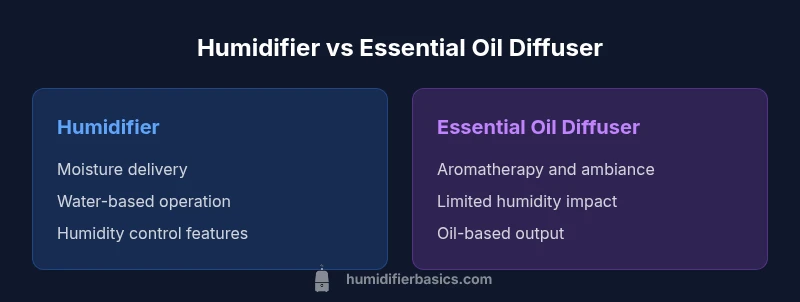
Humidifier vs essential oil diffuser: the humidifier adds moisture to dry air, while a diffuser disperses aromatic oils for scent and ambiance. For steady humidity, choose a humidifier; for fragrance, a diffuser. If you want both, use them in sequence or in larger rooms with caution. Base your choice on room size, safety guidelines, and maintenance needs.
What is a humidifier vs essential oil diffuser?
In the home, the humidifier and the essential oil diffuser are two moisture- and scent-related devices that often get conflated. Humidifier vs essential oil diffuser highlights two distinct goals: moisture management versus fragrance delivery. According to HumidifierBasics, the core difference is simple: a humidifier is designed to raise humidity in dry air, while a diffuser is designed to disperse essential oils into the air for aroma and mood. This separation matters because each device has different maintenance needs, safety considerations, and room-size suitability. Understanding these distinctions helps homeowners and renters choose the right tool for comfort, respiratory health, and overall air quality.
How they work: mechanisms and operation?
Humidifiers operate by introducing water vapor into a room. They come in several basic technologies—evaporative, ultrasonic, and warm-mist—and each type has its own pros and maintenance requirements. Essential oil diffusers, on the other hand, disperse tiny droplets of water mixed with essential oils using ultrasonic vibration or heat. While diffusers can create a pleasing scent, most models do not significantly alter room humidity on their own. A key takeaway when evaluating humidifier vs essential oil diffuser is to recognize that diffusion is primarily about aroma, not humidity control. For fragrance, ensure you’re using high-quality oils and following the diffuser’s instructions to avoid residue or irritation.
Primary benefits and limitations
The main benefit of a humidifier is comfort during dry seasons, improved sleep, and relief from dry skin or throat irritation. Its limitation is that excessive humidity can promote mold growth or dust mite proliferation, so humidity control is essential. A diffuser provides scent, mood enhancement, and a sense of well-being, but its humidity impact is minimal and it can cause respiratory irritation for sensitive individuals if oils are misused. In some environments, using both devices in tandem can offer comfort and aroma, but you must manage space and maintenance to avoid overlap or overuse. HumidifierBasics emphasizes prioritizing each device’s purpose to avoid shortchanging your needs.
Safety considerations and health implications
Both devices require attention to safety, especially in homes with children or pets. Humidifiers should be cleaned regularly and filled with pure water to minimize mineral dust. Over-humidification can create damp conditions that foster mold; use a hygrometer or built-in sensor to monitor humidity if available. Essential oil diffusers should use high-quality oils and be operated in well-ventilated spaces; diffuse oils can irritate airways or trigger allergies in sensitive individuals. Always follow manufacturer guidelines and consider room size, ventilation, and personal health concerns when deciding between humidifier vs essential oil diffuser. Humidity and scent should enhance comfort, not compromise air quality.
Scent, moisture, and air quality: how you should expect them to impact your home
If your goal is fragrance and mood, a diffuser can contribute to a spa-like ambiance without dramatically changing humidity. If you’re dealing with dry air—especially in winter—a humidifier offers tangible moisture delivery that can ease nasal dryness and skin irritation. The two devices are complementary when used thoughtfully: place them in different zones of a larger living space or alternate usage to avoid excessive humidity or odor buildup. HumidifierBasics recommends separating devices spatially and adhering to cleaning schedules to maintain air quality.
Maintenance and water quality tips
Maintenance is central to long-term performance for both devices. For humidifiers, clean the reservoir weekly, change the water filter if present, and consider distilled water to reduce mineral buildup. For diffusers, empty and rinse after each use, wipe the reservoir, and replace any pads or wicks according to the manufacturer’s schedule. Using distilled or demineralized water in diffusers also helps minimize residue and oil carryover. Consistent cleaning reduces the risk of mold, bacteria, and oil-related residue, which can otherwise compromise air quality and device function.
Cost and replacement parts: a practical lens
Prices for humidifiers and diffusers vary with capacity, materials, and features, but both tend to be affordable entry points for home air enhancement. Upfront costs can be moderate to low, while ongoing considerations include water quality, filter replacements, and occasional oil purchases. By evaluating your room size, desired aroma intensity, and maintenance tolerance, you can estimate total cost and value without relying on exact figures. HumidifierBasics suggests factoring in filters and cleaning supplies as ongoing costs when comparing humidifier vs essential oil diffuser.
Choosing between a humidifier and essential oil diffuser: a practical framework
Start with your primary goal. If you need measurable humidity improvement for a dry room, choose a humidifier. If scent and ambiance are paramount, choose a diffuser. For medium-to-large spaces or households with seasonal dryness and a desire for fragrance, you may benefit from both devices in separate zones and with careful usage to avoid over-humidification or scent saturation. Consider room size, layout, and personal health considerations when evaluating humidifier vs essential oil diffuser. The goal is to optimize air quality and comfort, not just to own a gadget.
Scenarios: best practices for different rooms and seasons
Bedrooms plagued by nighttime dryness often benefit most from a humidifier, especially in winter or low-humidity climates. Living rooms or entryways where fragrance enhances mood may be ideal for a diffuser, provided you maintain good air exchange. In small apartments, a compact diffuser near seating areas can deliver a subtle fragrance without noticeable humidity changes. Always dial in the method that aligns with your goals and keep a watchful eye on humidity levels and scent exposure to protect sensitive individuals and pets.
How to use both safely and effectively in the same space
If you choose to operate both a humidifier and a diffuser in the same room, position them apart and ensure the diffuser’s scent isn’t overwhelming. Use separate outlets and encourage good ventilation. Limit the diffuser’s oil quantity to avoid drifting into sleeping areas where strong odors can irritate eyes or lungs. Establish a cleaning routine for both devices and regularly check humidity levels to keep moisture within a comfortable range. With mindful placement, you can enjoy humidity and aroma without compromising air quality.
Practical setup checklist
- Define your primary goal (moisture vs scent) and select the corresponding device
- Place devices in separate zones to avoid overlapping humidity and fragrance
- Use distilled water where possible to minimize mineral buildup
- Clean reservoirs and mechanisms on a regular schedule
- Monitor room humidity with a hygrometer and adjust settings as needed
- Ensure good ventilation and avoid running devices continuously without breaks
Comparison
| Feature | Humidifier | Essential Oil Diffuser |
|---|---|---|
| Primary function | Raises ambient humidity for dry air | Disperses essential oils for fragrance |
| Impact on humidity | Deliberate humidity increase based on output | Minimal impact on room humidity |
| Oil usage | Water-based (oil typically not required and may be discouraged) | Uses essential oils to create aroma |
| Maintenance focus | Regular reservoir cleaning; mineral buildup control; distilled water recommended | Clean reservoir; replace pads/wicks as needed; oil residue removal |
| Ideal room type | Living spaces, bedrooms, larger areas seeking humidity | Small to medium spaces seeking fragrance and ambiance |
| Safety considerations | Monitor humidity to prevent mold; keep clean to avoid bacteria | Use oils safely; ensure ventilation; avoid irritants |
| Cost and replacement parts | Moderate upfront cost; occasional filter or maintenance parts | Low to moderate upfront; pads/filters may need replacement |
What's Good
- Improves perceived comfort by addressing dryness
- Easy to find and replace parts and refills
- Can be used to support broader air-quality goals with proper setup
- Diffusers add fragrance and mood without requiring large humidity changes
Negatives
- Oil compatibility and maintenance can be confusing
- Over-humidification risks and mold concerns with humidifiers
- Fragrance exposure may irritate sensitive individuals
- Ongoing maintenance requirements for both devices
Humidifier wins for moisture control; diffuser wins for scent.
Choose a humidifier if your primary goal is reliable humidity improvement and comfort. Opt for a diffuser when fragrance and ambiance are the top priority. If both needs exist, use them strategically in separate zones with mindful maintenance.
FAQ
Can I use essential oils in a humidifier?
Most humidifiers are not designed to diffuse essential oils. Oils can clog components and alter performance, and in some models may void the warranty. If the goal is scent, use a diffuser designed for oils.
Using essential oils in a humidifier is usually not recommended because it can clog the unit and affect air quality. Use a dedicated diffuser for oils instead.
Will a diffuser actually increase humidity?
Diffusers primarily disperse fragrance and do not significantly raise room humidity. If you need moisture, a humidifier is the appropriate tool. Diffusers can complement humidity, but they are not a substitute.
Diffusers mainly spread scent and don’t add meaningful humidity.
Is it safe to run both in the same room?
Yes, but monitor humidity and scent levels to prevent overdoing either. Space them apart if possible and ensure ventilation. Read manufacturer guidelines for safe operation.
You can run both, but watch humidity and scent levels and keep them apart if you can.
What water quality should I use?
Using distilled or demineralized water reduces mineral buildup in both devices and helps maintain air quality. Tap water can leave residue that affects performance and odor.
Opt for distilled water to minimize mineral residue in both devices.
How do I clean these devices?
Clean on a regular schedule: rinse reservoirs, wipe surfaces, and follow the manufacturer’s instructions. Avoid harsh chemicals that leave residues. Regular cleaning reduces mold and bacteria risks.
Clean the devices regularly and follow the manual for best results.
The Essentials
- Define your goal: humidity vs scent
- Prioritize device placement to avoid overlap
- Use distilled water to minimize residue
- Regular cleaning is essential for air quality
- Consider room size and health needs when choosing