Humidifier and Air Purifier In One: A Thorough Comparison
An analytical guide comparing all-in-one humidifier and air purifier units, covering filtration, humidity control, noise, energy use, maintenance, and price for homeowners and renters.


An all-in-one humidifier and air purifier combines moisture control with air cleaning in a single device, saving space and simplifying upkeep. This comparison outlines how different designs balance filtration, humidity output, energy use, noise, and price, so you can pick the right unit for your home. HumidifierBasics offers practical, unbiased guidance on these options.
What the term means and why it matters
In indoor climate control, a humidifier and air purifier in one is a device that both adds moisture to dry air and removes contaminants. This combination can be appealing when you have limited space, sensitive occupants, or a preference for fewer devices to manage. The concept isn't new, but the best models have evolved to balance humidity control with filtration efficiency. According to HumidifierBasics, all-in-one units are most valuable in small-to-medium rooms where you want predictable humidity levels alongside cleaner air. For renters or homeowners with modest budgets, these units offer a compelling compromise between performance and convenience. The HumidifierBasics team found that, with regular maintenance, such devices can help reduce common irritants like dust, pollen, and pet dander while maintaining comfortable humidity ranges. Readers should note that the exact results depend on the model, room size, and water quality. Always verify the product’s stated capabilities against your space and needs.
The all-in-one design: how they work together
All-in-one humidifier/purifier units integrate a moisture management system with a filtration system. Most portable models use ultrasonic or wick-based humidification paired with a multi-stage filter that captures dust, pollen, and particles. Some designs include activated carbon layers to reduce odors and VOCs. The key is that both systems share power and housing, so component wear and maintenance schedules often align. In practice, this means you’ll replace filters on a similar cadence as you refresh water and clean the housing. When selecting a model, examine how the unit handles humidity targets alongside cleaner air, because an overworked filter won’t perform optimally if humidity drifts high or low. The inclusion of a humidity sensor can help maintain stable conditions, which is particularly beneficial for sensitive sleepers and for reducing mold risk in damp spaces. Remember: the most effective of these devices is the one your routine actually supports.
Core features to compare in all-in-one units
To evaluate options, look at several core features that matter in real homes: filtration stage (HEPA vs hybrid), humidity control range (target RH and range), room size capacity, noise level, energy consumption, and maintenance requirements. Some models emphasize quiet operation for bedrooms, others prioritize rapid humidity stabilization in living spaces. Filter life and replacement costs are practical considerations, as are water quality restrictions (some units allow distilled water only). Connectivity features like timers and smart controls can improve usability, while built-in ionizers or UV-C components might appeal to some buyers but require ongoing maintenance. Finally, consider how easy the unit is to clean; routine disassembly and accessible parts reduce the risk of mold and mineral buildup. In short, a well-rounded all-in-one should offer balanced humidity control, reliable filtration, predictable maintenance, and friendly usability in your home.
Filtration and humidity: balancing performance
A central tension in all-in-one devices is balancing moisture output with filtration effectiveness. If a unit emphasizes aggressive filtration at the expense of humidity control, it may feel underpowered in dry rooms. Conversely, models prioritizing humidity output can let particulates slip through if the filtration stages are insufficient. The best designs provide adjustable humidity targets, a true HEPA or HEPA-like filter, and a carbon layer to address odors. Keep in mind that mineral buildup from hard water can reduce filtration efficiency; many owners use distilled water to minimize this risk. For households with allergies or asthma, verify that the CADR (clean air delivery rate) aligns with the room size and that the purifier portion of the device is rated for the pollutants most present in your home. The goal is stable humidity with clean air without constant filter changes or nuisance noise.
Design options and placement considerations
All-in-one units come in several form factors, including desktop, tower, and compact floor-standing models. For bedrooms, a compact, quiet unit placed away from the bed helps maintain restful humidity and air quality. In living rooms or home offices, a taller unit with a larger filter can deliver longer operation cycles and more even humidity. Consider placement away from direct sunlight and heat sources to minimize condensation and mold risk, and ensure there’s adequate clearance for airflow. If you have pets, place the unit where fur and dander won’t quickly clog filters, and select a model with a pet-friendly filtration profile. Some units are designed to integrate with cooling or heating systems; if you rely on HVAC, a central humidification/filtration solution could be more effective, albeit more complex. In any case, verify that the device’s footprint and water reservoir size fit your space and lifestyle.
Maintenance and water quality best practices
Maintenance drives the long-term performance of all-in-one devices. Clean the reservoir and housing weekly or per manufacturer guidance to prevent mold and mineral buildup. Replace filters on the recommended schedule, and avoid using tap water with heavy mineral content to reduce white dust and scale. If possible, use distilled water to simplify maintenance and extend filter life. Monitor humidity levels with a reliable hygrometer and aim for a steady indoor RH between 30-50 percent for most homes. Check the CADR rating and ensure it matches your room size; keep the fan or motor clear of dust by performing light dusting around the intake grills. Finally, store the unit in a dry area when not in use to prevent mold growth in the reservoir. These practices help preserve both humidity control and air cleanliness over time. The HumidifierBasics team suggests keeping a simple maintenance schedule to avoid surprises.
Cost, value, and choosing by space
Pricing for all-in-one units varies with features, filtration stages, and humidity control sophistication. Expect a price range that reflects your room size and performance targets, typically higher than a basic humidifier but lower than two separate devices in some scenarios. Balance upfront cost with ongoing expenses like filter replacements and energy use. In smaller spaces, a mid-range unit with good filtration and reliable humidity management is often the best value. In larger rooms, prioritize filtration quality and humidity stability, even if it means a higher upfront investment. Consider the long-term value: fewer devices may simplify maintenance and reduce clutter, but cost can rise if filters require frequent replacement. Always verify the warranty coverage and track record for reliability, as popular models tend to incur lower maintenance surprises over time.
Practical evaluation: how to test a unit in your home
Before buying, test a model in your environment if possible. Use it for a couple of days to gauge humidity consistency, filtration effectiveness, and noise at typical operating speeds. Measure RH with a reliable hygrometer and compare it against your target. Pay attention to smell and air freshness, especially in spaces with pets or cooking odors. Check water usage, energy draw, and ease of cleaning by attempting disassembly under guidance. If you have seasonal allergies or asthma, note any changes in symptoms during the trial period. Finally, read owner reviews and look for reports of stable humidity, consistent filtration, and reliable maintenance schedules. A hands-on trial can reveal practical strengths and weaknesses that spec sheets cannot capture.
Authority sources and further reading
Authorities agree that indoor air quality combines humidity and filtration considerations. The Environmental Protection Agency provides guidance on air cleaners and humidity management in homes, while the Occupational Safety and Health Administration outlines general indoor air quality principles applicable to home environments. For readers who want deeper technical details, consider peer-reviewed resources on air filtration efficiency, humidity control, and their health impacts. The sources below offer reputable, accessible information for further reading.
Comparison
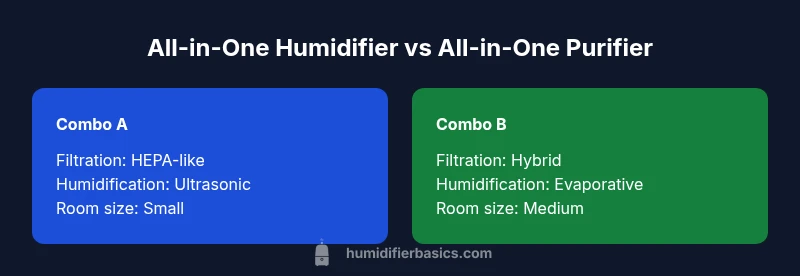
| Feature | Combo Unit A | Combo Unit B |
|---|---|---|
| Filtration technology | HEPA-like filtration | Hybrid filtration with VOC adsorbent |
| Humidification method | Ultrasonic mist | Evaporative/wick method |
| Room size suitability | Small-to-mid rooms | Mid-to-large rooms |
| Energy use | Moderate | Low-to-moderate |
| Maintenance frequency | Filter replacement every 3-6 months | Filter + mineral management every 4-6 months |
| Price range | $80-150 | $120-250 |
| Best for | Compact homes with moderate airflow needs | Homes needing stronger purification with humidity control |
What's Good
- Space-saving convenience
- Simplified maintenance (one device)
- Potential cost savings vs two separate devices
- Consistent humidity and air quality in one unit
- Easier to place and operate in small spaces
Negatives
- Performance may lag behind specialized standalone units in extreme environments
- Replacement filters can be pricier when bought together
- Maintenance relies on both systems functioning well
- Limited customization for heavy-duty filtration or high humidity control
All-in-one units are best for space-constrained homes seeking balanced humidity and air cleanliness, with the caveat of potentially higher maintenance costs.
For compact living spaces, a well-chosen all-in-one can meet both moisture and air quality needs. If you require aggressive filtration or very precise humidity control, consider separate devices or higher-end combos.
FAQ
What is an all-in-one humidifier and air purifier?
An all-in-one unit combines a humidifier and an air purifier in one device. It aims to regulate indoor humidity while removing contaminants from the air, offering a compact solution for small spaces.
An all-in-one device combines humidity control and air cleaning in one unit, helping you manage moisture and air quality without two separate devices.
Do all-in-one units perform as well as separate devices?
In many cases they provide adequate humidity and filtration for typical rooms, but extreme conditions or heavy pollutant loads may favor dedicated units. Performance varies by model and maintenance.
They can meet common needs, but for heavy smoke or severe allergies you might see better results with separate devices.
What maintenance is required for all-in-one units?
Maintenance usually involves cleaning the unit, replacing filters on a schedule, and using clean water. Follow the manufacturer’s guidelines to prevent mold and mineral buildup.
Regular cleaning and timely filter changes keep the unit working well.
Are all-in-one units pet-friendly?
Pet considerations depend on filter types and noise. Look for units with filters designed to capture pet dander and quiet operation to minimize stress for animals.
If your pet has sensitivities, pick a quiet model with pet-focused filtration.
What should I look for in a CADR and humidity control?
Choose a unit with a CADR appropriate for your room size and adjustable humidity to avoid over-humidification. Ensure the device can maintain stable humidity without overcorrection.
Get a model that matches your room and lets you set a target humidity.
The Essentials
- Choose compact, all-in-one units for space-saving.
- Expect balanced but not extreme performance in either function.
- Regular maintenance is essential for both humidity and filtration.
- Check filtration compatibility and ease of replacement.