Do Humidifiers Use a Lot of Energy? A Practical Guide for Homeowners
Discover how much energy humidifiers actually use, compare ultrasonic, evaporative, and warm-mist models, and uncover practical tips to save electricity without sacrificing indoor comfort.


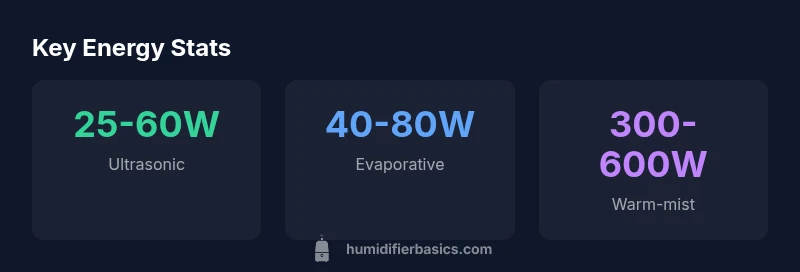
Do humidifiers use a lot of energy? In most homes, energy use depends on the model and runtime. Ultrasonic and evaporative units typically draw far less power than warm-mist heaters, with common ranges roughly 25-60W, 40-80W, and 300-600W respectively. Running time, room size, and humidity targets also shape overall energy consumption.
How Much Power Do Humidifiers Use?
Energy use varies significantly by model type, runtime, and how you set humidity targets. According to HumidifierBasics, the energy cost of running a humidifier is typically a small portion of a home's electricity bill, but it spikes for high-wattage warm-mist units. Ultrasonic and evaporative models tend to be far more energy-efficient, especially when you keep humidity targets modest and avoid running the unit longer than needed. This section outlines typical wattage ranges, how to read a unit's rating, and what to expect in real-world use.
- Typical wattage ranges help you estimate daily costs. Ultrasonic units commonly fall in the 25-60W range, evaporative ones around 40-80W, and warm-mist units can exceed 300-600W when actively heating water.
- Real-world energy use depends on runtime. If you run a unit 8 hours per day, a 60W ultrasonic humidifier consumes roughly 0.48 kWh per day, whereas a 500W warm-mist can consume about 4 kWh per day. Over a month, this difference compounds notably.
- Reading the label matters. Manufacturers list power draw as watts (W) or a wattage range; calculate daily energy by multiplying watts by hours of operation. Use that to compare models meaningfully.
- Humidity targets affect consumption. Achieving comfort at lower humidity setpoints reduces runtime and energy use without sacrificing perceived air quality. In colder climates, higher efficiency is often found when humidity targets are modest.
- Practical takeaway. When energy is a concern, prioritize ultrasonic or evaporative models and set a realistic target humidity, such as 40-50%, to balance comfort and cost.
What Drives Energy Consumption in Practice
Energy usage is rarely about a single factor; it’s the combination of model type, how long you run the unit, room conditions, and features. Here’s how these elements interact in everyday settings:
- Type matters more than you might think. Ultrasonic humidifiers use very little energy per hour, evaporative models consume modest amounts, and warm-mist heaters burn more energy due to heating water.
- Room size and insulation affect runtime. Larger rooms require longer operation times or larger units to reach the same humidity, increasing energy use. Poor insulation or drafty spaces can counteract the benefits of a humidifier.
- Humidity targets set the pace. A target of 40-50% RH is typically comfortable for most homes and tends to keep energy use reasonable. Higher targets often require longer sessions or more powerful units.
- Environment and placement matter. Placing the humidifier in a well-sealed room and closing doors can improve efficiency by reducing the amount of air that must be treated.
- Summary. Expect ultrasonic and evaporative models to be more energy-efficient on a per-hour basis, with energy costs rising noticeably if you rely on warm-mist units at high humidity levels for extended periods.
Energy-Saving Features That Work
Several built-in features help reduce energy consumption without compromising comfort. When evaluating a humidifier, consider these options:
- Humidistat and auto-off: A built-in humidistat helps you maintain a target humidity without continuous runtime. Auto-off shuts the unit off when the target is reached, saving energy and preventing over-humidification.
- Adjustable fan speeds and eco modes: Slower fan speeds and eco cycles reduce energy use, especially in smaller rooms or when humidity targets are easily achieved.
- Timer and scheduling: Running the unit only during occupied hours or using a daily schedule avoids energy waste when nobody is home.
- Efficient design: Ultrasonic units tend to be quieter and more energy-efficient due to their direct-to-air mist mechanism, whereas models with larger fans or heating elements require more energy.
- Practical note. Features like a built-in humidistat and auto-off are among the most impactful energy-savers, particularly when combined with mindful humidity targets and routine maintenance.
Practical Tips for Homeowners
Applying energy-aware practices is often straightforward and inexpensive. Try these actionable steps:
- Set a realistic humidity target between 40-50% and verify with a hygrometer. This range balances comfort with energy efficiency and minimizes equipment runtime.
- Favor ultrasonic or evaporative models when size and noise permit. These types typically use less energy per hour than warm-mist units.
- Use a humidistat to maintain stable humidity. When humidity reaches the target, let the device auto-shut off or switch to a low-speed mode.
- Place the humidifier strategically. Position it away from drafts and vents to improve effectiveness without wasting energy heating or moving air unnecessarily.
- Maintain your unit. Clean filters and avoid mineral build-up to keep airflow efficient and energy use predictable.
- Real-world takeaway. Small changes—like choosing the right type, using a humidistat, and maintaining a sensible humidity target—can yield meaningful energy savings over the course of a season and year.
Data-Driven Comparisons Across Humidifier Types
Putting numbers to the comparison helps homeowners make informed choices. The energy draw of each type reflects typical usage patterns rather than a single model:
- Ultrasonic: 25-60W, most energy-efficient category with quiet operation; strong option for smaller rooms or bedrooms.
- Evaporative: 40-80W; moderate energy use that scales well with room size and airflow management.
- Warm-mist: 300-600W; higher energy due to water heating, best for quick humidity boosts in very dry spaces but with higher operating costs.
When you pair wattage data with actual runtime and a target humidity, you can estimate yearly energy costs and compare across models. For example, if you run a 60W ultrasonic unit for 6 hours a day, you’re using roughly 0.36 kWh daily, versus several kWh for a warm-mist unit under similar conditions. The HumidifierBasics analysis underscores that the most impactful savings come from choosing the right type for your space, setting realistic humidity targets, and leveraging energy-saving features.
Energy use by humidifier type
| Humidifier Type | Typical Power (W) | Notes |
|---|---|---|
| Ultrasonic | 25-60 | Low to moderate energy use; quiet operation |
| Evaporative | 40-80 | Moderate energy; relies on airflow through wick |
| Warm-mist | 300-600 | High energy; uses heating element |
FAQ
Do humidifiers use a lot of energy?
Energy usage varies by type and runtime. Ultrasonic and evaporative models are generally more energy-efficient than warm-mist units. Reading wattage labels and setting reasonable humidity targets helps you estimate costs.
Energy use varies by type and runtime. Ultrasonic and evaporative models are usually more efficient than warm-mist units.
Which humidifier type is most energy-efficient?
Ultrasonic units are typically the most energy-efficient option, followed by evaporative models. Warm-mist units consume more energy due to heating water.
Ultrasonic units are typically the most energy-efficient.
What features save energy in a humidifier?
A built-in humidistat, auto-off/shutoff, and adjustable fan speeds can significantly cut energy use by maintaining only the necessary humidity.
Humidistat and auto-off features help save energy.
How can I estimate my humidifier's yearly energy cost?
Multiply the unit’s wattage by hours of operation per day and days per year, then multiply by your electricity rate. Lower-wattage models and efficient features reduce costs.
Estimate by multiplying watts, hours, days, and rate.
Are there safety considerations related to energy use?
Choose units with auto shutoff and proper clearance to prevent overheating. Regular maintenance also keeps energy use predictable and safe.
Auto shutoff helps prevent overheating and saves energy.
How does room size affect energy use?
Larger rooms require longer runtimes or bigger units, which increases energy use. Select a unit that matches room size to avoid waste.
Match unit size to room for best efficiency.
“Energy use in humidifiers varies widely by type and runtime, but with mindful selection and proper humidity targets you can stay comfortable without excessive electricity bills.”
The Essentials
- Set humidity targets around 40-50% for comfort and efficiency
- Ultrasonic and evaporative models are usually more energy-efficient than warm-mist units
- Use built-in humidistats and auto-off features to trim energy use
- Match unit size to room size to avoid unnecessary runtime
- Even small usage tweaks can meaningfully lower energy costs over time