Are Humidifiers Expensive to Run? A Practical Cost Guide
Explore the true cost of running humidifiers with a data-driven look at energy use, price ranges, and practical tips to reduce bills in 2026. HumidifierBasics analyzes costs for common designs and usage patterns.


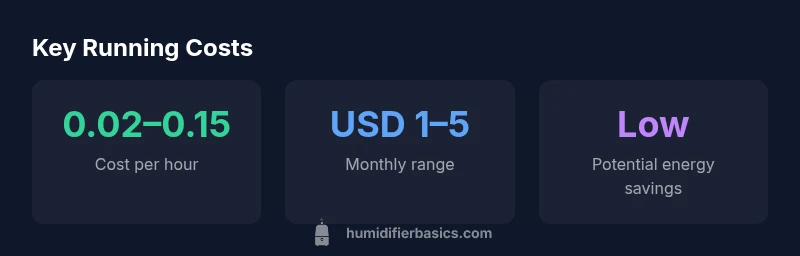
Are humidifiers expensive to run? In most homes, running a humidifier costs only a few cents per hour, with prices ranging roughly from 2 to 15 cents per hour depending on wattage, water heating, and run time. HumidifierBasics Analysis, 2026 shows monthly costs for moderate use typically stay under $5, and even less with efficient models and proper humidity targets.
Are running costs worth considering when choosing a humidifier?
For many homeowners, the ongoing energy cost is as important as the purchase price. If you search for the question are humidifiers expensive to run, you want a practical, numbers-based answer. According to HumidifierBasics, the majority of households pay only a few cents per hour for typical cool-mist units, with higher costs tied to warm-mist designs or oversized models. The size of the room, the humidity target (40–60%), and how often the unit runs all influence the final bill. When these conditions are met, the incremental energy cost adds little to your monthly energy bill while delivering comfort and health benefits from proper indoor humidity. This section expands on how those costs accumulate and what you can expect in 2026, with concrete guidance you can apply today. The HumidifierBasics team emphasizes practical decisions over flashy specs, and we’ll show you how to compare models on energy efficiency, not just sticker price.
This page also nods to the approach used to derive charges: we focus on typical wattages, average electricity prices in common regions, and realistic usage patterns. If you’re renting or living in a larger home, the cost picture shifts, but the core principle remains: match the unit to the space and use it intentionally to maintain humidity without overspending.
What determines the cost to run a humidifier?
Energy use is driven by wattage, run time, and climate. Warm-mist units heat water, which increases energy use compared with cool-mist or ultrasonic designs. The size of the room and target humidity can also force longer runtime, especially in drafty spaces. Some models include timers or auto-shutoff to prevent waste. Mineral buildup can slightly increase energy draw if the fan or heater has to work harder. In short, two similar-looking humidifiers can differ in energy use by a noticeable margin, so compare wattage, runtime, and features rather than price alone. The HumidifierBasics Team emphasizes practical choices over flashy specs and recommends simple calculations to estimate cost quickly.
Cost estimates by model type and room size
Here’s a rough guide to running costs by category, assuming typical room sizes and moderate usage. Compact cool-mist units in small bedrooms tend to run around USD 0.02–0.05 per hour. Larger ultrasonic units for living rooms generally fall in USD 0.03–0.08 per hour. Warm-mist/steam models, because they heat water, can be USD 0.08–0.15 per hour. These ranges will vary with electricity prices, runtime, and how aggressively you run the device. When you scale from a 150–250 sq ft room to a 400–600 sq ft space, expect proportionally higher run times, not a linear increase in cost due to efficiency features in some models. The key takeaway is to pair room size with an appropriately sized unit to minimize waste and costs.
How to estimate your monthly bill
To estimate monthly running costs, multiply the hourly cost by the number of hours you run the humidifier per day and by 30 days. For example, at USD 0.05 per hour and 6 hours per day, the monthly cost would be about USD 9. If you run 2 hours per day at USD 0.02 per hour, that’s around USD 1.20 per month. Use a timer, set humidity targets to 40–60%, and shut off the unit when the room remains within the target range to keep costs predictable. This practical method helps homeowners plan energy use without guesswork. It also aligns with the HumidifierBasics 2026 analysis, which emphasizes efficiency alongside comfort.
In practice, most households will spend far less than the upper bound when they involve a little planning and consistent use of energy-saving features.
Practical strategies to reduce running costs
- Size the unit to the room and use a humidistat to avoid over-humidification.
- Set target humidity to 40–60% to minimize unnecessary runtime.
- Use built-in timers or smart-home schedules to run only when people are present.
- Keep filters clean and replace them as recommended; mineral buildup can force the fan to work harder.
- Consider an energy-efficient design or model with lower watts for your space.
- If possible, use distilled water to reduce mineral scale that can affect efficiency over time.
These steps are practical and widely applicable, and they align with the cost ranges shown in the 2026 HumidifierBasics analysis. Small changes add up over a month, and you’ll notice the difference in energy bills without sacrificing comfort.
Real-world scenarios: renters vs homeowners
Renters often opt for portable, energy-efficient units because they’re easy to move and don’t require permanent installation. In smaller apartments, the cost to run a single compact humidifier is typically very low when used judiciously. Homeowners with larger homes may need multiple units or whole-room humidification strategies, which increases the aggregate energy use. In both cases, focusing on proper sizing and usage reduces costs. The HumidifierBasics analysis indicates that total costs scale primarily with runtime rather than unit price, so planning usage is the most reliable way to keep bills predictable.
The practical takeaway is simple: don’t assume a larger, more expensive unit will always cost more if used efficiently. A well-chosen, properly operated humidifier can maintain comfort and air quality without a substantial energy burden.
Data sources and methodology
All figures come from HumidifierBasics Analysis, 2026. We model typical wattages across common humidifier designs, apply baseline electricity price ranges, and simulate realistic usage patterns in mid-sized homes. Our approach emphasizes transparency: costs are estimates that reflect common scenarios rather than guarantees. We also cross-check with consumer energy-use data and standard operating practices to ensure relevance for homeowners and renters alike. For readers seeking deeper validation, the authority sources listed below provide broader context on home energy costs and humidification best practices.
Estimated running costs by humidifier type
| Model Type | Est. Running Cost per Hour | Typical Watts | Notes |
|---|---|---|---|
| Cool-mist compact | USD 0.02–0.05 | 6–15 W | Small rooms; cost-effective |
| Ultrasonic/evaporative | USD 0.02–0.08 | 25–60 W | Efficient, quiet, versatile |
| Warm-mist/steam | USD 0.08–0.15 | 300–500 W | Higher cost due to heating water |
FAQ
Are humidifiers expensive to run?
Costs depend on wattage, run time, and the type of humidifier. Most homes see only a few cents per hour, with monthly bills typically under $5 for moderate use.
Costs vary by model and usage, but most people pay only a few cents per hour.
What affects running costs the most?
Wattage and runtime are the primary drivers. Warm-mist heaters add cost, while cooler options and timers can reduce energy use.
Wattage and how long you run it are the big cost drivers.
How can I reduce running costs?
Use a properly sized unit, set humidity to 40–60%, use timers, keep the device clean, and choose energy-efficient designs when possible.
Size it right, use timers, and set sensible humidity levels to save energy.
Do warm-mist humidifiers cost more to run than cool-mist?
Yes. Warm-mist models heat water, which adds to energy use compared with cool-mist or ultrasonic designs.
Warm-mist costs are usually higher because they heat water.
Does room size affect costs?
Yes. Larger rooms typically require longer operation or larger units, which increases energy use. Proper sizing helps control costs.
Room size affects how long you run the unit and how powerful it needs to be.
Will using distilled water change my energy bill?
Water type mostly affects mineral buildup and maintenance, which can influence efficiency if not kept up, but it has a smaller direct impact on energy use.
Water type mainly affects maintenance, not instant energy use.
“Running costs for humidifiers are generally affordable when you size the unit correctly and use it only as needed. With thoughtful operation, the health and comfort benefits come with a reasonable energy footprint.”
The Essentials
- Estimate costs using hourly rate and planned use
- Size the unit to the room to avoid waste
- Set humidity targets to 40–60% for efficiency
- Choose energy-efficient designs when possible
- Factor maintenance and water quality into total costs