What Are the Differences in Humidifiers? A Practical Guide
Explore the differences between ultrasonic, evaporative, and warm-mist humidifiers. Learn how to choose, maintain, and safely use humidifiers to improve indoor air quality in any room.


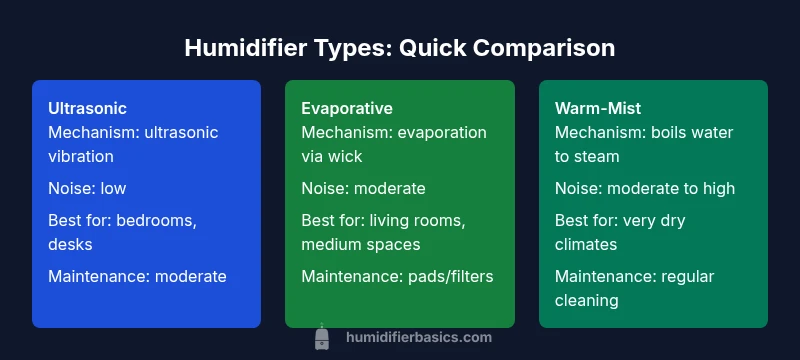
To answer what are the differences in humidifiers, humidifier types vary by mechanism and maintenance. Ultrasonic models run quietly and energy-efficiently but may spread mineral dust without distilled water. Evaporative units self-regulate humidity with a wick and pad, usually lower ongoing cost. Warm-mist units boil water for humidity, delivering rapid relief but with higher energy use and heat risk.
What are the differences in humidifiers? A data-driven lens on humidifier types
When homeowners and renters ask what are the differences in humidifiers, they’re really evaluating how each type handles water, air, and people. Humidifier technology centers on three broad families: ultrasonic, evaporative, and warm-mist. Ultrasonic units use high-frequency vibration to create a fine mist that dissipates quickly into the room. Evaporative models depend on a wick or filter that draws water into the air through evaporation, providing a natural form of self-regulation. Warm-mist devices boil water to release steam, delivering rapid humidity but consuming more energy and introducing a warm surface. Across these types, considerations include noise, maintenance cadence, water quality, and safety features. According to HumidifierBasics, understanding these core mechanisms helps you predict how a given model will feel in daily use and how it aligns with your household needs. This framing makes it easier to navigate product specs and real-world performance without guessing.
How humidifier mechanisms translate into daily use
The choice between ultrasonic, evaporative, and warm-mist humidifiers centers on how you balance quiet operation, humidity control, and upkeep. Ultrasonic units are prized for whisper-quiet operation and compact form factors, which makes them popular in bedrooms or home offices. The trade-off is that mineral dust can become visible if you don’t use distilled or demineralized water and a demineralization cartridge in some models. Evaporative units excel at safety because the evaporation process naturally throttles humidity as air becomes saturated; they typically rely on replaceable pads or filters, which means ongoing maintenance but predictable performance. Warm-mist humidifiers deliver instant humidity and can feel warmer to the touch, which some users find comforting in cold climates. They require careful handling and cleaning to prevent mineral buildup and to minimize burn risk if used around children.
Key factors that determine performance
To assess how a humidifier will perform, compare output at typical room conditions, the presence of a built-in humidistat, and how easily the device can be cleaned. Look for a unit that aligns with your room size: a small ultrasonic in a 200-square-foot bedroom behaves differently than a larger evaporative model in a living room. Consider water quality, as mineral-heavy tap water can leave residues. HumidifierBasics analyses indicate that a well-chosen model under consistent use can improve perceived comfort, reduce dry air symptoms, and support healthier indoor humidity levels when paired with a simple humidity target (40-50%).
Maintenance routines that keep humidifiers safe
Maintenance is not optional; it’s essential for long-term health. Nearly all humidifiers benefit from regular cleaning to remove biofilms and mineral deposits. Ultrasonic devices require occasional descaling to prevent mist darkening or clogging; evaporative units rely on pad or filter changes per the manufacturer’s schedule; warm-mist devices demand more frequent cleaning of the reservoir and boiling components to prevent mineral buildup. Always follow the user manual, and consider a routine where you empty, rinse, and dry the tank daily, with a thorough weekly clean using a mild solution. HumidifierBasics recommends using distilled water when possible to minimize mineral dust and bacterial growth, especially in bedrooms and nurseries.
Safety, water quality, and health considerations
Water quality matters. Mineral dust from hard water can settle on furniture and be inhaled with mist, particularly with ultrasonic units. Distilled or demineralized water minimizes this risk and reduces residue buildup. Bacteria thrive in standing water, so regular hygiene practices are crucial. For households with young children or pets, warm-mist units present burn risks if left unattended. The HumidifierBasics approach emphasizes choosing models with clear filter indicators, automatic shutoffs, and spill-proof designs to minimize accidents. Additionally, ensure devices sit on flat surfaces away from heat sources and keep the room’s humidity within recommended ranges to avoid mold growth or condensation.
Noise, energy use, and daily comfort
Noise is not merely a nuisance; it shapes how often you use a humidifier. Ultrasonic units often top the quietness charts, while evaporative and warm-mist devices can introduce moderate to higher noise levels due to fans or boiling action. Energy efficiency correlates with mist generation mechanics: ultrasonic units are typically the most energy-efficient option, while warm-mist devices use more electricity due to heating water. In practical terms, if you work from home or sleep nearby, a quiet ultrasonic model with a humidistat tends to deliver comfort with less disruption. If you need rapid humidity increase in drier months, a warm-mist unit can deliver faster relief, but you’ll weigh energy use against convenience.
Choosing by room size and environmental conditions
Room size remains the primary determinant of humidifier choice. Small bedrooms or home offices benefit from compact ultrasonic units with low output for steady humidity. Medium to large living spaces might require evaporative models with larger pads, which can handle sustained humidity without frequent refills. For kitchens or drafty rooms where you want immediate relief from dry air, a warm-mist unit provides quicker humidity, but be mindful of heat exposure and safety. In every case, pair the device with a reliable hygrometer to track actual humidity and adjust output to stay within the ideal range (roughly 40-50% RH in inhabited spaces).
Common myths and practical missteps to avoid
A common misconception is that “more mist equals better humidity.” In reality, over-humidification can feed mold and dust mites. Another misstep is assuming all minerals are harmless; mineral dust can irritate lungs and settle on surfaces, especially with ultrasonic devices. Some buyers assume expensive models are always better; however, maintenance quality, water type, and proper use often determine real-world performance more than price. Always verify safety features, such as auto shutoff, tip-over protection, and filter replacement reminders. HumidifierBasics suggests reading user reviews for long-term reliability and asking retailers about water quality recommendations for your home.
A practical decision framework you can apply today
Start with your room size and preferred noise level. If you prioritize silent operation and easy maintenance, a compact ultrasonic model with a humidistat is a strong starting point. If you’re concerned about over-humidification in larger spaces, an evaporative unit with a filter and built-in humidity control offers a more natural self-regulating experience. For rapid relief in dry climates or when respiratory sensitivity is high, a warm-mist unit can be appealing, provided you actively manage safety and cleaning. Use distilled water when possible, and keep humidity within 40-50% to minimize mold risks. This framework aligns with HumidifierBasics’ approach to practical, safety-conscious humidifier selection.
Feature Comparison
| Feature | Ultrasonic Humidifier | Evaporative Humidifier | Warm-Mist Humidifier |
|---|---|---|---|
| Mechanism | Ultrasonic vibration creates a fine mist | Evaporation through a wick/filter | Water is boiled to produce steam |
| Noise level | Low to very low | Moderate | Moderate to high (boiling sound possible) |
| Humidity control | Often requires humidistat; continuous output varies | Self-regulating via evaporation; easier to avoid overhumidification | Direct humidity via power setting; higher risk if not monitored |
| Maintenance | Descaling and occasional parts replacement | Replace pads/filters periodically | Frequent cleaning; monitor mineral buildup |
| Best for | Quiet operation; compact spaces | Medium to large rooms; cost-conscious | Rapid humidity; warm-room comfort |
| Price range | Moderate to high upfront | Low upfront | Moderate upfront with operating costs |
| Energy efficiency | Very high (no heat required) | Moderate | Lower efficiency due to heating element |
What's Good
- Quiet operation in most living spaces
- Lower ongoing cost for evaporative models
- Self-regulating humidity in evaporative units
- Broad availability and easier replacement parts
Negatives
- Mineral dust potential with hard water in ultrasonic models
- Pads/filters require replacement over time
- Warm-mist units pose burn risk and higher energy use
- Ultrasonic dust can occur without distilled water
Ultrasonic generally wins for quiet operation and efficiency; evaporative is best for stable humidity and lower maintenance; warm-mist offers speed at a safety and energy cost
Choose ultrasonic for quiet rooms and energy savings. Opt for evaporative when you want self-regulating humidity and simpler maintenance. Pick warm-mist if you need rapid humidity and don’t mind extra care.
FAQ
What are the main types of humidifiers, and how do they differ?
The main types are ultrasonic, evaporative, and warm-mist. Ultrasonic units use vibration to create a fine mist and are typically quiet. Evaporative models wick water through a filter for natural humidity control. Warm-mist humidifiers boil water to emit steam, delivering fast humidity but using more energy and requiring caution around heat. Each type has distinct maintenance needs and safety considerations.
There are three main types: ultrasonic, evaporative, and warm-mist. Ultrasonic are quiet, evaporatives self-regulate humidity, and warm-mist provide fast humidity but need careful use.
Which humidifier is best for a nursery or bedroom?
For nurseries or bedrooms, look for ultrasonics with a built-in humidistat and an auto shutoff. They’re quiet and energy-efficient, reducing sleep disruption. If minerals are a concern, choose distilled water and a model with easy cleaning access.
For nurseries, pick a quiet ultrasonic with a humidistat and easy cleaning. Use distilled water to minimize mineral dust.
Do humidifiers help with allergies or asthma?
Humidifiers can alleviate dryness-related irritation, but improper use can worsen mold or dust mite growth. Maintain humidity around 40-50% and clean regularly. Always choose models with safe materials and consider HEPA filtration in some setups for air-quality improvement.
Humidifiers help with dryness but require clean use and proper humidity levels to avoid mold or mites.
Is distilled water necessary for all humidifiers?
Distilled water is recommended with ultrasonic humidifiers to reduce mineral dust and buildup. Evaporative units are more tolerant of tap water but still benefit from cleaner water. Warm-mist humidifiers don’t rely on minerals for mist, but mineral deposits can still occur on parts if not cleaned regularly.
Distilled water reduces mineral dust in ultrasonic units; other types benefit from cleaner water but aren’t strictly required.
What maintenance cadence should I expect?
Most humidifiers require weekly cleaning and periodic filter or pad replacements. Descale as needed if you notice white residue or reduced mist. Following the manufacturer’s guidance helps prevent biofilms and ensures safe operation.
Clean weekly and replace filters as directed; descale if you see residue.
Are warm-mist humidifiers safer than cool-mist?
Warm-mist units can pose burn risks due to boiling water, especially around children or pets. Cool-mist options reduce burn risk but may require more frequent cleaning due to mineral dust or mold concerns if not maintained properly.
Warm-mist is faster but hotter and riskier around kids; cool-mist is safer but needs good cleaning and water choice.
The Essentials
- Assess room size before selecting a type
- Prefer humidistats to avoid over-humidification
- Use distilled water to reduce mineral dust
- Prioritize safety features in households with kids or pets
- Match maintenance effort to your routine