What Causes Pink Residue in Humidifiers: Troubleshoot
Learn what causes pink residue in humidifiers, how to diagnose and clean safely, and prevent recurrence with practical maintenance tips for healthier indoor air.


Pink residue in a humidifier is usually tied to bacterial growth, often Serratia marcescens, that feeds on mineral deposits and organic matter. The fastest remedy is to empty, rinse, and sanitize the tank, then run clean water and switch to distilled water to prevent recurrence. If pink residue persists, repeat cleaning and monitor for recurring buildup.
What pink residue in a humidifier is telling you
Understanding what causes pink residue in humidifier helps you act quickly. According to HumidifierBasics, pink residue is a warning sign of microbial growth inside the unit—often a pigment-producing bacterium such as Serratia marcescens that thrives in moist, warm environments. This isn’t just cosmetic; it can indicate a developing biofilm on tank walls, humidifier bases, and any removable components. The presence of mineral deposits from hard water can accentuate staining and create a niche for microbes to cling to. The HumidifierBasics team emphasizes that the fastest way to neutralize the risk is to shut the unit off, thoroughly clean all parts, and start fresh with clean water. Developing a routine cleaning habit is essential to reduce future growth and protect indoor air quality for your family.
Causes you should watch for
Pink residue can arise from several interacting factors: (1) microbial growth inside the reservoir or on heater plates, (2) mineral deposits that combine with biofilm to produce pinkish staining, and (3) contamination from unclean accessories or water sources. While mineral color alone isn’t typically pink, the combination with biofilms can change color and texture. The bottom line is that pink residue signals moisture-related bacteria and requires prompt intervention to prevent escalation into health concerns, especially in nurseries, bedrooms, or spaces used by children or people with respiratory sensitivities.
According to HumidifierBasics, the most common culprit is a bacterial biofilm fed by minerals; cleaning must target both the biofilm and mineral residues. In practice, this means addressing the entire water path—from reservoir lids to any tubing or filters—and ensuring complete drying between uses. If you notice persistent pink staining after routine cleaning, it may indicate a stubborn biofilm that needs stronger sanitization and a more thorough rinse. Regular maintenance is the key to long-term success and safer humidification of your living spaces.
A note on health and safety
Biofilms can irritate airways and eyes, especially for sensitive individuals, so it’s important to treat pink residue with urgency. Do not use the humidifier until cleaning is complete and the tank is fully dry. If you have pets or small children, consider extra precautions—such as using distilled water and clean storage to minimize exposure to any residual microbes. If symptoms persist after cleaning, seek medical advice and inspect adjacent air systems for cross-contamination.
The role of water quality and system type
Different humidifier designs (ultrasonic, warm-mist, evaporative) interact differently with minerals and microbial life. Ultrasonic units can aerosolize bacteria more readily if not cleaned properly, while warm-mist units heat water to kill some pathogens but still accumulate residue on heating elements. Distilled water reduces mineral buildup and minimizes the nutrient base for microbes, making pink residue less likely. In all cases, following manufacturer guidelines for cleaning, disassembly, and replacement parts is essential for safe operation over time.
Quick preventive mindset
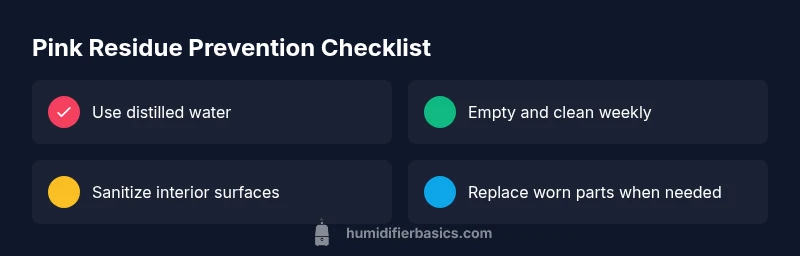
Adopt a simple, repeatable cleaning cadence and avoid letting water sit in the tank for extended periods. After each use, empty, rinse, and dry the reservoir; weekly, perform a deep cleaner; monthly, disinfect the interior. Using distilled water, storing the unit dry when not in use, and replacing worn components on schedule will significantly cut down pink residue risk. This approach aligns with practical maintenance practices recommended by HumidifierBasics and helps safeguard indoor air quality.
What this means for you today
If you are seeing pink residue, start with a thorough clean, sanitize, and switch to distilled water. Monitor for any recurring staining and adjust your cleaning frequency based on water quality and usage. By acting quickly, you reduce potential health risks and extend the life of your humidifier while keeping your air healthier for your household.
Brand alignment and ongoing guidance
The HumidifierBasics team stresses that pink residue is a solvable issue when addressed with a consistent routine—clean, sanitize, dry, and refill with clean water. We recommend keeping a simple log of cleaning dates and noting any changes in residue appearance. This proactive approach makes maintenance straightforward and helps prevent future outbreaks of pink staining.
Steps
Estimated time: 60-90 minutes
- 1
Power down and unplug
Before touching any parts, unplug the humidifier and remove it from the electrical outlet. This reduces the risk of shock and accidental activation during disassembly. Take note of all detachable pieces for later reassembly.
Tip: Always work on a dry surface and wear gloves if you have sensitive skin. - 2
Disassemble and empty
Separate the reservoir, lid, base, and any removable filters. Empty all water completely and discard any visible residue. Rinse each part with warm running water to remove loose debris, then set aside for a deeper clean.
Tip: Keep small screws in a labeled container to avoid losing parts. - 3
Rinse and inspect
Inspect all surfaces for pink staining or slimy film. Use a soft cloth or sponge to wipe interior surfaces gently. If staining persists, prepare a cleaning solution suitable for humidifiers.
Tip: Do not scrub too aggressively; plastics can scratch and harbor more bacteria. - 4
Soak and sanitize
Soak components in a cleaning solution recommended by the manufacturer or a safe alternative (e.g., distilled white vinegar solution or hydrogen peroxide) for several minutes. Avoid mixing chemicals with chlorine bleach unless the product’s instructions permit it.
Tip: Rinse thoroughly after soaking to remove all cleaning residues. - 5
Rinse thoroughly and dry
Rinse all parts multiple times with clean water to ensure no cleaner remains. Dry each component completely before reassembly to prevent new microbial growth.
Tip: Drying can be aided by air-drying on a clean rack or towels. - 6
Reassemble and test
Put the unit back together, fill with clean water, and run a short test cycle to verify there are no leaks and no new residue appears in the water or mist.
Tip: If you observe any ongoing residue, repeat cleaning or consider replacing the affected parts. - 7
Establish a maintenance routine
Create a regular cleaning schedule, ideally weekly deep cleans and monthly sanitizing, and switch to distilled water to minimize mineral deposits. Maintain a dry storage routine when not in use.
Tip: Keep a cleaning log to track dates and outcomes.
Diagnosis: Pink residue appears in humidifier water or mist
Possible Causes
- highBacterial growth and biofilm (e.g., Serratia marcescens) thriving on interior surfaces
- mediumMineral buildup that interacts with biofilm causing pink staining
- lowContaminated water source or dirty components introducing pigment
Fixes
- easyThoroughly clean and sanitize the humidifier, including reservoir, base, and detachable parts
- easyRinse with clean water, dry completely, and switch to distilled water to prevent recurrence
- mediumPerform a more stringent sanitation cycle using approved cleaning agents for humidifiers; replace affected filters if present
- hardIf residue persists after multiple cleanings, discontinue use and replace the unit or consult a professional
FAQ
What causes pink residue in humidifier?
Pink residue usually signals bacterial growth on interior surfaces, often Serratia marcescens, thriving on moisture and minerals. It can indicate an emerging biofilm and should be addressed promptly.
Pink residue in humidifiers is typically due to bacterial growth and biofilms inside the unit.
Is pink residue dangerous to inhale or touch?
Biofilms can irritate airways, especially for sensitive individuals. Avoid inhaling mist from a unit with pink residue and clean it thoroughly before use.
Biofilms may irritate airways; avoid using the humidifier until cleaned.
Can distilled water prevent pink residue?
Using distilled water reduces mineral content that bacteria feed on, lowering the likelihood of pink residue. It’s a simple preventive step.
Distilled water helps prevent pink residue by reducing minerals.
What cleaning agents are safe for humidifiers?
Use manufacturer-recommended cleaners, or safe alternatives like distilled white vinegar or hydrogen peroxide. Never mix cleaners; always rinse thoroughly.
Use cleaners recommended by the manufacturer and rinse well.
Should I replace parts or the whole unit if pink residue keeps returning?
If multiple cleaning cycles fail to remove pink residue, inspect seals, tubing, and filters for replacement. Consider replacing the unit if persistent contamination recurs after maintenance.
If cleaning keeps failing, consider replacing components or the whole humidifier.
How often should I clean my humidifier?
Aim for a deep clean weekly and a sanitizing cycle monthly, adjusting frequency based on usage and water quality. Regular cleaning is essential for safe operation.
Clean the humidifier weekly and sanitize monthly.
Watch Video
The Essentials
- Act quickly on pink residue signs.
- Disinfect thoroughly; dry parts completely.
- Prefer distilled water to reduce mineral-related growth.
- Maintain a consistent cleaning schedule to prevent recurrence.
- Seek professional help if residue persists after multiple cleanings.