Why Is My Humidifier So Dirty? A Practical Troubleshooting Guide
A practical, urgent guide to diagnosing dirty humidifiers, cleaning safely, and preventing mineral buildup and mold for healthier indoor air.


Most likely culprit is mineral buildup and microbial growth caused by minerals in tap water. A quick fix is a thorough rinse, vinegar soak, and a distilled-water cleaning cycle, followed by a fresh rinse. Then switch to distilled water and clean weekly to prevent future grime and musty odors.
Why is my humidifier so dirty
Why is my humidifier so dirty? If you’re asking why is my humidifier so dirty, you're not alone. When you notice cloudy mist, a musty odor, or slimy residue, the culprit is usually mineral buildup and microbial growth from tap water. According to HumidifierBasics, dirty humidifiers typically result from mineral residue left by hard water, combined with organic growth from standing water. The HumidifierBasics team found that the most persistent grime appears when the unit is not cleaned regularly or when distilled water isn’t used. In practice, even small amounts of minerals can accumulate into film on the tank and reservoir parts, while warm mist can foster mold and mildew in dark corners. This combination leads to visible residue, reduced performance, and unwanted odors that can irritate the nose and lungs, especially in homes with pets or sleeping children. Read on to understand why and how to combat it effectively.
Common culprits behind dirt and musty smells
Many homeowners ask, why is my humidifier so dirty after a week? Mineral deposits appear fastest in hard water; mold and bacteria thrive in damp reservoirs and stagnant air. If the tank isn't emptied daily or if the filter is overdue for replacement, grime accumulates quickly. Mold spores can ride on mist and settle on furniture, carpets, and bedding. Poor placement (enclosed shelves, little air movement) further compounds the problem. The key takeaway: check water quality, clean schedule, and airflow to prevent repeat buildup. The HumidifierBasics guidance emphasizes consistent cleaning cycles and using distilled water to reduce mineral residue.
How mineral buildup forms and why it matters
Mineral buildup forms when dissolved minerals in hard water precipitate out and adhere to tank walls, tubing, and wicks. Over time, this creates a cranky cloudy film that reduces mist output and can harbor bacteria. If you skip routine cleaning, the mineral film compounds with organic matter from air and food residues, fostering odors. In essence, mineral buildup lessens efficiency and invites microbial growth, which can trigger coughing or throat irritation for sensitive people. Regular cleaning disrupts this cycle and maintains air quality.
Mold and mildew risks in humidifiers
Humidifiers are perfect breeding grounds for mold and mildew when kept moist and dark. Mold can colonize in the water reservoir, tubes, and lid gasket. The visible signs are musty smells, green or black patches, and a persistent stale odor on first waking. Microbial contamination can spread through the room as mist, so it’s essential to sanitize and dry parts between uses. The HumidifierBasics approach stresses drying, air exchange, and weekly sanitization to minimize health risks associated with dirty humidifiers.
Quick fixes you can do today
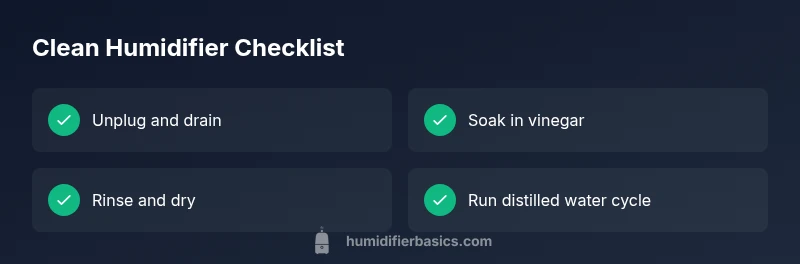
Start with a basic clean: unplug, empty the reservoir, rinse with hot water, and wipe surfaces. Soak parts in a 1:1 solution of white vinegar and water for 30 minutes, then rinse thoroughly. Refill with distilled water to minimize mineral deposits and run the unit for 5–10 minutes to flush out residues. If you notice persistent odor, repeat the cycle or consider a mild sanitizing rinse recommended by the manufacturer. Always air-dry components before reassembly.
Deep cleaning: step-by-step guide (Part 1)
This section covers the first half of a deep clean. Disassemble the unit according to the user manual, remove the tank, lid, and any detachable parts, and set aside non-washable pieces. Prepare a cleaning solution of white vinegar and water (1:1) and soak for 20–30 minutes to break mineral deposits. Scrub with a soft brush, rinse thoroughly, and dry completely before reassembly. The goal is to remove mineral buildup without damaging seals.
Deep cleaning: Part 2 — disassembly and sanitizing
For stubborn grime, use a diluted bleach solution (follow manufacturer guidelines) or a hydrogen peroxide rinse to sanitize internal surfaces. After sanitizing, rinse until no chemical odor remains. Recheck seals, then reassemble. Run a clean cycle with distilled water and discard the initial mist to ensure no residues are released into the air. This process reduces the risk of mold returning.
Preventive maintenance routines
Establish a weekly cleaning schedule and use distilled water whenever possible to minimize mineral deposits. Empty and dry the tank between uses if you don’t run the humidifier daily. Regularly replace filters and check for cracks or wear around seals. Consider airflow in the room—good circulation helps prevent stagnant moisture that promotes mold growth.
Steps
Estimated time: 60-90 minutes
- 1
Unplug and empty the tank
Power down the unit and pour out residual water. This prevents splashing and prepares for cleaning.
Tip: Do not ignore any gasket seals; a leaky seal indicates wear. - 2
Disassemble removable parts
Take apart the tank, lid, and any detachable pieces following the manual.
Tip: Keep small parts in a labeled container so you don’t lose them. - 3
Soak in vinegar solution
Soak parts in a 1:1 white vinegar and water solution for 20-30 minutes to break mineral deposits.
Tip: Never mix vinegar with chlorine bleach. - 4
Scrub and rinse
Gently scrub all surfaces with a soft brush; rinse thoroughly until no residue remains.
Tip: Rinse multiple times until water runs clear. - 5
Sanitize (optional)
If needed, sanitize with manufacturer-approved solution or a peroxide bleach mix; follow instructions.
Tip: Avoid concentrated chemicals near living spaces. - 6
Dry and reassemble
Air-dry all parts completely before reassembling; ensure seals are secure.
Tip: Completely dry prevents future mold growth. - 7
Run a flush cycle
Fill with distilled water and run the unit to clear any remaining residues.
Tip: Discard the first few mist passes. - 8
Establish a weekly routine
Set reminders to clean weekly and adjust water type as needed.
Tip: Keep a cleaning log for accountability.
Diagnosis: Tank shows slimy residue, musty odor, cloudy mist, or visible mold growth
Possible Causes
- highMineral buildup from hard water
- mediumStagnant water in tank
- lowMold or mildew in reservoir
Fixes
- easyDisassemble and rinse with hot water; soak in vinegar solution (1:1) for 20-30 minutes; rinse thoroughly
- easySanitize with manufacturer-approved solution or diluted bleach; rinse until scent-free
- easySwitch to distilled water; replace filters if applicable; run several clean cycles
FAQ
How often should I clean my humidifier?
Most manufacturers recommend cleaning at least once a week during regular use. If you notice mineral buildup or odors, clean more often. Always follow the user manual for specific intervals.
Most people should clean weekly; if you notice buildup, clean more often.
Can I use bleach or vinegar to clean?
Vinegar is safe for routine mineral removal, but avoid concentrated vinegar on certain plastics. Bleach can be used for sanitizing if the manufacturer allows it; rinse thoroughly to remove all chemical traces.
Vinegar is common for mineral removal; use bleach only if allowed and rinse well.
Is distilled water better than tap water?
Yes. Distilled water minimizes mineral deposits and reduces mold risk, improving efficiency and air quality. Tap water increases mineral buildup and can lead to more frequent cleanings.
Distilled water reduces mineral buildup and mold risk.
What are signs I need to replace parts?
Cracked tanks, warped lids, torn seals, or persistent odor after cleaning indicate parts may need replacement. Worn filters reduce airflow and cloud the mist.
Look for cracks, warping, or persistent odors; replace parts as needed.
Can a dirty humidifier affect health?
Yes. Mold and bacteria in a dirty humidifier can trigger coughing, throat irritation, or allergic symptoms, especially in sensitive individuals. Regular cleaning reduces these risks.
Dirty humidifiers can worsen allergies or coughing; clean regularly.
What if I have pets in the home?
Pets increase exposure to mold spores; ensure surfaces are dry, use distilled water, and clean more frequently. Keep the unit out of pet areas if possible.
Pets can raise mold exposure; clean more often.
Watch Video
The Essentials
- Clean weekly to prevent buildup
- Use distilled water to reduce minerals
- Disassemble and sanitize safely
- Dry parts thoroughly to stop mold
- Monitor for signs of mold or leaks