Why does my humidifier have black stuff in it? Urgent troubleshooting guide
Urgent troubleshooting guide to fix black residue in humidifiers. Learn how to identify mold vs mineral buildup, clean safely, and prevent future recurrences with HumidifierBasics expert tips.


To fix black residue in a humidifier, start by stopping use, emptying the tank, and thoroughly rinsing with clean water. The most likely causes are mineral buildup from tap water or mold from standing moisture. Next, clean the reservoir with a mild cleaning solution, rinse well, and switch to distilled water or a cleaning cycle recommended by your unit's manual.
Why the question matters
If you’re asking why does my humidifier have black stuff in it, the answer is usually that either mineral buildup from hard or tap water or microbial growth from prolonged moisture is occurring. Homeowners often discover this after a few days of use in bedrooms or nurseries. According to HumidifierBasics, moisture systems are only as clean as the water and the routine you give them; neglect invites both minerals and microbes to take hold. This guide will help you diagnose quickly and act decisively, so you can restore safe, comfortable humidity without sacrificing air quality.
Mold, mildew, and microbial growth in humidifiers
Black or dark residue is frequently a sign of mold or mildew thriving in a damp reservoir. This happens when mist from the humidifier circulates spores into the air, especially if the unit sits unused for long periods or the water stays stagnant overnight. You may also notice a musty smell. Mold can irritate eyes, skin, and especially the respiratory system, so it’s essential to address it promptly. Regular cleaning disrupts the life cycle of these organisms and reduces exposure risks. HumidifierBasics notes that visible mold warrants thorough cleaning and a possible component replacement if growth persists.
Mineral buildup from water quality
Even when no visible mold is present, minerals dissolved in tap water can accumulate on surfaces inside the tank and on the evaporator. This is more common with hard water and ultrasonic models where minerals are dispersed into the mist as you humidify. Mineral scale can clog jets, reduce humidification efficiency, and create a cloudy, blackish tint over time. The simplest fix is to switch to distilled water, followed by a thorough tank and wick/plate cleaning. In HumidifierBasics analyses, mineral buildup correlates strongly with water type and cleaning frequency; prevention hinges on water choice and routine maintenance.
Quick checks you can do today (non-technical)
- Unplug the unit and remove the tank. Check for any visible mold on the tank walls or cap.
- Smell the water or tank: a musty odor usually signals mold, while a sour smell can indicate bacterial growth.
- Look for mineral films on the tank, lid, or evaporator plate. If you can visually confirm mineral scale, plan a cleaning routine immediately.
- If your humidifier has a disposable wick or filter, inspect or replace it, as clogged components nurture residue growth. These checks are simple, safe, and often resolve the issue without tools.
Cleaning strategies that actually work
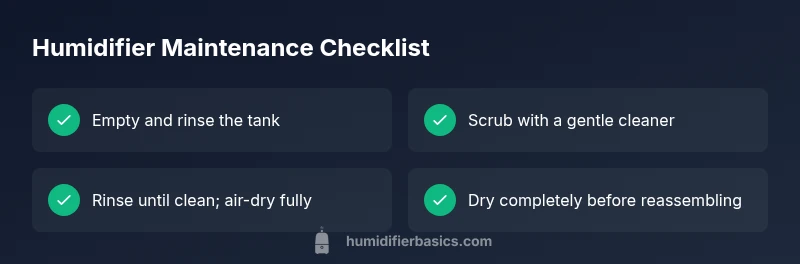
Effective cleaning combines mechanical scrubbing with a gentle sanitizing rinse. Start by emptying the reservoir, then rinse with clean water. Use a mild cleaning solution recommended by the manufacturer or a safe household option like distilled vinegar solution, and scrub with a soft brush. Rinse until all traces of cleaner are gone, then air-dry all parts completely before reassembly. If odor or residue returns after a few days, repeat the cleaning cycle and consider replacing the tank or filter.
Aftercare, prevention, and long-term tips
Set a weekly cleaning schedule: drain, rinse, scrub, circle the drain, and air-dry. Always use distilled or demineralized water for daily use, and avoid keeping water in the tank for extended periods. Keep the humidifier in a clean, dry area away from direct sunlight to slow mold growth. Dry all components between uses, and store without water if you won’t use the device for a while. The HumidifierBasics team emphasizes consistent care as the best defense against black buildup and reduced air quality. The HumidifierBasics team also notes that consistent maintenance reduces health risks associated with dirty humidifiers.
Steps
Estimated time: 45-60 minutes
- 1
Power off and unplug
Unplug the unit and remove the water tank. This first step prevents shocks and keeps you safe while inspecting for visible mold or scale. Check the power cord for any wear.
Tip: If the cord shows damage, stop and replace the unit or consult a professional. - 2
Disassemble and empty
Take apart removable components (tank, lid, wick/filters, evaporator plate) and pour out old water. Do not mix residues from different parts; keep everything separated for thorough cleaning.
Tip: Label components to avoid mixing parts during reassembly. - 3
Rinse and scrub
Rinse all parts with clean, lukewarm water. Use a soft brush or cloth to scrub any visible residue from the tank, lid, and evaporator surface. Avoid abrasive tools that could scratch surfaces.
Tip: Do not use harsh chemicals on plastic parts as they can degrade over time. - 4
Sanitize with safe cleaner
Apply a mild sanitizer or a safe cleaning solution (as recommended by the manufacturer or a harmless vinegar rinse) and scrub again. Rinse until there are no traces of cleaner left.
Tip: Limit cleaner contact to the intended parts to avoid damage. - 5
Rinse thoroughly
Rinse all parts thoroughly to remove any cleaner residue. Any leftover cleaner can disperse into mist and irritate eyes or lungs.
Tip: Run plain water through the tank to ensure complete rinsing. - 6
Dry completely
Dry all components completely before reassembly to prevent new mold growth. Leave the tank open in a well-ventilated area until completely dry.
Tip: Water remaining inside any hollow spaces promotes mold growth. - 7
Reassemble and test
Reassemble the unit and fill with clean water. Run on a short cycle to check for leaks and to ensure the unit operates normally.
Tip: Observe for any unusual odors or residue after the test run. - 8
Evaluate water type and schedule
If black residue returns, switch to distilled water and adopt a weekly cleaning schedule. Consider replacing old components that show wear or mold.
Tip: Keep a cleaning log to track when you cleaned and what water you used.
Diagnosis: Visible black residue or growth inside humidifier tank
Possible Causes
- highMineral buildup from tap water
- highMold or mildew from prolonged moisture
- mediumContaminated water source or dirty reservoir
- mediumDirty or clogged filter or wick
Fixes
- easyEmpty, rinse, and scrub the tank; use a mild cleaner or vinegar rinse if recommended by the manufacturer
- easySwitch to distilled water and run a cleaning cycle; replace filters or wicks if present
- mediumDisinfect the reservoir with manufacturer-approved sanitizers and rinse thoroughly; allow to dry completely
- hardIf odor or residue recurs after cleaning, replace the tank or the humidifier unit
FAQ
What causes black stuff in a humidifier?
Black residue is usually mold or mineral buildup. Mold grows in damp reservoirs, while minerals come from water. Use distilled water and a regular cleaning routine to address both.
Black residue in a humidifier is typically mold or mineral buildup. Regular cleaning and distilled water reduce both risks.
Is the residue dangerous to breathe?
Mold spores and bacteria can irritate the lungs and airways. If you notice persistent residue, clean thoroughly and consider replacing parts or the unit.
Mold and bacteria in a humidifier can irritate your lungs. Clean and replace parts if needed.
How often should I clean my humidifier?
Clean the humidifier at least once a week when used daily, and more often if you notice residue or odor. Always drain and dry between uses.
Clean weekly when in use, more often if you see residue or odor.
Should I always use distilled water?
Distilled or demineralized water reduces mineral buildup and improves air quality. Tap water increases scale and residue.
Yes—distilled water helps prevent mineral buildup and keeps the unit cleaner.
What if cleaning doesn’t remove the residue?
If residue persists after cleaning, replace the tank or unit, and consult the manual for replacement parts. Seek professional help if mold is widespread.
If residue stays after cleaning, replace parts or the unit and consider professional help if mold is widespread.
Can I bleach my humidifier?
Bleach is generally not recommended for humidifiers because it can create fumes when heated. If allowed by the manufacturer, use it sparingly and rinse thoroughly.
Bleach isn’t usually recommended in humidifiers due to dangerous fumes; check your manual first.
Watch Video
The Essentials
- Clean and dry the humidifier after each use
- Switch to distilled water to minimize mineral buildup
- Use manufacturer-approved cleaning routines and replace worn parts
- Mold requires prompt, thorough cleaning or replacement