What Causes Pink Mold in Humidifier: Troubleshooting Guide
Urgent troubleshooting guide to pink mold in humidifiers. Learn causes, health risks, and proven steps to clean, prevent recurrence, and know when to seek professional help for safer indoor air.


The most likely cause is stagnant water that sits long enough for a pink biofilm to establish, especially where minerals fuel growth. Quick fixes: empty and rinse the tank, use a vinegar or hydrogen peroxide cleaning solution, rinse thoroughly, and run through a clean water cycle with distilled water before resuming use. If mold returns, repeat cleaning and consider replacing worn parts.
Pink mold in humidifiers: what it is and why it forms
Pink mold is a common, fast-growing biofilm that can appear in humidifier tanks and bases when warm, stagnant water sits for extended periods. This pink residue is not merely cosmetic; it can harbor microbes that irritate the throat, trigger allergies, or worsen asthma in sensitive individuals. According to HumidifierBasics, pink mold grows best where humidity is high, temperatures are mild, and mineral deposits provide nutrients. This guide explains what causes pink mold in humidifier and how to stop it from returning. By acting quickly, you can reduce potential health risks and keep your indoor air cleaner. Start by inspecting the tank, tray, and any removable parts for discoloration — the sooner you identify it, the easier prevention becomes.
The science behind pink mold: moisture, minerals, and warmth
Pink mold thrives in warm, damp environments with residual minerals from hard water. Even with regular use, mineral buildup can provide a nutrient source for biofilms. The warmth from proximity to a heater or room air circulation enhances growth, while stagnant water offers a steady supply of moisture. HumidifierBasics notes that while the exact organism may vary, the pink-orange film is a telltale sign of a growing biofilm that can transfer to mist. Understanding this helps homeowners tailor their cleaning frequency, water type, and storage practices to reduce recurrence.
Key takeaway: minimizing standing water, reducing mineral buildup, and controlling room humidity are your best defenses against pink mold.
Where pink mold hides in your device: common spots to check
Pink mold can colonize the tank, lid gaskets, tubing, and any small crevices that retain moisture. Ultrasonic humidifiers, evaporative types, and warm-mist devices each have unique niches where biofilms thrive. In many cases, mold hides where a tank meeting surface, misaligned seals, or poorly rinsed components trap water. Regular observation of the lid seals, air intake areas, and the base is essential. If you see a pink coating on any surface, pause use and begin a thorough cleaning cycle before reusing the unit.
Quick checks you can do today to curb growth
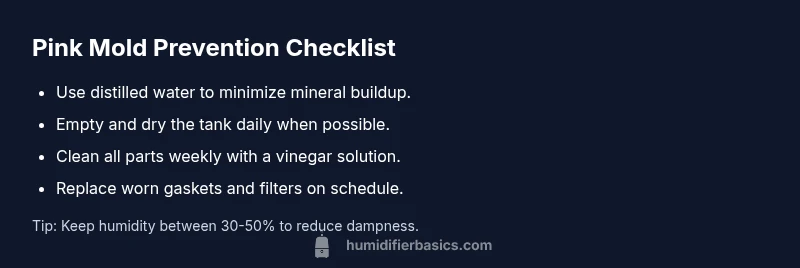
- Empty and rinse the reservoir daily if the unit runs continuously; otherwise, do it at the end of the day.
- Use clean, distilled water instead of tap water to reduce mineral deposits that feed mold.
- Wash removable parts with mild dish soap and a brush to reach tight corners.
- Dry all components completely after cleaning to prevent residual moisture from feeding mold.
- Check for cracks or warped gaskets; replace any damaged parts to keep the device sealed and dry.
Deep-clean techniques that actually remove pink biofilms
- Prepare a cleaning solution: a 1:1 mixture of distilled white vinegar and water; soak all removable parts for 20–30 minutes, then scrub with a soft brush.
- For tougher residues, use a hydrogen peroxide solution (3% concentration) to kill microbes; rinse thoroughly to remove any trace of chemical.
- After soaking and scrubbing, rinse all parts twice with clean water and air-dry completely before reassembling.
- When reassembling, fill with distilled water and run a 15-minute clean cycle to flush the system before normal use.
- Do not mix cleaners; avoid bleach on certain plastics unless the manufacturer explicitly allows it.
Step-by-step maintenance to prevent pink mold from returning
Establish a weekly cleaning routine for the device, with a deeper monthly cleaning. Refill with distilled water, and replace any filters or cartridges according to the manufacturer’s schedule. Store the humidifier in a dry, ventilated area and keep humidity levels in the home between 30–50% to reduce indoor dampness. Regular checks of seals, hoses, and bases help catch wear before mold takes hold.
Water quality and filtration: reducing mold-friendly conditions
Hard water minerals accelerate biofilm formation; using distilled or demineralized water helps reduce the nutrient load. If your unit uses filters, replace them as recommended by the manufacturer. Clean water alone isn’t enough; ensure the tank dries between uses and that you’re not leaving water in the base overnight. View the humidifier as a system: if any part holds water after a cycle, you increase mold risk.
Health risks and safety: what pink mold means for your home
Pink mold can contribute to allergies, coughing, and throat irritation, particularly for children, elderly, or those with respiratory sensitivities. If you notice persistent symptoms after running your humidifier, pause use and consult a healthcare professional. Always ensure good ventilation when operating humidifiers to prevent moisture buildup in walls or ceilings. Do not ignore persistent discoloration or a musty odor, which could indicate a broader mold problem beyond the humidifier.
When to replace parts or call a pro: deciding the right time
If the mold recurs after thorough cleaning, or if seals or hoses show wear that cleaning cannot address, replacement parts are often the best option. Persistent pink film on the tank or lid can indicate micro-tears or micro-cracks where moisture hides, which are hard to clean thoroughly. In such cases, consult the manufacturer’s guidance or a professional appliance service to assess the device for replacement or advanced cleaning.
Steps
Estimated time: 45-60 minutes
- 1
Power down and unplug the humidifier
Unplug the device and remove the water tank. This ensures your safety during disassembly. Prepare a clean workspace and gather cleaning supplies.
Tip: Always unplug before touching internal parts to avoid electric shock. - 2
Empty water and disassemble
Pour out any remaining water, remove the tank, lid, any hoses, and the base if possible. Lay parts on a towel to prevent accidental drops.
Tip: Take a photo of part placement to aid reassembly. - 3
Soak and scrub
Soak removable parts in a 1:1 vinegar-water solution for 20–30 minutes, then scrub with a soft brush. For stubborn spots, repeat as needed.
Tip: Avoid harsh abrasives that can scratch plastic surfaces. - 4
Rinse and sanitize
Rinse all parts thoroughly with clean water. For extra disinfection, use a 3% hydrogen peroxide solution and rinse again until no residue remains.
Tip: Let parts air-dry completely before reassembly. - 5
Dry and reassemble
Ensure every component is completely dry before reassembling. This minimizes the chance of quick mold rebound.
Tip: Do not reuse damp seals; replace if they show wear. - 6
Test cycle with distilled water
Run a short cycle with distilled water to flush any cleaner residue and ensure proper operation before regular use.
Tip: Discard the first two batches of mist to prevent air contamination. - 7
Implement a maintenance plan
Set a weekly cleaning schedule and monthly deep clean. Use distilled water and replace filters on schedule.
Tip: Keep a cleaning calendar visible near the humidifier.
Diagnosis: Visible pink discoloration in reservoir, tubing, or mist output
Possible Causes
- highStagnant water and mineral buildup feeding biofilm
- mediumContaminated removable parts or filters
- lowInadequate drying and improper water type
Fixes
- easyEmpty tank and rinse; clean all removable parts with vinegar solution
- mediumDisassemble and scrub with a soft brush; sanitize surfaces with hydrogen peroxide; rinse thoroughly
- easyReplace filters or worn gaskets; switch to distilled water permanently; run multiple clean cycles
FAQ
What exactly is pink mold in humidifiers?
Pink mold is a biofilm that forms in moist environments inside humidifiers. It appears as a pink or orange film and can harbor microbes that affect indoor air quality. Regular cleaning helps prevent its growth and spread.
Pink mold is a biofilm that forms in moist humidifiers and can affect air quality. Regular cleaning helps prevent it.
Is pink mold dangerous to health?
Prolonged exposure to mold biofilms may irritate airways or trigger allergies in sensitive people. If you notice persistent coughing, wheezing, or throat irritation after humidifier use, stop using the device and consult a professional.
Mold can irritate airways; stop using the humidifier if you have symptoms and consult a professional if needed.
How often should I clean my humidifier to prevent pink mold?
Clean the humidifier weekly with a vinegar solution and perform a deeper clean monthly. Empty and dry the tank between uses if you don’t run it daily.
Clean weekly with vinegar; deep clean monthly; dry between uses.
Can I use bleach to clean pink mold in humidifiers?
Bleach can be effective in some devices, but it may damage plastics or leave residues. Always follow the manufacturer’s cleaning guidelines and never mix bleach with other cleaning agents.
Bleach isn’t always safe for humidifiers; follow manufacturer guidelines and never mix cleaners.
Should I replace the humidifier if pink mold keeps returning?
If mold persists after thorough cleaning and part replacement, the device may be past its protective life. Consider replacing with a device that offers easier cleaning and better seals.
If mold keeps returning after good cleaning, replacement may be wise.
What water type helps prevent pink mold growth?
Distilled or demineralized water reduces mineral growth that feeds biofilms. It’s a simple, effective preventative step for most humidifiers.
Use distilled water to cut down on mold-fueling minerals.
Watch Video
The Essentials
- Regularly empty and dry humidifier tanks to prevent mold.
- Distilled water reduces mineral buildup that feeds pink mold.
- Deep clean with vinegar or peroxide; avoid mixing cleaners.
- Replace worn parts and maintain a consistent cleaning schedule.