Why Does My Humidifier Have Red Residue? A Practical Troubleshooting Guide
Learn why red residue appears in humidifiers and how to fix it fast. Step-by-step cleaning, prevention tips, and safety guidance from HumidifierBasics.


Red residue in a humidifier is usually caused by mineral buildup, rust, or bacterial growth. For a quick fix: unplug, empty the tank, rinse with distilled water, and clean with white vinegar. Rinse again, sanitize with hydrogen peroxide, then refill with distilled water. If the residue persists, consider replacing faulty parts or the unit.
Why Does My Humidifier Have Red Residue?
According to HumidifierBasics, red residue in a humidifier is most often caused by mineral deposits from hard water, rust from metal components, or microbial growth in damp parts. When warm mist or ultrasonic units operate, minerals like iron, calcium, and magnesium can accumulate on heat plates and reservoirs, giving a rust-like tint. Serratia marcescens and other reddish bacteria thrive in consistently wet environments and can appear as pinkish slime or specks. This is not just an aesthetic problem; it can affect air quality and potentially irritate sensitive occupants. Before you panic, perform a systematic check to identify which scenario is most likely in your unit. Start by inspecting water quality, looking for rust-colored stains on the tank, and noting any unusual odors. If you have a furnace humidifier or a unit with a metal base, rust from internal components is more common. Distilled water dramatically reduces mineral buildup and should be your default for ongoing use.
Quick Checks You Can Do Now
If red residue has appeared, you can begin with simple, safe checks that don’t require tools:
- Unplug the unit, empty the water tank, and inspect all reservoirs for visible rust or pink/orange slime.
- Check your water source: is it faucet water or well water? Hard water increases mineral deposits. If possible, switch to distilled or demineralized water.
- Inspect filters, wicks, or cartridges for discoloration or clogging; replace if visibly dirty or if manufacturer guidance calls for it.
- Look for moldy smells or fuzzy growth near edges of the water reservoir; these indicate microbial growth that requires sanitation beyond surface cleaning.
- Note the age of the unit and its parts; older components are more prone to rust or mineral buildup. Regular maintenance becomes crucial once you know which part is likely failing.
Safe Cleaning and Sanitization Methods
Cleaning a humidifier safely is essential to prevent exposure to irritants. Begin with non-abrasive methods and only move to stronger sanitizers if residue persists:
- Empty the tank and fill with a 1:1 solution of distilled water and white vinegar. Soak for 20–60 minutes to loosen mineral deposits; use a soft brush to scrub corners and tubing.
- Rinse thoroughly with distilled water until you smell no vinegar; ensure all vinegar is removed to avoid misting acidic vapor.
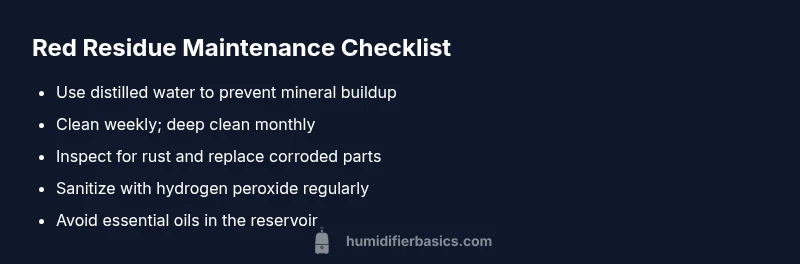
- To sanitize, run a solution of 3% hydrogen peroxide through the reservoir for 15 minutes, then rinse thoroughly with distilled water. Do not mix vinegar and hydrogen peroxide in the same cycle.
- After cleaning, dry all components completely before reassembling. Use distilled water for the first few cycles to help prevent immediate mineral buildup.
- If your unit has a removable filter, inspect and replace if necessary. Avoid essential oils in the reservoir, which can encourage residue and clogging.
- Never use bleach or strong cleaners in close-contact with the reservoir; if you must use a stronger cleaner, follow the manufacturer’s instructions and rinse thoroughly.
Diagnostic Path: Distinguishing Causes
Red residue can originate from several sources. Distinguish among them by observing signs and testing water:
- Mineral deposits: typically white, chalky crusts on the tank and components; occur with hard water and mineral-rich rinses. Distilled water substantially reduces this issue.
- Rust: reddish-brown stains on metal bases or heat plates; usually from corroded metal parts or a rusty reservoir insert.
- Bacterial/mold growth: pinkish or orange slime along water lines or inside the tank; often accompanied by a musty odor. This is more likely if the unit sits unused for long periods or is not cleaned regularly. By documenting where you see residue and the water source, you can select targeted fixes and decide whether professional service is needed.
Preventing Red Residue in the Future
Prevention is the best medicine when it comes to red residue. Build a simple, repeatable maintenance routine:
- Use distilled or demineralized water exclusively; avoid tap water that contains minerals that form deposits.
- Clean the humidifier weekly or per the manufacturer’s schedule; at minimum, do a monthly deep clean if you use the unit daily.
- Replace filters or wicks on schedule; clogged components retain moisture that promotes bacterial growth.
- Dry all parts completely after each cleaning and store the humidifier with the cap off to promote air drying.
- Keep the humidifier out of damp, poorly ventilated areas where mold can thrive; ensure humidity is kept in a comfortable range (roughly 30–50% in most homes).
- If you notice persistent residue after following cleaning steps, consider replacing aging components or the entire unit to avoid recurring issues.
When to Replace Your Humidifier
If red residue keeps returning despite thorough cleaning, or you notice structural rust, cracks in the reservoir, or persistent foul odors, replacement is often the safest option. A unit with multiple failed components may not be reliably sanitized and could release contaminants into the air. Consider models with stainless steel or high-quality plastic components designed to resist mineral buildup, and verify that replacement parts are readily available. If you’re unsure, consult a professional for a quick assessment and recommendations on models suitable for your space.
Steps
Estimated time: 30-45 minutes
- 1
Power down and prep
Unplug the humidifier and remove the water tank. Disassemble any removable parts according to the user manual. Gather cleaning supplies and a towel to catch spills.
Tip: Always unplug first; never work on a live electrical appliance. - 2
Empty and inspect
Dump remaining water and inspect the reservoir for rust stains, white mineral crust, or pink/orange slime. Note any smells that could indicate bacterial growth.
Tip: Take a photo of suspicious stains to help you track changes after cleaning. - 3
Prepare cleaning solution
Mix distilled water with white vinegar in a 1:1 ratio for mineral deposits. Avoid mixing cleaners unless the manufacturer allows it.
Tip: Do not use hot liquids; they can warp plastic parts. - 4
Soak and scrub
Submerge removable parts in the vinegar solution for 20–60 minutes. Use a soft-bristle brush to scrub corners and tubing where residue hides.
Tip: Be gentle on silicone seals to prevent tearing. - 5
Rinse and sanitize
Rinse all parts thoroughly with distilled water until no vinegar odor remains. Run a hydrogen peroxide rinse (3%) through the reservoir for 15 minutes, then rinse again.
Tip: Rinse until the mist has no chemical odor. - 6
Dry and reassemble
Dry all parts completely before reassembly. Refill with clean distilled water for the first test run, and observe for any residue.
Tip: Leave the cap off briefly after reassembly to ensure air drying.
Diagnosis: Red residue appears in humidifier tank or mist
Possible Causes
- highMineral buildup from hard water
- mediumRust from metal components
- highBacterial or mold growth
Fixes
- easySwitch to distilled water and perform a deep clean with vinegar; rinse thoroughly
- easySanitize with hydrogen peroxide and re-test using distilled water
- mediumReplace rusted components or the unit if residue recurs after cleaning
FAQ
What causes red residue in humidifiers?
Red residue is often mineral buildup from hard water, rust from metal parts, or bacterial growth in the reservoir. A thorough inspection of water quality and components helps identify the cause.
Red residue usually comes from minerals, rust, or bacteria. Check water quality and clean the unit to identify the source.
Is red residue harmful to breathe?
Residues can irritate sensitive individuals and worsen indoor air quality if not properly cleaned. Sanitizing and using distilled water reduces health risks.
Residue can irritate some people; proper cleaning and using distilled water lowers the risk.
Can I use essential oils when cleaning or after residue appears?
Avoid adding essential oils to the reservoir, as they can promote residue buildup and clog components. If you use oils, do so with devices designed for them and follow manufacturer guidance.
Don’t put essential oils in most humidifiers; they can clog parts. Use devices designed for oils if you choose to.
How often should I clean my humidifier?
Clean the humidifier weekly with a deep clean every month if used daily. If it sits unused for long periods, clean before use to prevent mold.
Clean weekly; deep clean monthly if used often, and clean before reusing after storage.
When should I replace the humidifier?
If residue recurs after cleaning, or there are rust, cracks, or persistent odors, replacement is advisable. Choose models with durable components and accessible replacement parts.
If cleaning doesn’t fix it or you see rust/cracks, it might be time to replace.
Watch Video
The Essentials
- Identify the residue source: minerals, rust, or bacteria.
- Switch to distilled water to prevent mineral buildup.
- Clean regularly and sanitize with safe solutions.
- Replace aging parts if residue returns.