What to Do If Humidifier Has Mold: A Practical Troubleshooting Guide
Urgent, practical guide to diagnosing and fixing mold in humidifiers, with safe cleaning steps, filter replacement guidance, and prevention tips for healthier indoor air.


Unplug the unit, empty all water, and remove the tank. Rinse with warm water, then scrub the tank with a 1:1 vinegar-water solution or mild detergent. Rinse thoroughly, dry completely, and run the unit on empty for a few minutes to verify no mold scent. If mold persists, replace filters and consider professional service.
What mold in a humidifier means and why it's dangerous
If you're trying to understand what to do if humidifier has mold, start by recognizing that mold growth in any appliance signals persistent moisture and organic material feeding fungal colonies. Mold in a humidifier can release spores into the air, potentially triggering allergies, coughing, or respiratory irritation, especially for sensitive individuals. The presence of mold also indicates that the device isn’t drying out fully between cycles, creating a favorable environment for bacterial growth. According to HumidifierBasics, addressing mold promptly is essential for indoor air quality and device longevity. The HumidifierBasics team found that quick containment and thorough cleaning can dramatically reduce exposure risk and help prevent recurring problems.
Mold can form on tank walls, seals, hoses, and internal components, particularly in cool-mist and ultrasonic units where water sits for extended periods. In some cases, mold isn’t visible; you may notice a musty odor, slimy residues, or discoloration. These signs warrant a deep cleaning and a review of maintenance routines to ensure the appliance won’t recontaminate the room.
Immediate safety steps and containment
When mold is suspected, safety comes first. Unplug the humidifier before handling any parts to prevent electrical shock. Empty all water from the reservoir and tank, then remove the tank for cleaning. Move the unit to a well-ventilated area, ideally near an open window or under a fan. Put on gloves and, if available, eye protection to avoid contact with mold spores. Do not mix cleaning products haphazardly — vinegar and mild detergents are safer first-line options than bleach in enclosed spaces. If you have pets or children, keep them away during cleaning. After disassembly, wipe down all accessible surfaces with your chosen cleaner, rinse thoroughly, and dry parts completely before reassembly. Finally, run the unit without water for a couple of minutes to ensure everything is dry and free of odor before adding fresh water.
Cleaning solutions: vinegar, hydrogen peroxide, soap
There isn’t a one-size-fits-all solution, but two safe, effective options consistently recommended by HumidifierBasics are white vinegar and mild dish soap. For vinegar cleaning, mix equal parts white vinegar and warm water and soak removable parts for 15–20 minutes, then scrub with a soft brush to remove biofilm. Rinse thoroughly and dry completely before reassembling. If you prefer a chemical disinfectant, dilute hydrogen peroxide (3%) with water and wipe surfaces, allowing a short contact time before rinsing. Avoid combining cleaners that can create harmful gases. For stubborn mold, repeat the cleaning cycle and consider a second rinse with distilled water. Remember to dry every component completely; moisture left in corners can seed new mold growth.
Filter and replacement considerations
Many humidifiers use filters or wicks that can trap mold spores. If you see mold on or inside the filter, replace it promptly according to the manufacturer’s recommendations. Even if the mold appears only on the exterior, mold spores can seep into the filter housing during use. Inspect seals and gaskets for wear; cracked or warped parts can harbor moisture and harbor mold. When replacing parts, choose components compatible with your model and avoid reusing old filters if they’ve seen mold growth. After replacement, run the unit with clean water and monitor for any signs of odor or residue.
Prevention tactics to avoid mold reoccurrence
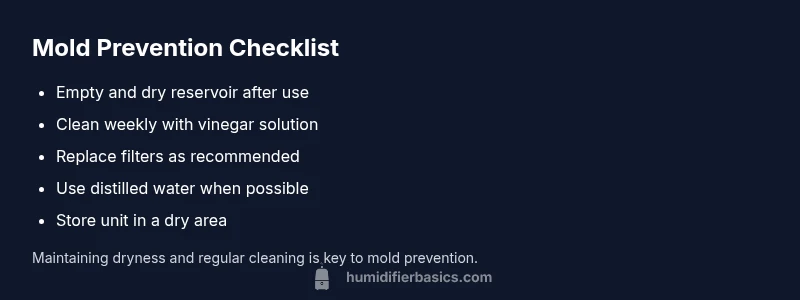
Prevention hinges on reducing lingering moisture and ensuring thorough drying after each use. Use distilled or demineralized water when possible to limit mineral buildup, which can foster biofilm. Keep the tank and reservoir dry when storing the unit, and store in a clean, ventilated area. Establish a routine: empty, rinse, and dry the tank daily for steamers or humidifiers used nightly. Clean the unit weekly with a vinegar solution or mild detergent, and dry all parts before storage. Consider running the unit on a no-water cycle every few days to ensure internal components dry. If you notice persistent odors, reassess room humidity levels and ensure the unit isn’t producing more moisture than the space can safely handle.
When to replace the humidifier
If you observe recurrent mold despite regular cleaning, persistent odors after cleaning, or visible buildup in hard-to-reach areas, replacement may be the safest option. Old devices can harbor biofilms in inaccessible passages, making complete decontamination unlikely. Before purchasing a new unit, check warranty status and model safety features, and consider replacing components with newer, mold-resistant materials. In rooms with high humidity, a more robust model with auto shutoff and improved filtration can help maintain air quality without repeated mold issues.
Daily maintenance routine for mold prevention
A practical daily routine reduces mold risk significantly. Each day, empty and rinse the reservoir, then dry all surfaces with a clean cloth. Refill with fresh water and run the unit for a short period to ensure it’s functioning without odor. Weekly, scrub tank walls and seals with a vinegar-water solution, rinse thoroughly, and dry. If your model uses filters, replace them as recommended by the manufacturer and store spare filters in a dry place. Finally, monitor room humidity with a gauge; aim for a comfortable level (generally 30–50%), and adjust your humidifier settings accordingly to prevent moisture buildup. Consistency is the key to long-term mold prevention.
Steps
Estimated time: 60-90 minutes
- 1
Power down and remove tank
Unplug the humidifier and detach the water tank. Empty all water and set the unit aside. This limits exposure to mold spores during cleaning.
Tip: Do not attempt to clean while plugged in. - 2
Initial wipe-down
Wipe accessible surfaces with a dry cloth to remove loose debris. Use a vinegar-water solution (1:1) on non-electronic parts, then scrub gently with a soft brush.
Tip: Ventilate the area well during cleaning. - 3
Soak and scrub tank parts
Soak tank and removable parts in the vinegar solution for 15–20 minutes. Scrub any residue, then rinse thoroughly with clean water.
Tip: Avoid bleach; it can release harmful fumes. - 4
Rinse and dry completely
Rinse all components until no cleaner scent remains. Dry with a clean towel, then air-dry further to ensure no moisture remains.
Tip: Drying time reduces mold re-growth. - 5
Reassemble and test
Reassemble the unit with clean water and run it on a short cycle to ensure proper operation and no odors. If a musty scent persists, repeat cleaning or consider replacement.
Tip: Keep a moisture-free storage area. - 6
Replace filters if needed
If your model uses filters, replace them if they show mold growth or if cleaning cannot remove residues. Always use manufacturer-approved parts.
Tip: Document replacement dates to track maintenance.
Diagnosis: Visible mold in humidifier water reservoir or a musty odor from the unit
Possible Causes
- highWater left sitting for extended periods
- highInfrequent cleaning or using dirty water
- mediumWorn seals or cracked parts that trap moisture
- lowMold spores present in the environment spreading to the unit
Fixes
- easyDisassemble and clean all removable parts with vinegar or mild detergent; rinse thoroughly and dry completely
- mediumReplace filters and inspect seals; replace any damaged components
- easyRun the unit on no-water to dry internal passages, then test with fresh water
- hardIf mold recurs after cleaning and replacement, consider professional assessment or replacement of the humidifier
FAQ
Can I use bleach to clean mold from my humidifier?
Bleach is not recommended for humidifiers because it can release harmful fumes in enclosed spaces and may damage plastics. Stick to vinegar or hydrogen peroxide solutions and always rinse thoroughly.
Bleach isn't recommended for humidifiers; use vinegar or peroxide and rinse well.
How often should I clean my humidifier to prevent mold?
Clean the humidifier weekly during regular use and after any mold signs. If you run it daily, perform a quick rinse daily and a thorough clean weekly.
Clean weekly and after mold signs; do quick rinses if you use it daily.
Should I replace the humidifier if mold keeps returning?
If mold recurs after proper cleaning and part replacement, the device may be beyond salvage. Consider a newer model with better seals, materials, and an improved filtration system.
If mold keeps coming back, a replacement might be the safest option.
Is distilled water better for preventing mold?
Distilled water reduces mineral buildup that supports biofilm formation, but it won’t eliminate mold entirely. Use distilled water plus regular cleaning for best results.
Distilled water helps, but cleaning remains essential.
What are the signs of mold exposure from a humidifier?
Common signs include musty odors, coughing, throat irritation, and eye irritation. If anyone in the home has allergies, mold exposure can aggravate symptoms.
Watch for musty smells and allergy symptoms; if they appear, clean immediately.
Can I clean the humidifier with my dishwasher?
Most humidifier components aren’t dishwasher-safe. Hand wash removable parts and dry completely before reassembly. Check your user manual for specific guidance.
Don’t put humidifier parts in the dishwasher; hand wash instead.
Watch Video
The Essentials
- Unplug and clean promptly at first sign of mold
- Use vinegar or mild detergent for safe cleaning
- Replace filters and inspect seals regularly
- Control room humidity to prevent mold growth