Humidifier Not Working on Furnace: A Practical Troubleshooting Guide
Urgent, practical troubleshooting for a furnace humidifier that won’t operate. Step-by-step checks, common causes, and maintenance tips to restore humidity fast.


Most often a furnace humidifier fails due to a simple power, water supply, or control issue rather than a faulty unit. Check that the humidifier’s power switch or the furnace control board is energized, verify the water supply valve is open, and confirm the bypass valve or damper isn’t closed. If the humidistat reads incorrectly, reset and recalibrate to a moderate setting, then retest.
Why the issue happens with humidifier not working on furnace
When a furnace humidifier won’t run, homeowners often panic, but most problems are not about a dead humidifier. According to HumidifierBasics, the majority of non-working furnace humidifier incidents start with power disruption, a closed water valve, or a misreading humidistat rather than a faulty internal component. This is especially true in homes with newer furnaces where the control wiring is sensitive to disturbances. The key is to stay calm, verify one factor at a time, and avoid rushing to replace parts. In this guide, we walk through a practical, step-by-step approach to diagnose and fix the most common culprits while preserving safety and system integrity. Expect a clear path from quick checks to more involved fixes, with emphasis on avoidable mistakes and preventive care.
As you analyze the problem, keep in mind that humidity levels in a home influence comfort, respiratory health, and energy use. The HumidifierBasics team notes that minor adjustments—like ensuring proper valve position and accurate humidistat settings—can restore comfort quickly without expensive repairs. This is especially important for renters who rely on consistent humidity without altering the heating system layout.
Check power and wiring connections
The first place to inspect if the humidifier not working on furnace is power and wiring. Ensure the furnace and humidifier have power at the same time, confirm that the humidifier power switch is ON, and inspect any inline fuses or fuses in the furnace panel. A tripped circuit breaker or a blown fuse is a common, easy fix. Next, visually examine the wiring harness and connectors between the humidifier and the furnace control board for loose or damaged pins. Loose connections can interrupt signals and prevent operation even if other components are functional. If you find a loose plug, reseat it firmly and test again. For safety, always power down the system before touching wiring, and use a non-contact voltage tester to verify there is no live current before handling cables.
Verify water supply and distribution path
A humidifier can fail if water isn’t reaching the unit. Check that the water supply valve is fully open and the supply line is free from kinks or blockages. If your system uses a bypass valve, ensure it is open and not stuck in a closed position, which can starve the unit of water. When the water doesn’t flow, or if you hear a hissing or unusual sound, there may be an air lock in the line. Purge air by briefly loosening a valve fitting (with power off) or by running the taps to move water through the line. Mineral deposits at the inlet or drain line can also impede flow, so inspect for scale and clean as needed.
Inspect humidistat, thermostat wiring, and control signals
The humidistat measures ambient humidity and signals the furnace control to activate the humidifier. If the humidistat is miscalibrated or defective, it will prevent operation or cause irregular cycles. Check the humidistat setting; ensure it is set to a humidity level appropriate for the season (for example, 35-45% in dry seasons). Inspect thermostat wiring for loose screws or damaged wires that could interrupt the signal path. Look for signs of corrosion on terminals and inspect the control board connectors feeding the humidifier relay. Re-seat any loose connections and test with the furnace’s call for humidity. If there are multiple control boards or zone controls, confirm the humidifier relay is active during a heat call.
Look for mineral buildup, nozzle clogs, and mechanical faults
Mineral buildup from tap water can clog spray nozzles, orifices, and sensors, causing reduced or no mist output. Inspect the humidifier’s nozzle, mist outlet, and any filters for mineral scale. Clean with a mild vinegar solution or a recommended descaler, following the manufacturer’s directions. If the nozzle or spray mechanism is worn or cracked, replace it. Clogged or dirty bypass dampers can reduce flow; ensure the damper moves freely and isn’t obstructed by debris. Regular cleaning prevents mineral buildup and extends the life of the humidifier.
Safe testing and reset procedures
After performing basic checks, safely test the system. Reconnect power, set the humidistat to a moderate humidity, and observe whether the humidifier engages during a furnace call. If it still does not run, perform a controlled reset of the furnace and humidifier control modules following the manufacturer’s instructions. Document any fault codes displayed on the furnace panel, as these codes guide troubleshooting and may indicate an electrical or sensor fault. If you notice unusual noises, burning smells, or heat loss from ducts, power down and seek professional help promptly.
Proactive maintenance to prevent future failures
Prevention is better than reaction. Schedule seasonal checks focusing on water supply, valve operation, and humidistat calibration. Replace filters and mineral-reducing components as recommended, and use distilled or demineralized water if your system supports it. Keep the furnace area clean and free from dust that can affect sensors. Finally, maintain a steady indoor humidity level to reduce strain on the humidifier and furnace, which can extend system life and improve overall air quality.
When to call a professional and what to expect
If basic troubleshooting does not restore operation, it’s time to call a licensed HVAC technician. Professional help is advised for electrical diagnostics, control board issues, gas line safety, and complex relay or wiring faults. A technician will typically test with a multimeter, inspect after-market accessories, check the humidifier relay, water supply integrity, and verify compatibility with your furnace model. Expect a safety-first approach, a written assessment, and a clear plan for repairs or part replacement.
Steps
Estimated time: 45-60 minutes
- 1
Power down and locate the humidifier power source
Turn off the furnace at the thermostat and switch off the circuit breaker for the humidifier circuit. Locate the humidifier power switch or relay on the furnace cabinet and verify wiring is intact. This prevents shock and ensures safe inspection.
Tip: Use a non-contact tester to confirm no live voltage before touching wires. - 2
Check water supply valve and lines
Ensure the water supply valve is fully open and free of obstructions. Inspect supply lines for leaks, kinks, or air locks. If water isn’t reaching the unit, resolve the valve position or purge air as needed.
Tip: If you hear air hissing, briefly loosen a line fitting to purge air while power is off. - 3
Inspect bypass damper and drain path
Confirm the bypass damper moves freely and isn’t stuck closed. Check for debris in the drainage path that could cause backflow or water pooling. Clear obstructions to restore proper flow.
Tip: Move the damper by hand if safe, noting any resistance that indicates wear. - 4
Test humidistat and thermostat connections
With power off, review humidistat settings and wiring to the control board. Re-seat loose connections and look for damaged insulation. After reconnection, turn power back on and observe if humidity triggers the humidifier during a heat call.
Tip: Document settings before changing and re-check after reassembly. - 5
Inspect control board and relay
Inspect the furnace’s control board for signs of corrosion, burn marks, or loose relays that control the humidifier. Re-seat connectors and check for firmware updates if applicable. A faulty relay can prevent the humidifier from receiving a start signal.
Tip: If you notice melted plastic or burnt smell, stop and call a pro. - 6
Clean mineral buildup and nozzle
Inspect the humidifier’s nozzle, spray mechanism, and mineral trap. Use a vinegar solution or manufacturer-approved cleaner to remove scale. Rinse thoroughly and ensure no residues remain that could block mist.
Tip: Perform this step with the unit unplugged and dry before reassembly. - 7
Reassemble and test operation
Reconnect all components, restore power, set a moderate humidity target, and run the furnace for a cycle. Listen for the humidifier engaging and feel for a noticeable mist at the outlet. If it still won’t operate, proceed to professional service.
Tip: Take note of any fault codes displayed on the furnace panel.
Diagnosis: Humidifier not turning on or producing moisture when the furnace runs
Possible Causes
- highPower supply issue or tripped breaker
- highWater valve closed or water line blockage
- mediumFaulty humidistat, thermostat wiring, or control board issue
- lowMineral buildup or clogged nozzle
Fixes
- easyVerify power to furnace and humidifier; reset breakers or replace fuses as needed
- easyOpen water valve fully and clear any kinks; purge lines to remove air pockets
- mediumTest humidistat and wiring; recalibrate humidistat and secure thermostat connections
- mediumClean mineral buildup and replace clogged nozzles or worn components
FAQ
Why won't my furnace humidifier start even when the furnace is running?
Common causes are power, water supply, or control issues. Check the humidifier power switch, verify the water valve is open, and inspect the humidistat and wiring. If these steps don’t resolve the problem, consult a professional.
Common causes are power, water, or control issues. Start with the power switch, water valve, and humidistat, and only escalate to a professional if needed.
How do I test the humidistat with a multimeter?
Power down the system, remove the humidistat cover, and test for continuity across the terminals. If there’s no continuity when the circuit is active, replace the humidistat or related wiring. Always follow the manufacturer’s instructions and safety precautions.
Power down, check continuity with a multimeter, and replace the humidistat if needed.
Is it safe to bypass the humidifier controls to diagnose?
No. Bypassing humidifier controls can damage the furnace, void warranties, and create safety risks. Use documented diagnostic steps and, if in doubt, contact a licensed HVAC tech.
Don’t bypass controls; it’s risky and can void warranties. Use proper diagnostic steps or a pro.
Can mineral buildup cause failure?
Yes. Mineral deposits can clog nozzles and sensors. Regular cleaning with appropriate cleaners and using softened or distilled water can prevent problems and extend component life.
Minerals can clog nozzles and sensors; clean regularly and consider softened water.
When should I call a professional?
If you suspect control board issues, gas line concerns, wiring faults, or if you smell gas, contact a licensed HVAC technician immediately. They can safely diagnose and repair complex electrical or safety-related problems.
Call a pro if you have wiring, board, or gas-related concerns.
Watch Video
The Essentials
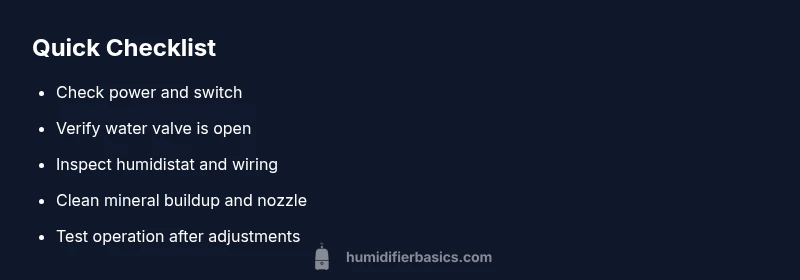
- Check power, water, and humidistat first
- Purge air in supply lines and inspect dampers
- Clean nozzles and remove mineral buildup regularly
- Reset controls if readings are off, then test
- Call a professional for electrical or gas-related issues