How Long to Soak a Humidifier in Vinegar: A Practical Guide
Learn, step-by-step, how long to soak humidifier parts in vinegar, plus safety tips and maintenance practices to minimize mineral buildup and protect seals. HumidifierBasics guides you through practical soaking times, preparation, and post-cleaning care.


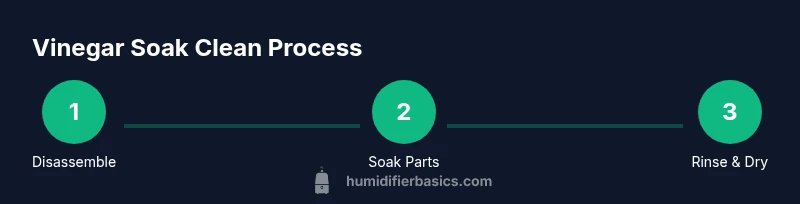
According to HumidifierBasics, a vinegar soak is an effective step for removing mineral buildup from removable humidifier parts. For most units, soak the parts in a 1:1 white vinegar and water solution for 15-60 minutes, then rinse thoroughly. Do not soak or submerge the motor or base; follow with a rinse and air-dry before reassembly.
What soaking vinegar does for humidifier maintenance
Vinegar acts as a mild acid that helps dissolve mineral scale and deposits left by hard water in humidifier components. Soaking is most effective on removable parts such as the tank lid, cap assembly, and base connectors, where mineral buildup tends to accumulate. This process does not replace a full manufacturer's cleaning routine but it can dramatically reduce scale, improve airflow, and prevent blockages that reduce mist output. For best results, use white distilled vinegar and a 1:1 mixture with clean water, and avoid prolonged exposure on rubber or plastic seals that may be sensitive to acidity. According to HumidifierBasics, this approach is a practical first step in routine descaling, especially in areas with hard tap water.
Vinegar vs other descalers: safety and effectiveness
White distilled vinegar is a common, inexpensive descaler that is generally safe for most humidifier plastics and metal components when used correctly. Compared with harsher chemical cleaners, vinegar is milder and easier to rinse away. However, it is not a sanitizer; it won’t kill all germs on contact. If you have a sealed or electronic control section, never immerse it, and always follow the manufacturer’s cleaning recommendations. Always ventilate the area and avoid mixing vinegar with bleach to prevent harmful vapors.
Which parts to soak and which to skip
Typically, you should soak only detachable parts: water tanks, caps, and removable bases that contact water. Do not submerge the main body, electronics, or any motor housing. If you’re unsure, consult the user manual. Soaking sleeves, gaskets, and metal heat exchangers can be damaged by long exposures; check for signs of wear and replace damaged components. HumidifierParts like tanks and lids are usually ideal for soaking, whereas the base and motor housing should remain dry. HumidifierBasics analysis shows that mineral buildup responds best to short, targeted soaks rather than full immersion of the unit.
Preparing your vinegar cleaning solution
Prepare a 1:1 solution of white distilled vinegar and water at room temperature. Use enough solution to fully submerge the parts you are cleaning. Pour the mixture into a clean container sized to hold the parts. Label and date the solution if you plan to reuse it within the same cleaning session. Distilled water is preferable to minimize mineral carryover and re-scales.
Step 1: Disassemble and inspect
Power off and unplug the humidifier before touching any parts. Remove the water tank, lid, and any detachable components. Inspect for cracks, warping, or heavy mineral buildup that might require replacement. Taking photos during disassembly can help during reassembly and ensure nothing is forgotten.
Step 2: Soak removable parts
Place the detachable parts in the vinegar solution until deposits loosen; typical soak times range from 15 to 60 minutes depending on the severity of buildup. Do not soak the base or motor. After soaking, lift out components with tongs or gloves to avoid spills. If deposits remain, you can repeat the soak for a shorter duration.
Step 3: Scrub mineral deposits
Use a soft-bristled brush or an old toothbrush to gently scrub areas with stubborn scale. Rinse, especially around threads and seal grooves, and re-check for remaining residue. For hard-to-reach spots, use a cotton swab dipped in vinegar to target small crevices.
Step 4: Rinse thoroughly and dry
Rinse each part under running water until there is no vinegar odor and all deposits are removed. Wipe with a clean microfiber cloth and let parts air-dry completely on a clean towel or rack before reassembly. A complete dry-down helps prevent new mineral deposits from forming.
Optional sanitizing for deeper clean
If you want extra sanitization after descaling, you can apply a hydrogen peroxide solution (3%) or follow the manufacturer’s sanitizing instructions. Soak for 5-10 minutes, then rinse thoroughly. Do not mix chemicals in the same container; use separate steps and containers with thorough rinsing between stages.
Reassemble and test after cleaning
Once all parts are dry, reassemble the humidifier following the manual. Refill with clean water and run a short test cycle to ensure there are no leaks and that mist output is normal. If you notice unusual odors after cleaning, run a second rinse with fresh water and monitor performance.
Common issues and troubleshooting
Scale that returns after cleaning may indicate very hard water. Consider using distilled water or adding a routine descaler schedule. If cracking or warping occurs after vinegar exposure, stop using that part and replace it. For persistent deposits on metal components, you may need to repeat the soak but limit exposure time to protect seals.
Maintenance habits to minimize mineral buildup
To reduce future deposits, use distilled water when possible, clean on a regular schedule (every 1-2 weeks for heavy use), and rinse daily if you use the humidifier frequently. Keep the tank and base dry when not in use, and store parts in a clean, dry place. Establishing a simple routine can help sustain better air quality and reduce scale formation long-term.
Tools & Materials
- White distilled vinegar (5%)(Use 1:1 with water for soaking removable parts)
- Water (distilled preferred)(For the soak solution and final rinse)
- Measuring cup(To ensure accurate vinegar-to-water ratios)
- Small bowl or container(Large enough to fully submerge parts)
- Soft-bristled brush or old toothbrush(For gentle scrubbing on deposits)
- Microfiber cloth(For drying and final wipe-down)
- Gloves(Protect hands during soaking and scrubbing)
- Dish soap (optional)(Use if parts feel oily or greasy after rinse)
Steps
Estimated time: 60-90 minutes
- 1
Power off and unplug
Ensure the unit is completely powered down before touching any components. This prevents electrical shock and protects sensors. Keep the power cord away from water during cleaning.
Tip: Double-check that the unit has cooled if it was recently used. - 2
Detach water tank and removable parts
Remove the tank, lid, and any detachable sections that contact water. Set aside components that don’t come into contact with the electronics and inspect for damage before soaking.
Tip: Take photos of each assembly step to simplify reassembly. - 3
Prepare vinegar solution
Mix white distilled vinegar with water in a 1:1 ratio in your container. The solution should be deep enough to submerge the parts you plan to soak.
Tip: Label the container to avoid cross-contamination with future cleaners. - 4
Soak removable parts
Place detachable parts into the solution and soak for 15–60 minutes, depending on buildup. Do not immerse the main body or motor housing.
Tip: Check occasionally and gently agitate to help loosen deposits. - 5
Scrub mineral deposits
After soaking, use a soft brush to remove loosened scale. Pay attention to threads and small grooves where deposits lodge.
Tip: Use a cotton swab for narrow crevices to avoid damage. - 6
Rinse thoroughly and dry
Rinse each part under running water until no vinegar odor remains. Dry with a microfiber cloth and allow to air-dry completely before reassembly.
Tip: Even tiny residues can re-form deposits during storage. - 7
Optional sanitizing
If desired, sanitize with hydrogen peroxide (3%) using a separate container, for 5–10 minutes, then rinse well. Do not mix cleaners in one container.
Tip: Rinse between steps and dry before reassembly. - 8
Reassemble and test
Reassemble the unit according to the manual, fill with clean water, and run a short cycle to verify there are no leaks and that airflow is normal.
Tip: Watch for leaks at seals during the test cycle. - 9
Post-clean inspection
Inspect seals and gaskets for wear after the soak. If you notice cracking or swelling, replace parts rather than reusing compromised components.
Tip: Keep a spare seal kit on hand if your unit requires frequent maintenance.
FAQ
Is it safe to soak an ultrasonic humidifier in vinegar?
Yes, soak only removable parts; do not submerge the electronic base or motor. Follow the manufacturer’s guidance for any parts that involve electronics.
Yes—only soak the removable pieces, never the electronic base; follow your humidifier's manual for parts to avoid damage.
How long should parts soak?
A typical soak ranges from 15 to 60 minutes depending on buildup. For light deposits, 15 minutes may be enough; for heavy buildup, extend up to an hour.
Soak removable parts for 15 to 60 minutes depending on how much scale you see.
Can I use apple cider vinegar Instead of white vinegar?
White distilled vinegar is preferred for consistency and safe rinsing. Apple cider vinegar can be used but may leave color or scent residues.
White vinegar is best; apple cider can work but may leave a residue or scent.
Do I need to rinse after soaking?
Yes. Rinse until the vinegar smell is gone and the water runs clear to prevent residual acidity from affecting mist output.
Rinse thoroughly after soaking until the water is clear and there’s no vinegar odor.
Will vinegar damage rubber seals or gaskets?
Short soaks are typically safe for most seals, but prolonged exposure can degrade some materials. If you notice cracking, replace the seals.
Short soaks usually won’t hurt seals, but avoid long exposures; replace any damaged gaskets.
Is sanitizing after vinegar soak necessary?
Sanitizing is optional. If you choose it, use hydrogen peroxide separately and rinse well; do not mix cleaners.
Sanitizing is optional; if you do it, use hydrogen peroxide separately and rinse well.
Watch Video
The Essentials
- Soak only removable parts, not the motor housing.
- Use a 1:1 vinegar-to-water ratio for descaling.
- Rinse thoroughly and dry before reassembly.
- Consider distilled water to minimize future mineral buildup.