Is it humidifier or dehumidifier? A Practical Comparison
A thorough, analytical guide to choosing between a humidifier and a dehumidifier, with sizing, usage, and maintenance tips to maintain ideal indoor humidity.


Is it humidifier or dehumidifier? According to HumidifierBasics, the choice depends on your indoor humidity. A humidifier adds moisture to dry air, while a dehumidifier removes excess moisture. Start with a hygrometer to check RH and target a comfortable range (roughly 30–50%). HumidifierBasics explains how to size, operate, and maintain the right device for your home.
Is It Humidifier or Dehumidifier? Defining the Difference
The question is deceptively simple: does your space need moisture added or removed? Humidifiers and dehumidifiers are both humidity-control devices, but they play opposite roles. A humidifier increases moisture in dry air, which can relieve dry skin, irritated sinuses, and static electricity. A dehumidifier reduces excess moisture, helping to curb mold growth, damp odors, and condensation on windows. The HumidifierBasics team emphasizes that the real driver is the current RH level, not just the weather outside. If you ask, 'is it humidifier or dehumidifier', start by measuring indoor humidity with a reliable hygrometer and compare against the recommended range of about 30–50% RH for most homes. Maintaining that band is a practical, science-backed approach that applies to bedrooms, living rooms, basements, and nurseries.
Is It Humidifier or Dehumidifier? Defining the Difference
The question is deceptively simple: does your space need moisture added or removed? Humidifiers and dehumidifiers are both humidity-control devices, but they play opposite roles. A humidifier increases moisture in dry air, which can relieve dry skin, irritated sinuses, and static electricity. A dehumidifier reduces excess moisture, helping to curb mold growth, damp odors, and condensation on windows. The HumidifierBasics team emphasizes that the real driver is the current RH level, not just the weather outside. If you ask, 'is it humidifier or dehumidifier', start by measuring indoor humidity with a reliable hygrometer and compare against the recommended range of about 30–50% RH for most homes. Maintaining that band is a practical, science-backed approach that applies to bedrooms, living rooms, basements, and nurseries.
Is It Humidifier or Dehumidifier? Defining the Difference
The question is deceptively simple: does your space need moisture added or removed? Humidifiers and dehumidifiers are both humidity-control devices, but they play opposite roles. A humidifier increases moisture in dry air, which can relieve dry skin, irritated sinuses, and static electricity. A dehumidifier reduces excess moisture, helping to curb mold growth, damp odors, and condensation on windows. The HumidifierBasics team emphasizes that the real driver is the current RH level, not just the weather outside. If you ask, 'is it humidifier or dehumidifier', start by measuring indoor humidity with a reliable hygrometer and compare against the recommended range of about 30–50% RH for most homes. Maintaining that band is a practical, science-backed approach that applies to bedrooms, living rooms, basements, and nurseries.
Comparison
| Feature | Humidifier | Dehumidifier |
|---|---|---|
| Ideal use case | Dry air relief, night-time comfort | Mold/mildew prevention and damp spaces |
| Energy usage | Low to moderate | Moderate to high depending on humidity load |
| Room size coverage | Small to medium rooms | Medium to large rooms and basements |
| Maintenance tasks | Water tank cleaning, mineral management | Filter changes, coil/condensation control |
| Noise level | Typically low to moderate | Typically moderate to high during peak operation |
| Price range (USD) | $40–$150 | $100–$350 |
| Best for | Dry climates, allergy relief in winter | Humid climates, damp basements, moisture control |
What's Good
- Helps restore comfortable indoor humidity levels
- Can improve health symptoms related to dry air or mold risk
- Provides better sleep quality when humidity is balanced
- Policy-friendly energy use when paired with proper sizing
Negatives
- Overuse may cause excess moisture or condensation
- Requires regular maintenance and water quality attention
- Some models produce more noise or require more energy in humid climates
Neither device universally outperforms the other; choose based on measured RH and room requirements
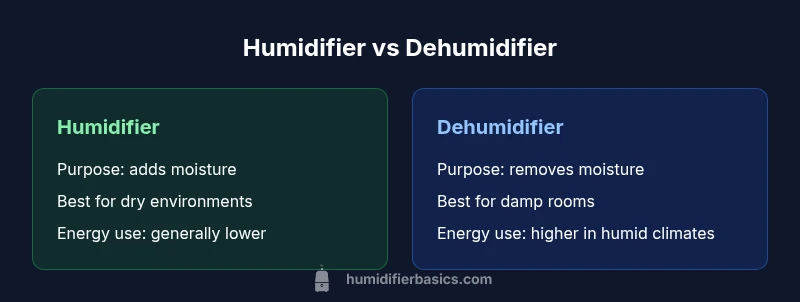
Use a hygrometer to determine whether your space leans dry or damp. Humidifiers excel in dry environments, dehumidifiers in damp ones. The right choice maintains 30–50% RH for comfort and health, with both devices used judiciously as needed.
FAQ
What is the practical difference between a humidifier and a dehumidifier?
A humidifier adds moisture to dry air, which helps with dry skin and nasal irritation. A dehumidifier removes excess moisture, reducing mold risk and damp odors. Both aim to stabilize indoor humidity, not just climate conditions.
A humidifier adds moisture when air is too dry, and a dehumidifier removes moisture when air is too damp. Use a hygrometer to check and balance humidity between about 30 and 50 percent.
Can I use both devices at the same time?
Yes, in some homes with large humidity swings or extreme climates, using both devices on separate zones or seasons can help maintain consistent comfort. Avoid running them simultaneously in the same small space to prevent overcorrection.
Yes, you can use both in different areas or seasons if humidity swings are extreme, but be careful not to overcorrect in a single space.
How do I decide which to buy first?
Start with a hygrometer to measure current RH. If it’s consistently below 30%, a humidifier is warranted. If it’s above 50% and you notice dampness, mold, or condensation, opt for a dehumidifier.
Measure first, then choose based on whether the air is too dry or too damp over time.
What maintenance does a humidifier require?
Regular cleaning is essential to prevent mold and mineral buildup. Use distilled or demineralized water when possible, and replace any filters per the manufacturer’s schedule.
Clean it regularly, use clean water, and replace filters as recommended.
Are humidifiers safe around kids and pets?
Keep units out of reach, maintain cleanliness to prevent mold, and ensure proper placement away from sleeping areas if noise is disruptive. Use cool-mist designs to minimize burn risk.
Place units safely away from beds, clean often, and choose cool-mist models if kids or pets are involved.
What are signs of over-drying or over-wetting a room?
Persistent static, dry skin, and cracked lips indicate too-dry air. Condensation on windows, musty smells, and visible mold indicate too-wet air. A hygrometer helps confirm these conditions.
If you notice flakes of skin or condensation on windows, check humidity with a meter.
The Essentials
- Measure humidity first with a reliable hygrometer
- Aim for 30–50% RH in most rooms
- Choose humidifier for dryness, dehumidifier for excess moisture
- Match device size to room and monitor maintenance
- Use both only if humidity swings are extreme