Does a Humidifier Make Congestion Worse? Troubleshooting Guide
Urgent troubleshooting guide to determine if your humidifier worsens congestion, with quick fixes, maintenance steps, and safe usage tips for home air quality.


Short answer: A humidifier can help congestion if the air is dry, but it can worsen congestion when humidity becomes too high or the device isn’t clean. Avoid standing water, clean regularly, and use distilled water. When used properly, a humidifier supports breathing rather than blocking it. Monitor humidity with a hygrometer, keep the unit clean, and adjust usage before blaming the device.
Can a Humidifier Make Congestion Worse?
According to HumidifierBasics, does humidifier make congestion worse? The short answer is nuanced: a humidifier can ease congestion when the air is dry, but it can aggravate symptoms if the air becomes excessively humid, if mold or bacteria grow in the reservoir, or if you place the unit in a poorly ventilated corner. The key is balancing moisture, ensuring clean water, and following maintenance steps. A few simple habits—keeping water clean, using distilled water, and avoiding overuse—often determine whether your humidifier helps or harms breathing. In practice, the difference comes down to room conditions, device cleanliness, and correct usage. This is why the fastest wins are often the easiest fixes: check the current humidity with a hygrometer, clean the reservoir, and adjust placement before you assume the device is to blame.
How Humidity Levels Affect Your Nose and Airways
Humidification plays a central role in airway comfort. When air is too dry, mucous membranes can crack and irritate, triggering congestion and throat irritation. Conversely, air that is too moist can foster mold, dust mites, and fungal spores that irritate the airways. The takeaway is to maintain a comfortable, stable moisture level and to use a hygrometer to avoid guesswork. A steady approach helps many households reduce nasal irritation and postnasal drip while preventing dampness that invites mold growth on walls and furniture.
Common Scenarios Where a Humidifier Helps or Hurts
In cold seasons, a properly set humidifier can relieve dryness-related congestion. However, if the unit runs continuously in a poorly ventilated space or uses dirty water, it may spread microbes or mineral dust. People with mold sensitivities or asthma may notice worsening symptoms if humidity is not controlled. Mineral deposits from tap water can become airborne with ultrasonic models, irritating the nose and throat. The practical rule: balance moisture, clean regularly, and choose the right water type to minimize irritants.
Safety, Cleaning, and Water Quality to Prevent Congestion
The reservoir and internal components are critical hygiene zones. Bacteria and mold proliferate in standing water, so empty and dry the tank daily if possible. Distilled water reduces mineral particles that can irritate nasal passages. For safety, never place a humidifier near a sleeping area if it causes condensation on walls or windows. Routine cleaning includes scrubbing with a mild detergent, rinsing well, and disinfecting every so often with a vinegar solution or manufacturer-recommended product. Proper placement and ventilation also matter for air quality.
Quick Fixes You Can Try Today
First, measure room humidity with a hygrometer and adjust the humidifier accordingly. If the air is above comfortable levels, reduce output or shut the device off until humidity stabilizes. Empty, rinse, and dry the reservoir; scrub any mineral buildup and replace filters if applicable. Switch to distilled water to minimize mineral dust. Relocate the unit away from beds and walls to improve airflow. If symptoms persist, pause use and consult a healthcare professional to rule out other causes.
Maintenance and Hygiene Essentials
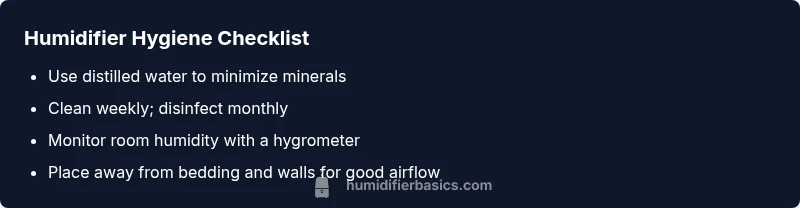
A weekly cleaning routine is essential to prevent congestion caused by contaminants. Clean and dry parts thoroughly, disinfect the reservoir monthly, and replace filters on a schedule recommended by the manufacturer. Keep water fresh, and avoid refilling with old or stagnant liquid. Document your maintenance to ensure consistency, especially if the humidifier runs daily during dry seasons. Cleanliness directly correlates with breathing comfort.
Practical Scenarios by Room Type
In a bedroom, prioritize a compact model with a quiet operation and a reliable humidistat to maintain steady humidity without excess moisture. In living spaces, ensure the unit is off the floor and near an open area for good airflow. For renters, choose a portable, easily cleaned model and avoid obstructing vents. In all cases, use distilled water and perform regular cleaning to minimize irritation and risk of mold.
Steps
Estimated time: 30-45 minutes
- 1
Check current room humidity
Place a hygrometer in the same room as the humidifier and read the level after 15 minutes. If readings are high, reduce output or pause use until the level stabilizes. If readings are low, gradually increase humidity while monitoring the change.
Tip: Use a digital hygrometer for quick, accurate readings. - 2
Clean and sanitize the reservoir
Empty the tank, rinse with clean water, and scrub with a mild soap or vinegar solution per the manual. Rinse completely to remove any residue, then air-dry all parts before reassembly. Don’t reuse dirty water.
Tip: Do this at least weekly if you run the unit daily. - 3
Switch to distilled water and check filters
Fill with distilled or demineralized water to reduce mineral deposits in the air. If your model uses filters or cartridges, replace them according to the manufacturer’s schedule to prevent microbial buildup.
Tip: Keep spare filters on hand to maintain performance. - 4
Reposition and test airflow
Move the unit away from walls, furniture, and bedding to prevent localized damp pockets. Ensure there is space for air to circulate and that the unit’s airflow isn’t blocked.
Tip: Avoid placing it in a closed cabinet or corner.
Diagnosis: Congestion worsens after using a humidifier
Possible Causes
- highOver-humidification causing condensation and mold growth
- mediumContaminated water or reservoir harboring bacteria or mold
- mediumMineral dust from tap water in ultrasonic models
- lowPoor air circulation or incorrect placement
Fixes
- easyTurn off device and verify humidity with a hygrometer; aim for a comfortable range
- easyClean and sanitize the reservoir and components according to the manufacturer
- easySwitch to distilled water to reduce mineral dust
- easyRelocate the humidifier away from sleeping areas and ensure proper airflow
- mediumIf symptoms persist, consult a healthcare professional
FAQ
Can a humidifier make congestion worse even if I clean it?
Cleaning reduces risk, but congestion can still worsen if humidity is too high or if hidden mold or mineral dust is present. Always monitor humidity and inspect for mold or mineral buildup during cleaning.
Cleaning helps, but if humidity is too high or you see mold, congestion can persist. Keep monitoring the environment and inspect for mold during cleaning.
What humidity level should I aim for to relieve congestion?
Aim for a comfortable, steady moisture level in the room. Use a hygrometer to avoid extremes since both too dry and too damp air can irritate nasal passages.
Aim for a comfortable, steady moisture level and check with a hygrometer to avoid extremes.
Is warm-mist or cool-mist better for congestion relief?
Both can help depending on the climate and safety considerations. Cool-mist is generally safer around children, while warm-mist can provide comfort in colder rooms.
Both can help; choose based on safety and comfort for your space.
How often should I clean my humidifier?
Clean at least weekly if you use it daily, and more often if you notice mineral buildup or a musty smell.
Clean weekly, more often if you see buildup or smell damp odors.
Can humidifiers affect pets or allergies?
Yes. Pets can be sensitive to mold and spores; keep humidity moderate and maintain a clean reservoir to protect their air quality.
Pets can be sensitive to mold and spores; keep things clean and humidity in check.
What signs indicate the humidifier is making congestion worse?
If you notice persistent congestion after use, condensation on surfaces, or a musty odor, stop using and consult a clinician.
If congestion persists or you smell damp conditions, stop using and seek help.
Watch Video
The Essentials
- Keep indoor humidity in a moderate range to ease congestion.
- Clean the humidifier weekly and use distilled water.
- Avoid over-humidifying to prevent mold and dampness.
- Place the unit away from beds and ensure good room airflow.
- If congestion persists, seek medical advice.