Allergies Humidifier or Dehumidifier: What Works for Relief
Explore whether a humidifier or dehumidifier best supports allergy relief at home. Compare effects on air quality, mold risk, maintenance, and real-world usage to decide which device fits your climate and triggers.


When allergies are a concern, the choice between a humidifier and a dehumidifier matters. In general, a humidifier raises humidity to ease nasal dryness, while a dehumidifier lowers humidity to curb mold and dust mite growth. The HumidifierBasics team finds that neither is a universal fix—your climate, season, and allergy triggers determine the best option.
Allergies and the humidifier or dehumidifier decision
For people managing allergies, the choice between a humidifier and a dehumidifier is not cosmetic—it can influence symptom frequency and fragrance perception in your home. The keyword here is balance: too little moisture can irritate nasal passages, while too much humidity can foster mold and dust-mite growth. When you hear the phrase allergies humidifier or dehumidifier, the question becomes: which device fits your climate, season, and triggers? According to HumidifierBasics, success often means using humidity control as part of a broader allergy-management plan, not as a stand-alone solution. Start by measuring your baseline humidity with a reliable hygrometer, then consider seasonal shifts (dry winters vs humid summers). In many homes, a combined strategy—seasonal adjustments, targeted maintenance, and integrated air-quality improvements—produces the best outcomes. This section lays out how to think about humidity as a variable in allergy control, and how to decide which device to deploy when symptoms spike or subside.
In the rest of this article, you will see comparisons, practical tips, and a framework you can apply in real homes. The goal is to help you answer: should I use a humidifier, a dehumidifier, or neither when allergies are at their worst? The emphasis is on evidence-based decisions, not marketing claims. The guidance here reflects the HumidifierBasics approach to practical, science-informed air quality improvements.
As you read, keep in mind that the best choice often involves monitoring humidity and adjusting over time. The aim is to minimize allergy triggers without over-correcting the environment. This section lays groundwork for understanding how humidity interacts with common allergens and symptoms.
How humidity affects allergy symptoms
Humidity is a major environmental variable in allergy management. Dry air can irritate nasal passages, throat, and eyes, making allergic symptoms feel more pronounced. Conversely, overly damp environments encourage the growth of mold, mildew, and dust mites, which are common culprits in allergic reactions. Maintaining a comfortable middle ground—often described as a relative humidity range of roughly 40-60% depending on climate and season—helps several mechanisms that relieve symptoms. Dust mites, for example, thrive when humidity is consistently high, while mold can proliferate in damp areas after rain or poor ventilation. In this comparison, you’ll see how humidifiers and dehumidifiers align with these dynamics. HumidifierBasics analysis shows that many homes experience seasonal humidity swings that trigger different allergy responses; understanding those swings is the first step toward choosing the right device and settings. When used correctly, humidity control can reduce nasal congestion, coughing, and throat irritation, though it is not a substitute for other allergen-reduction strategies like air filtration and vacuuming.
For readers seeking actionable targets, aim to use a hygrometer to track RH (relative humidity) and adjust to keep it within a comfortable band. This approach helps users avoid the extremes that feed allergy symptoms. The key takeaway is that humidity is a lever—pull it carefully and in coordination with cleaning and filtration to create a more comfortable, less allergen-prone home.
When a humidifier is the better choice
A humidifier is typically the better fit in homes that experience dry indoor air, especially during cold seasons when heating systems remove moisture from the air. Dry air can irritate nasal passages, sinuses, and dry eye, exacerbating certain allergy symptoms. In these conditions, a cool-mist or warm-mist humidifier can restore moisture, ease throat irritation, and improve overall comfort. When choosing a humidifier, consider the size of the room, the speed at which the device can add moisture, and the ease of cleaning—mineral dust from tap water can become a source of irritants if not managed properly. Humidifiers using distilled water are preferred by allergy-conscious households to minimize mineral dust. It’s also essential to pair humidity control with regular maintenance: clean fixtures, change filters if applicable, and monitor mineral buildup. A well-maintained humidifier supports nasal comfort without tipping the humidity balance into mold-friendly territory. If you live in a dry climate or during winter months, the humidifier offers tangible relief for many people with allergies. This block explains the scenarios where a humidifier is most advantageous and how to optimize performance for symptom relief while protecting air quality.
When a dehumidifier is the better choice
A dehumidifier is most appropriate in climates or seasons characterized by high indoor humidity, particularly in basements, bathrooms, or naturally damp rooms. Excess moisture creates environments favorable to mold and dust mites, both of which can aggravate allergic responses. In such cases, reducing humidity to a target range often yields more noticeable improvements in allergy symptoms than humidification. When selecting a dehumidifier, focus on capacity relative to room size, moisture removal efficiency, and ease of maintenance. Filters and condensate drain cleanliness matter for air quality, and units that offer humidity readouts help prevent over-drying, which can also be uncomfortable. For allergy-prone homes with persistent dampness, a dehumidifier provides a practical control knob: it lowers humidity to minimize mold spores and dust mites without requiring large investments or dramatic lifestyle changes. This section provides practical guidance on when dehumidification makes sense and how to implement it safely without creating new irritants.
Many homes benefit from a staged approach: dehumidify during humid months and rely on other strategies (air filtration, ventilation) to manage seasonal allergens. In essence, dehumidification targets the moisture problem itself, which is a central factor in mold and mite-related allergies.
Safe use and maintenance for allergy-prone homes
Safety and cleanliness are central to any humidity-control strategy for allergies. Both humidifiers and dehumidifiers can improve air quality when correctly maintained, but poor upkeep can create new problems. Start by selecting devices with easy cleaning access and, where possible, replaceable filters and mineral-residue control. If you use a humidifier, prefer distilled or demineralized water to minimize mineral dust that can irritate the lungs and eyes. For dehumidifiers, emptying condensate promptly and cleaning the tank helps prevent mold growth. Regularly wipe down surfaces, sanitize parts that contact water, and replace filters according to manufacturer guidelines. Use a hygrometer to monitor RH and avoid over-humidifying, which increases moisture-related risks. Cleansing routines, water quality practices, and air filtration work together to maximize benefits for allergy sufferers. This block emphasizes practical steps and daily routines that minimize allergen exposure while promoting comfortable humidity levels.
Setup tips and common mistakes
Placement matters for both devices. Keep humidifiers away from walls and directly in the living space where moisture can disperse evenly, and avoid placing a unit inside closets or behind furniture. Dehumidifiers should be located away from walls and ensure proper drainage to prevent standing water. Use a hygrometer in your primary living spaces to track RH and adjust settings promptly. Common mistakes include running a humidifier in a damp basement, over-reliance on a single device without filtration, and ignoring filter changes. Another misstep is using tap water in humidifiers, which can discharge minerals into the air as dust—distilled water reduces this risk significantly. Finally, don’t assume that humidity alone will eliminate allergy symptoms; combine humidity control with regular cleaning, air purifiers with HEPA filters, and dust-m mite mitigation to achieve more comprehensive relief. This block focuses on practical setup considerations and typical errors that reduce effectiveness.
Maintenance and replacement considerations for allergy-prone homes
Over time, all devices require maintenance and part replacements to stay effective and safe. Inspect humidifier or dehumidifier components for wear, check seals for leaks, and replace filters when recommended. If a humidifier uses wick filters, change them according to the manufacturer’s schedule; if a dehumidifier uses a carbon filter, monitor for odor and performance. Mineral buildup in humidifiers can reduce efficiency and release irritants if not cleaned; hence, using distilled water can be a simple but significant improvement for allergy-prone homes. In high-use environments, anticipate more frequent maintenance to sustain air quality. Finally, consider long-term investment: a device with a reliable warranty, accessible replacement parts, and straightforward cleaning routines tends to be the best value in homes sensitive to allergens. This section outlines practical maintenance rituals and replacement timelines that help you keep humidity control aligned with allergy management goals.
Practical decision framework and scenarios
To translate theory into action, use a simple, repeatable decision framework:
- Step 1: Measure current RH with a hygrometer; note seasonal patterns.
- Step 2: Identify dominant triggers (dry air vs moisture). If symptoms are worse with dry air, lean humidifier; if mold or dampness dominates, lean dehumidifier.
- Step 3: Set target RH to a comfortable band (often around 40-60%), and adjust gradually while monitoring symptoms.
- Step 4: Pair device use with cleaning, filtration, and ventilation to tackle allergens from multiple fronts.
- Step 5: Reassess after 2-4 weeks and refine settings. Seasonal adjustments are common; winter may favor humidification, while humid seasons may require more dehumidification. By following this framework, you can tailor humidity control to your allergy profile without overcorrecting. This section provides a structured approach to real-world decision-making and seasonally adaptive strategies.
Seasonal adjustments and ongoing monitoring
Allergy management through humidity control is a dynamic process. In winter, when heating systems dry indoor air, a humidifier can provide symptom relief if used carefully. In summer, or in damp basements, a dehumidifier often yields greater comfort by suppressing mold growth and reducing mite activity. Continuous monitoring with a hygrometer helps you stay within the recommended humidity range and avoid the pitfalls of over-correction. The HumidifierBasics team emphasizes that ongoing monitoring, maintenance, and integration with other air-quality practices (like air purifiers and source control) create the most reliable improvements for those with allergies. The goal is a stable, breathable environment where humidity is a managed variable rather than a constant source of irritation.
Comparison
| Feature | Humidifier | Dehumidifier |
|---|---|---|
| Effect on indoor humidity | Raises humidity when air is dry | Reduces humidity when air is damp |
| Best for allergy-prone homes | Useful in dry climates/winter to ease dryness; risk of mold if overused | Useful in damp climates to reduce mold and dust mites; risk of dryness if overused |
| Maintenance needs | Regular cleaning; filters or descalers vary by model | Regular cleaning; drain care; filter replacement varies by model |
| Typical price range | $30-$200 | $150-$400 |
| Energy use | Low to moderate (model dependent) | Low to moderate (model dependent) |
| Best practice usage | Use with a humidistat to avoid over-humidifying | Use with a hygrometer and ventilation to maintain 40-60% RH |
| Noise level | Low to moderate (ultrasonic models are quieter) | Low to moderate (depends on compressor and fan size) |
What's Good
- Improves nasal comfort in dry indoor environments
- Helps stabilize humidity for sensitive individuals
- Supports sleep quality when humidity is balanced
- Can reduce static electricity and furniture cracking in dry homes
- Low-cost models are available for small spaces
Negatives
- Over-humidification can promote mold and dust mites
- Requires regular cleaning and water-quality considerations
- Not a cure-all for allergies; must be used with other controls
- Mineral dust can be introduced if tap water is used
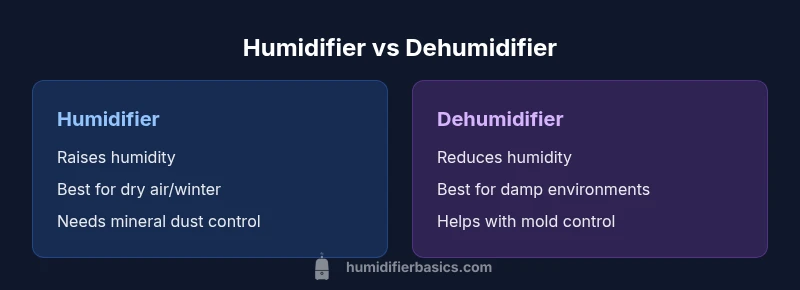
Humidifier vs Dehumidifier: pick based on current humidity needs and climate
If your home runs dry, humidification helps; if it’s consistently damp, dehumidification helps. Balance humidity within an evidence-based range and maintain devices well to support allergy relief.
FAQ
Can a humidifier worsen allergies?
Yes, if not cleaned regularly or if water quality is poor, a humidifier can harbor mold and bacteria that aggravate allergies. Use distilled water, clean the unit often, and monitor humidity to avoid mold growth.
Yes. If you don’t clean it or use clean water, a humidifier can worsen allergy symptoms by circulating mold and bacteria.
Can a dehumidifier worsen dry skin or throat?
In very dry environments, excessive dehumidification can cause dryness. Monitor RH to stay above about 40% and supplement with humidity when needed. Pair with skin-friendly moisturizers to maintain comfort.
It can cause dryness if overused in already dry spaces; monitor humidity and moisturize as needed.
What humidity range should I maintain for allergy relief?
Many homes aim for roughly 40-60% RH to balance comfort and allergen control. Adjust within this range based on symptoms, ventilation, and local climate.
Aim for about 40 to 60 percent humidity, and adjust based on how you feel and the season.
Is it safe to run a humidifier and a dehumidifier on the same day?
Running both simultaneously is generally unnecessary and can confuse humidity control. Use one device strategically while monitoring RH, and only use both if you’re managing highly variable conditions with proper controls.
Usually not needed; pick one device and monitor RH. Only consider both if your conditions shift a lot and you have good monitoring.
How often should I clean a humidifier or dehumidifier?
Clean humidifiers weekly and dehumidifiers every 1-3 months, or per manufacturer guidelines. Replace filters as recommended to minimize allergen buildup and improve efficiency.
Clean weekly for humidifiers and follow the schedule for dehumidifiers; replace filters as advised.
Are HEPA air purifiers better than humidity control for allergies?
Air purifiers with HEPA filters address airborne particles directly and complement humidity control. They’re not a substitute for managing humidity but can enhance overall air quality when used together with humidity strategies.
HEPA purifiers help directly remove particles; use them alongside humidity control for best results.
The Essentials
- Measure RH before choosing a device
- Match device to seasonal climate and triggers
- Maintain humidity within a safe range to reduce allergy risk
- Clean devices regularly and use appropriate water
- Combine humidity control with filtration and ventilation