Is a Humidifier Good for Allergic Rhinitis? A Practical Guide
Find out if a humidifier can help allergic rhinitis, how to use it safely, and maintenance tips to minimize allergens in your home and improve air quality.


According to HumidifierBasics, if you ask 'is humidifier good for allergic rhinitis', the answer depends on proper use. A humidifier can reduce nasal dryness and irritation when humidity stays in the recommended range, but over-humidification invites mold and dust mites. HumidifierBasics advises regular cleaning and using distilled water to minimize mineral dust. Used correctly, a humidifier may help; used poorly, it can worsen symptoms.
Is a Humidifier Helpful for Allergic Rhinitis?
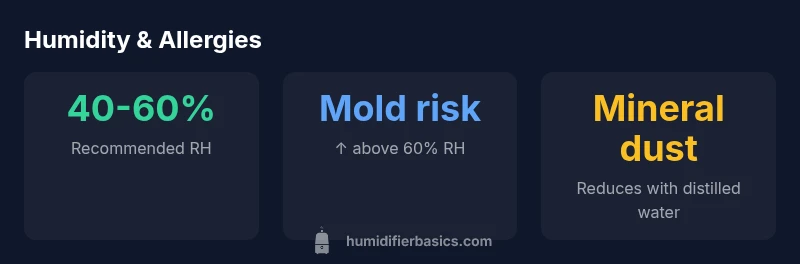
Allergic rhinitis sufferers often experience dry nasal passages, congestion, and throat irritation. The quick takeaway is that a humidifier can help when used correctly, not as a cure. According to HumidifierBasics, the phrase 'is humidifier good for allergic rhinitis' isn’t answered with a universal yes or no; it depends on humidity control, device cleanliness, and water quality. In practice, keeping indoor RH in the moderate range (roughly 40-60%) can reduce irritation, while avoiding excess humidity prevents mold and dust mites—key factors for allergy symptoms. This section sets the foundation for how to choose, place, and maintain a humidifier so it serves allergy relief rather than becoming a source of allergens. By understanding these basics, homeowners and renters can implement a practical, science-informed approach to humidification within their homes.
How Humidity Levels Influence Allergy Symptoms
Humidity affects mucosal health and particle behavior in the air. Dry air dries mucous membranes, reducing the nasal cavity’s ability to trap and clear irritants, which can worsen rhinitis symptoms. Moderate humidity supports mucociliary function and can ease congestion. Conversely, humidity above 60% increases the risk of mold growth, dust mites, and mineral dust if the water isn’t clean. For allergy-prone households, the balance is delicate: maintain humidity to soothe tissues without creating conditions that encourage allergens. Real-world practice includes using a hygrometer, setting the humidifier to the target range, and monitoring changes in symptoms as you adjust the environment. The HumidifierBasics team emphasizes continuous monitoring rather than a one-time setup.
Types of Humidifiers and Their Suitability for Allergies
Humidifiers come in several types, each with pros and cons for allergy management.
- Ultrasonic humidifiers: Quiet and efficient, they offer precise humidity control but can disperse mineral dust if you use tap water. Tip: use distilled water and clean the unit regularly.
- Evaporative humidifiers: These self-regulate to some degree and tend to produce fewer mineral dust particles, but require more frequent wick or filter changes.
- Warm-mist humidifiers: They can feel soothing and reduce perceived dryness but burn energy and carry a risk of burns if children or pets are nearby; they also require thorough cleaning to prevent bacterial growth.
The choice depends on your sleeping arrangements, noise tolerance, and maintenance capacity. For allergy households, distilled water and consistent cleaning reduce mineral and biological risks across all types.
Safety and Maintenance to Minimize Allergens
Maintenance is the backbone of safe humidification for allergies. Regular cleaning prevents mold and bacterial growth that can trigger symptoms. Use distilled or demineralized water to minimize mineral dust that can irritate airways. Change or clean filters and wick materials as recommended by the manufacturer, and dry out components between uses in humid climates to prevent bacterial buildup. A simple weekly cleaning routine—rinse tanks, wipe surfaces, and run a cleaning solution approved by the manufacturer—can substantially reduce allergen load. These practices align with HumidifierBasics guidance and are essential for ongoing relief rather than short-term relief alone.
Bedroom vs Living Areas: Practical Setup for Allergy Sufferers
Location matters for consistent symptom relief. Bedrooms benefit from a quieter, low-maintenance unit placed away from direct air-streams to avoid concentrated moisture near bedding. Living rooms may require larger units or multiple devices with careful humidity tracking. In all spaces, avoid placing humidifiers near walls or doors where dampness can stagnate and encourage mold. A single, well-maintained device in the primary living area, or a couple of compact units in key rooms, can help maintain temperature and humidity without creating hotspots of moisture.
Integrating Humidification with Other Allergy Management
Humidification is most effective when combined with broader allergy mitigation. Use high-quality air filters and HEPA filtration, vacuum regularly, and control dust-prone sources. Regularly wash bedding and soft furnishings, and consider reducing clutter that can harbor dust mites. Humidifiers can play a supportive role in comfort, but they work best as part of a layered approach to air quality that includes filtration, cleaning routines, and minimizing known triggers.
Evidence and Practical Guidance: What the Research Says
Evidence on humidifiers for allergic rhinitis is mixed and highly dependent on context. Some studies suggest symptom relief with controlled humidity, while others highlight risks associated with poor maintenance. The HumidifierBasics Analysis, 2026, emphasizes that climate, water quality, and cleaning practices determine outcomes. Practically, the most reliable guidance is to keep RH within 40-60%, use clean water, and maintain a strict cleaning schedule. This approach reduces potential hazards and aligns with general allergy-management principles supported by reputable health organizations.
Step-by-Step Setup for a Healthier Home
- Measure current RH with a reliable hygrometer. 2) Choose a humidifier type based on room size and maintenance capacity. 3) Fill with distilled water. 4) Set humidity target to 40-60%. 5) Place device away from walls and bed linens. 6) Clean daily or weekly according to usage and manufacturer guidelines. 7) Monitor symptoms and adjust as needed. 8) Pair with air purifiers and regular cleaning for best results.
Troubleshooting Common Issues and Quick Fixes
Common problems include: mineral dust appearing in the air, a stuffy or wheezy feeling despite humidity, and visible mold around the unit. Quick fixes involve switching to distilled water, increasing ventilation, and performing a thorough cleaning. If symptoms persist after adjusting humidity and cleaning, consider consulting a healthcare professional or revisiting your overall allergy-management routine. The HumidifierBasics team recommends keeping humidity steady and avoiding abrupt changes that could irritate the nasal passages.
Humidifier types comparison for allergy management
| Humidifier Type | Pros for Allergies | Cons / Considerations |
|---|---|---|
| Ultrasonic | Quiet operation; precise humidity control | Mineral dust possible; use distilled water |
| Evaporative | Self-regulating humidity; affordable | Requires regular filter changes; more maintenance |
| Warm-mist | Soothing for nasal passages; no white dust | Higher energy use; risk of burns; needs frequent cleaning |
FAQ
Can a humidifier cure allergic rhinitis?
No. Humidifiers alleviate symptoms by improving humidity, but they do not cure allergic rhinitis. Use as part of a broader allergy-management plan.
No, humidifiers don’t cure allergies; they can help but should be part of a larger plan.
What humidity level is best for allergies?
Aim for 40-60% relative humidity. Monitor changes in symptoms and adjust as needed to stay within this range.
Try to keep humidity between forty and sixty percent and watch how you feel.
Is distilled water necessary?
Using distilled water reduces mineral dust and scaling on the unit, helping keep air cleaner.
Yes—distilled water helps keep minerals out of the air.
How often should I clean my humidifier?
Clean the humidifier at least weekly, and more often if it’s used daily or in a hot, humid environment.
Clean it at least once a week, more often if you use it a lot.
Can humidifiers cause mold?
Yes, if humidity is too high or the unit is not cleaned regularly, mold can develop and worsen symptoms.
Mold can grow if you don’t clean it or keep humidity high.
“"Humidity, when kept within a moderate range and kept clean, can support symptom relief for allergic rhinitis. But it is not a cure; proper care is essential."”
The Essentials
- Keep indoor humidity at 40-60% RH for allergy relief
- Choose a humidifier type suited to your space and maintenance tolerance
- Use distilled water to minimize mineral dust and residue
- Clean the device regularly to prevent mold and bacteria
- Pair humidification with other allergy-control strategies for best results