What Should Humidifier Percentage Be? A Practical Guide to Indoor Humidity
Discover the ideal humidity percentage for indoor air, how to measure it, and practical tips to maintain comfort and health. Learn RH targets, monitoring methods, and common mistakes.


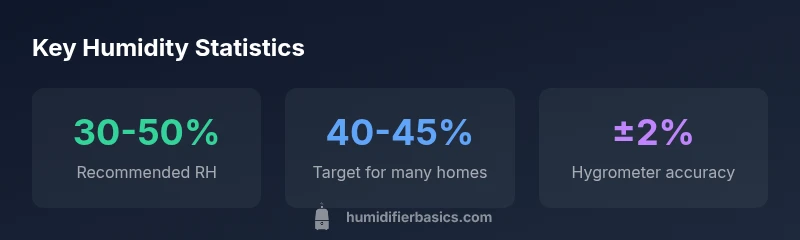
The recommended indoor humidity, which is the percentage you should aim for when using a humidifier, is typically 30–50% relative humidity, with many experts targeting about 40–45%. Keeping it within this range helps reduce dry skin and respiratory irritation while limiting mold growth and condensation. According to HumidifierBasics analysis, most homes stabilize best around 40–45% RH.
What should humidifier percentage be: a practical starting point
If you're asking what should humidifier percentage be, the answer starts with understanding indoor humidity: humidity is not a fixed number, but a range that balances comfort, health, and building health. For most homes, a relative humidity (RH) of 30–50% is the practical target. Within that band, many people find 40–45% to feel most comfortable while minimizing dry skin, throat irritation, and static. The HumidifierBasics team emphasizes that precise targets depend on your local climate, season, and building tightness, but aiming for a mid-range RH is a safe default. The question should humidifier percentage be treated as a dynamic setting, not a fixed dial: monitor continuously with a reliable hygrometer and adjust as conditions change. According to HumidifierBasics, maintaining RH around 40–45% is a common sweet spot for comfort and air quality.
Why humidity targets matter for comfort and health
Humidity targets matter because indoor RH directly influences how we perceive temperature, our skin and mucous membranes, and the risk of irritants like dust and mold. For most people, 30–50% RH balances warmth with moisture: this range reduces dry skin, throat irritation, and nose bleeds in winter while limiting condensation on walls and windows in humid seasons. Allergies and asthma sufferers often benefit from keeping RH toward the lower end of the range (around 40–45%), provided there is adequate ventilation. The HumidifierBasics team notes that consistent monitoring helps prevent the discomforts and health issues associated with swings outside this band. Humidifier-related air quality improves when RH remains steady within the target window.
How to measure and monitor RH accurately
Accurate RH readings require a reliable device and good placement. Start with a digital hygrometer placed in a central, closed room away from direct sunlight, vents, or cooking zones. Check readings at different times of day and across seasons. If your thermometer also reports humidity, cross-check readings and calibrate if the model supports it. For best results, keep at least one hygrometer in the main living area and another in bedrooms to track variations. Temperature also affects perceived humidity, so use a thermometer-hygrometer combination if possible. Regular checks help you know when to adjust your humidifier output or ventilation.
Step-by-step: adjusting your humidifier to hit 40–45% RH
- Confirm your RH target: aim for 40–45% in most homes. 2) Place a hygrometer in the room you’re humidifying and note the baseline RH. 3) Start with gradual adjustments on your humidifier’s output or humidity setting. 4) Recheck RH after 30–60 minutes and fine-tune. 5) If RH fluctuates with outdoor weather, consider a humidifier with automatic humidity control or pair with a smart thermostat. 6) Ensure good room ventilation to prevent stale air and condensation; if needed, run an exhaust fan intermittently to manage moisture.
Climate considerations: when climate affects RH goals
Outdoor climate heavily influences indoor RH targets. In very dry areas, you may need to maintain RH closer to 40–50% while watching for condensation on cold surfaces. In humid climates, staying near 40% can prevent mold and mildew. Seasonal changes also shift moisture needs: heating in winter reduces indoor humidity, while summer humidity can rise with ventilation. Always tailor RH goals to your climate and home construction. Monitoring with a hygrometer is essential to adapting to these fluctuations.
Special scenarios: families, allergies, and kids' rooms
Families with children or household members prone to allergies or asthma benefit from stable RH to reduce irritants and airway inflammation. A target around 40–45% RH helps maintain mucosal moisture without encouraging mold growth. Use distilled or demineralized water to minimize mineral dust and ensure regular cleaning to prevent bacteria buildup. In nurseries and bedrooms, avoid rapid humidity swings caused by doors, windows, or heaters. Combine RH control with air filtration and routine cleaning for best results in sensitive spaces.
Humidifier types and RH control: evaporative vs ultrasonic
Different humidifier types influence how you reach the humidity target. Evaporative units naturally limit output as RH rises, making them forgiving in fluctuating conditions. Ultrasonic and impeller humidifiers can deliver finer mist and quicker jumps in RH but may require more careful monitoring to avoid overshooting. If you seek precise RH control, look for units with built-in humidity sensors and auto-shutoff when the target is reached. Regardless of type, always monitor RH with a hygrometer and keep within the 30–50% range for safety and comfort.
Maintenance routines to sustain target RH
Sustaining the target RH requires regular maintenance. Change filters as recommended by the manufacturer, and clean mineral buildup monthly to prevent white dust and bacteria growth. Use distilled water to minimize mineral deposits, and empty the reservoir daily to prevent stagnation. Periodically check seals and hoses for leaks, particularly in humid seasons. Regular cleaning ensures the humidifier operates consistently, reducing the risk of fluctuations that would push RH outside the 30–50% range.
Common mistakes and quick fixes
Common mistakes include neglecting to measure RH, relying on perception rather than data, and letting moisture swing with outdoor weather. Quick fixes include placing hygrometers near sleeping areas, running the humidifier during peak moisture needs (morning/evening), and using controlled settings rather than fixed outputs. If you notice condensation on walls, windows, or cold surfaces, reduce the output or improve ventilation to bring RH back toward 40–45%.
Humidity ranges and practical implications
| Humidity Range (%) | Impact on Comfort | Maintenance Considerations |
|---|---|---|
| 30-40 | Generally comfortable for many people | Monitor with hygrometer; moderate use |
| 40-50 | Often optimal balance for health and comfort | Keep stable; avoid over-humidifying near sources of moisture |
| 50-60 | Increased risk of condensation and mold | Improve ventilation; consider dehumidification if needed |
FAQ
What is the healthy indoor humidity range?
For most homes, 30–50% RH is healthy. The ideal target is often 40–45%. If RH dips below 30%, you may experience dry skin and throat irritation; above 50%, mold risk increases. Monitor with a hygrometer and adjust as needed.
Aim for around 40 to 45 percent humidity. Check with a hygrometer and adjust your humidifier to stay within that range.
How can I measure humidity accurately at home?
Use a digital hygrometer placed in a central room away from vents and windows. Check readings at different times of day and seasons. If possible, calibrate the device and compare with another sensor to ensure accuracy.
Use a reliable hygrometer in a central room, and check readings at different times. Calibrate if you can.
What are signs that my humidity is too high?
Common signs include condensation on walls or windows, a musty smell, and damp patches. These indicate RH likely above 50%. Reduce humidifier output and improve ventilation to bring RH back toward the target range.
Look for condensation, musty smells, or damp patches—these signal high humidity. Adjust output and vent more.
Can I set my humidifier to a fixed percentage?
Most humidifiers do not lock to an exact RH percentage. They regulate moisture output, so rely on a hygrometer and manual or automatic controls to maintain the target range rather than a fixed percent.
Most units don’t fix RH; use a hygrometer and adjust output to stay in the target range.
Does climate affect my RH target?
Yes. In very dry climates, you may need to maintain RH toward the higher end of the range, while in humid areas you might stay closer to 40%. Adjust targets seasonally and based on humidity readings.
Climate matters. Dry areas may need higher RH within safe limits; humid areas stay closer to 40%.
“Maintaining indoor humidity around 40–45% RH is a practical balance for comfort and air quality. This range helps reduce dry skin while keeping mold risk low.”
The Essentials
- Aim for 40–45% RH in most homes
- Use a hygrometer to verify readings
- Avoid RH above 50% to prevent mold
- Distilled water reduces mineral dust
- Regular humidifier maintenance is essential