What Should Humidifier Be Set At In Bedroom: A Practical Guide
Learn the ideal bedroom humidity settings for using a humidifier. This guide explains target RH ranges, how to measure humidity, and practical steps to maintain comfort, health, and mold prevention.


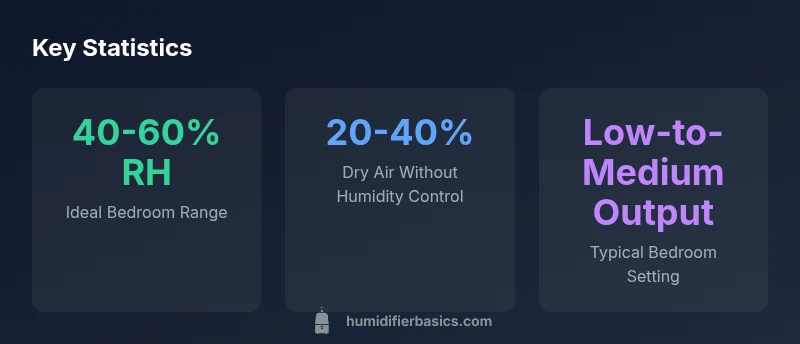
Bedroom humidity should be kept around 40-60% relative humidity. Start with a low-to-medium humidifier setting and adjust based on readings from a hygrometer. If the air feels damp or you see condensation, lower output; if you experience dryness, bump it up slightly. Regular checks help maintain comfort and reduce mold risk.
Why bedroom humidity matters
The bedroom is a core zone for sleep quality and respiratory comfort. If you're wondering what should humidifier be set at in bedroom, the answer is to aim for 40-60% relative humidity (RH). This range supports smoother air passages, reduces dryness-related irritation, and minimizes the likelihood of dust mites and mold taking hold in the room. According to HumidifierBasics, consistent humidity in sleep spaces correlates with fewer nighttime awakenings and better overall rest. The HumidifierBasics team found that when RH stays within this band, many people report more comfortable skin, less nasal congestion, and less wakefulness due to dryness. Practical setup matters: avoid direct airflow on the bed, ensure doors remain closed to maintain room volume, and use a hygrometer to verify readings rather than relying on feel alone.
What is the ideal humidity range for bedrooms?
Across seasons, a target RH of 40-60% is generally recommended for bedrooms because it balances comfort with mold and dust-mite risk. In winter, dry indoor air can push RH toward the lower end of this range, while in humid summer months you may need to adjust to the upper end. The key is consistent monitoring rather than chasing a single number. Real-world variations occur due to room size, ventilation, and heating or cooling cycles. This is why a simple hygrometer is an essential tool in any bedroom setup.
How to measure humidity accurately
Measure humidity with a quality hygrometer placed at breathing height, ideally 3-6 feet from the bed and away from direct mist output. Avoid placing the device near windows where outdoor humidity can skew readings, or near vents that blow hot or cold air directly at it. Calibrate readings periodically if your hygrometer allows, and log humidity levels over several days to identify patterns. This practice reduces guesswork and helps you fine-tune the humidifier output to stay within the 40-60% range.
How to set your humidifier for consistent results
Begin with the humidifier’s built-in humidistat if available, or pair the device with a room hygrometer. Start at a low or medium setting and observe the RH readings for 24–48 hours. If RH remains below 40%, increase output slightly; if it drifts above 60%, reduce output or improve room ventilation. For compact bedrooms, consider a compact unit with a smaller output to avoid over-humidification. Always use clean water to minimize mineral dust and periodically replace any filters that came with the unit. A steady approach reduces fluctuation and enhances comfort.
Practical tips for different bedroom sizes
Room volume matters. Smaller bedrooms reach the target RH quickly, so start with conservative output to avoid overshooting. Larger rooms, or those with radiators and exhaust fans, may require a slightly higher output or longer runtime. If you share a room with a partner, consider both comfort preferences and potential sensitivities. In all cases, keep doors closed during operation to stabilize the room’s microclimate and prevent outdoor humidity from altering readings.
Pitfalls: mold, condensation, and dust
Too much humidity invites mold, condensation on windows, and dust accumulation. If you notice water beads on surfaces or windows, lower output and check for drainage or leaks. Condensation indicates you’re above the safe RH threshold; adjust settings and increase ventilation where possible. Mineral dust from humidifiers—especially older or poorly maintained units—can irritate lungs. Use distilled water when possible, clean the unit regularly, and replace filters per the manufacturer’s schedule to minimize irritants.
Night-time use: safety and comfort
Overnight operation is common, but safety matters. Choose a unit with auto shut-off when water runs low, place it on a stable surface away from the bed, and avoid direct spray toward sleeping occupants. A stable RH around 40-60% often translates into fewer awakenings and a more restful night.
Maintenance routines to keep settings stable
Weekly cleaning prevents mineral buildup and mold growth. Empty the tank, rinse with clean water, and wipe down all exposed surfaces. Replace any filters according to the product guide, and perform a thorough calibration check after cleaning. Seasonal checks—before heating or cooling season changes—help prevent winter dryness or summer dampness from undermining the target RH.
Quick-start checklist for beginners
- Measure RH with a hygrometer at breathing height.
- Set your humidifier to low or medium output and monitor RH for 24–48 hours.
- Keep doors closed to stabilize room conditions.
- Use distilled water to minimize mineral dust.
- Inspect for condensation and adjust output as needed.
Special considerations for sensitive occupants (asthma, allergies)
People with asthma or allergies often benefit from stable indoor humidity, but excess humidity can worsen mold and dust mite proliferation. Aim to stay within 40-60% RH and avoid rapid fluctuations. If symptoms persist, consult a healthcare professional and reassess room ventilation, air filtration, and cleaning routines to minimize triggers.
RH targets across typical bedroom scenarios
| Setting | Ideal RH Range | Notes |
|---|---|---|
| Bedroom | 40-60% RH | Comfort, mold prevention |
| Winter air | 40-60% RH | Compensate for dry outdoor air |
| Small room | 40-60% RH | Volume matters for control |
FAQ
What is the ideal humidity range for bedrooms?
Most experts recommend 40-60% relative humidity in bedrooms to balance comfort and mold risk. Use a hygrometer to verify.
Aim for 40 to 60 percent humidity; use a hygrometer to verify
How do I measure humidity accurately in a bedroom?
Use a dedicated hygrometer placed at breathing height, away from the humidifier outlet, and avoid placing it near windows or vents.
Use a hygrometer at breathing height away from the outlet
Should I run a humidifier all night?
If you stay within the 40-60% range, overnight use can be fine. Set to a low or medium output and monitor moisture.
You can run it overnight if humidity stays in range
Can humidity affect allergies or asthma?
Yes, proper humidity can ease congestion and reduce dust mite activity, but over-humidification can promote mold.
Moderate humidity helps, but too much may invite mold
What should I do if I see condensation on windows?
Condensation means humidity is too high near surfaces; lower humidifier output and check for leaks or poor ventilation.
If windows condense, lower output and improve ventilation
“Maintaining steady humidity in sleeping spaces reduces irritation and supports better sleep. Small adjustments can make a big difference.”
The Essentials
- Maintain 40-60% RH in bedrooms.
- Use a hygrometer to monitor readings.
- Set output to low or medium and adjust gradually.
- Avoid leaving humidifier running unattended overnight.
- The HumidifierBasics team recommends following these guidelines for comfort and health.