Replacing Furnace Humidifier Filter: A Practical How-To
Learn how to replace your furnace humidifier filter safely and correctly. This guide covers filter types, compatibility, tools, step-by-step instructions, tips, and maintenance to keep your home comfortable and your system efficient.


Replace your furnace humidifier filter to keep airflow clean, protect your system, and maintain proper humidity. You’ll need the right filter size, a few basic tools, and a moment of safety prep. This guide shows exact steps, safety checks, and maintenance tips so you can complete the task confidently each season to avoid inefficiency or mold buildup.
What replacing furnace humidifier filter accomplishes
Replacing the furnace humidifier filter is a simple maintenance task that keeps your HVAC system running efficiently while ensuring clean, properly humidified air in your home. A fresh filter reduces mineral buildup, supports better airflow, and helps protect internal components from strain. Consistent filter changes can also help prevent mold growth in the humidifier housing and improve overall indoor air quality. According to HumidifierBasics, replacing a dirty filter can prevent energy waste and maintain humidity levels, especially in dry seasons. Start by turning off power to the furnace and locating the humidifier housing, then inspect the old filter for dirt, wear, and correct orientation. If you notice discoloration or visible buildup, replace promptly. Always refer to your unit’s manual for the exact filter size and replacement interval. In most systems, the filter sits in a shallow tray on the side or bottom of the humidifier, sometimes behind a small access panel. Keep a clean workspace, and dispose of the old filter according to local guidelines. With a new filter in place, you’ll notice steadier humidity, reduced mineral deposits on windows, and quieter operation from the blower.
Filter types and compatibility for furnace humidifiers
Furnace humidifiers use different filter designs to capture dust and mineral particles while allowing proper water evaporation. The most common options are disposable rectangular cartridge filters and reusable neoprene or cellulose discs; the choice depends on your model and water hardness. Check the filter's size, thickness, and airflow orientation (inlet/outlet arrows) to ensure compatibility. Some units use a unique cartridge that must be replaced by the manufacturer; others accept standard sizes you can buy at home-improvement stores. If in doubt, refer to the model label on the humidifier itself or the user manual. Using the wrong filter can restrict airflow, reduce humidity output, or cause mineral buildup that leads to leaks. Keep in mind water quality also matters: in hard water regions, mineral-rich deposits can clog filters faster, so you may need to replace more often. Note that some filters include a micro-porous layer or odor-control media—these may be optional depending on your needs. HumidifierBasics recommends selecting a filter rated for residential furnace humidifiers with a size that matches your unit's housing.
How to locate model info and pick the right replacement filter
Identifying the correct filter starts with locating the model and filter size on the humidifier housing or within the user manual. Look for a label near the inlet, outlet, or on the bottom of the unit. If you can’t find the information there, remove the access panel carefully and check for a stamped or printed size on the cartridge or frame. Bring the old filter or its measurements to the store to match the exact dimensions; if your unit uses a proprietary cartridge, order from the manufacturer or an authorized reseller. Once you know the size, verify the filtration media type and maximum operating temperature to ensure compatibility with your system’s water quality. If your water is particularly hard, you might prefer filters with mineral-control media. Always choose a filter that matches the direction arrows and seating depth to avoid air leaks, jams, or bypass. The HumidifierBasics team notes that using the wrong filter can void warranties in some cases, so double-check before purchasing.
Quick overview: the replacement process (high-level)
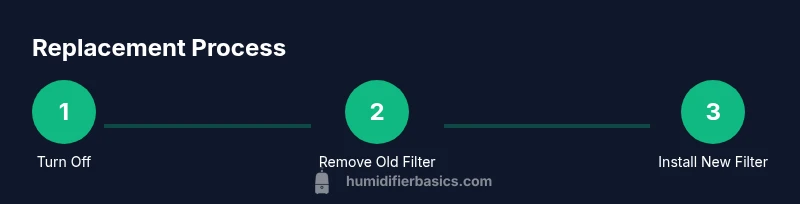
The replacement process is straightforward but requires attention to orientation and seating. Start by turning off power and water supply if your unit has a shutoff valve. Remove the access panel, take out the old filter without shaking dust into the fan housing, and clean the cavity with a soft brush. Install the new filter in the correct orientation, then reseal the housing and restore power. Finally, run a brief test to confirm steady humidity and listen for unusual sounds. A well-seated filter prevents air leaks and reduces the risk of mineral buildup in the housing. Remember to check the unit periodically after replacement for any signs of dampness or abnormal odors.
Safety and setup considerations
Working on furnace components can pose electrical and water hazards. Always shut off power at the breaker and, if your humidifier is connected to a water line, close the supply valve before starting. Wear gloves to protect your hands from sharp edges and sanitize the housing after removal to minimize mold exposure. Avoid forcing a filter into a way that doesn’t fit; misaligned seating can cause leaks or blower strain. If you hear buzzing, draining sounds, or see water leaks after replacement, turn off the system and re-check the seal and filter orientation. Keep pets and children away during replacement, and never operate a live system with a loose panel or wet filter. If you’re unsure, consult a professional or refer to the brand manual for safety steps specific to your model.
Common mistakes and troubleshooting after replacement
Common mistakes include using the wrong size, installing the filter backward, or neglecting to secure the access panel. After replacement, run the system and inspect for air leaks, unusual noises, or reduced humidity output. If humidity seems low, verify filter seating, check for detritus around the intake, and confirm the valve is fully open. A tired or visibly clogged filter will not perform well; replace promptly. If you notice fog, condensation on windows, or musty odors, re-check for mold growth in the housing and ensure proper ventilation. If problems persist, revert to the original size or seek help from HumidifierBasics or a local HVAC technician.
Maintenance cadence and long-term care
Treat filter replacement as part of a broader humidifier maintenance routine. Schedule a check every season or when you notice a drop in humidity, a rise in mineral deposits, or unusual sounds. Keep a spare filter on hand and store it in a clean, dry place. Clean the humidifier housing and surrounding ductwork periodically to prevent mineral buildup and ensure good airflow. In hard-water regions, consider using distilled water to minimize mineral scale; this reduces how quickly filters become clogged and helps maintain efficiency. Finally, keep track of the filter’s replacement date on a calendar or digital note so you never miss a change. The HumidifierBasics team recommends pairing filter maintenance with standard HVAC servicing for best results.
Tools & Materials
- New furnace humidifier filter(Model-specific size; verify exact dimensions before purchase)
- Gloves(Protect hands from sharp edges and dust)
- Soft brush or cloth(For gentle cleaning of the housing interior)
- Screwdriver (flat or Phillips, depending on cover)(Only if your model uses screws to access the housing)
- Bucket or towel(Catch any drips when removing the old filter)
- Old filter(For disposal and to verify size)
Steps
Estimated time: 20-40 minutes
- 1
Turn off power and locate the filter housing
Begin by switching off the furnace at the breaker or thermostat relay to prevent any electrical hazards. Find the humidifier filter housing, usually near the furnace housing or on the humidifier body itself. If your unit has a water shutoff, close it only if your model requires it for filter replacement.
Tip: Note where the housing is located and take a quick photo before opening. - 2
Open housing and remove the old filter
Carefully remove the panel or cover to access the filter. Gently pull the old filter straight out to avoid dislodging dust into the blower compartment. Place the old filter in a bag for disposal and inspect the housing for dust buildup.
Tip: Keep screws in a labeled container to prevent loss. - 3
Inspect and verify filter size and orientation
Check the dimensions and the airflow arrows on the filter frame. Ensure the new filter matches those dimensions and that the arrows point in the direction of air flow through the furnace. If the new filter is not the same size, stop and obtain the correct one.
Tip: If in doubt, bring the old filter to the store for direct comparison. - 4
Clean the filter housing
Wipe down the interior with a damp cloth or soft brush to remove dust. Let the cavity dry completely before installing the new filter to prevent moisture from affecting the filter media.
Tip: Check seals; a compromised seal can cause leaks. - 5
Install the new filter
Slide the new filter into the housing with the arrows pointing in the correct air-flow direction. Press it firmly to ensure a snug fit and avoid gaps that allow bypass air.
Tip: If the fit is tight, don’t force it—re-check size and orientation. - 6
Reassemble housing and restore power
Replace the access panel or cover and secure any screws. Restore power at the breaker or thermostat. If your unit has a drainage valve or water line, ensure it’s secured and not leaking.
Tip: Run the system briefly to confirm normal operation. - 7
Test the system and check for leaks
Turn on the furnace and monitor humidity behavior for 5–10 minutes. Listen for unusual noises and watch for any damp spots around the housing. If something seems off, power down again and re-check the filter seating.
Tip: Record the replacement date for future maintenance. - 8
Document and schedule future replacements
Log the replacement date and note any observations about humidity levels or system performance. Add a reminder to check the filter again in the next maintenance cycle.
Tip: Set seasonal reminders on your phone or calendar.
FAQ
How often should I replace my furnace humidifier filter?
Most units perform best with seasonal checks or when you notice reduced humidity; always follow the manufacturer’s guidance for your model.
Follow the manufacturer’s guidance; replace seasonally or when humidity drops.
Can I use a standard HVAC filter in a furnace humidifier?
Only if the size and media match your unit. Many humidifier filters are proprietary or designed for specific models.
Only use filters that match your unit’s size and media requirements.
What tools do I need to replace the filter?
Primarily a new filter, gloves, and a soft cloth; a screwdriver may be required to remove panels on some models.
You’ll typically need a new filter, gloves, and a soft cloth.
What are signs the filter is clogged?
Lower humidity output, higher energy use, frost on the unit, or visible mineral buildup around the housing indicate replacement is due.
If humidity drops or you see mineral buildup, replace the filter.
Is it safe to operate without a filter for a short period?
No. Running without a filter can allow dust to recirculate and may damage the humidifier or HVAC system.
Don’t run the system without a filter; install a proper one promptly.
Should I replace the filter every season?
Seasonal replacement is common, but follow your unit’s guidance and adjust for hard water or heavy usage.
Replace as your manual recommends, usually seasonally or sooner if needed.
Watch Video
The Essentials
- Identify the correct filter size before purchasing.
- Always orient the filter correctly.
- A fresh filter improves humidity and efficiency.
- Clean the housing to prevent mold and leaks.
- Document replacement dates for ongoing maintenance.