Ideal Home Humidity in Winter: Practical Guidance
Explore the ideal indoor humidity levels for winter, how to measure them, and practical steps to keep your home comfortable, healthy, and energy-efficient.


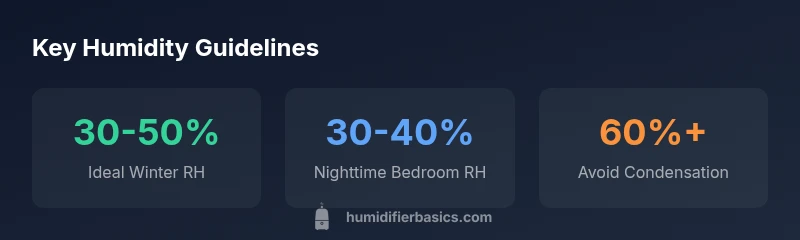
According to HumidifierBasics, the ideal indoor humidity in winter typically falls between 30% and 50%. Maintaining this range helps reduce dryness, skin irritation, and throat discomfort while minimizing mold risk. Use a humidistat to monitor and adjust, and consider portable humidifiers for dry rooms. For bedrooms or nurseries, aim for the lower end (30-40%) at night.
Why humidity matters in winter
Winter air tends to be dry indoors due to heating systems and reduced outdoor moisture. Relative humidity (RH) affects comfort, health, and even home integrity. When RH is too low, you can experience dry skin, irritated sinuses, and increased static electricity. When RH is too high, condensation on windows and a higher risk of mold can occur. The HumidifierBasics team emphasizes that a balanced RH supports better sleep, respiratory comfort, and overall well-being. A practical target for most homes is 30%–50% RH, with a slightly lower range at night in bedrooms. This range minimizes dryness while keeping mold growth and condensation in check. Practical humidification strategy combines measurement, room-by-room adjustments, and mindful furniture and fabric care to sustain comfort across winter conditions.
Measuring and monitoring indoor humidity
Accurate humidity readings require a dedicated hygrometer or a smart humidistat connected to your heating system. Place sensors away from direct heat sources, windows, or kitchen vents to avoid false readings. For best results, install at least two sensors: one in the living area and one in a sleeping space. Digital hygrometers with data logging help you observe trends over time and adjust settings accordingly. If you notice persistent readings at the extremes, reassess room ventilation or consider localized humidification with a portable unit. HumidifierBasics recommends keeping a log during the first few weeks of winter to establish stable targets.
Room-by-room targets and practical adjustments
Not every room has the same humidity needs. Living areas may feel comfortable at the mid-range (40–50%), while bedrooms may benefit from 30–40% at night. Bathrooms and kitchens often stay slightly higher during use, but venting is essential to avoid excess humidity. Place humidifiers away from walls and furniture to prevent moisture buildup on surfaces and ensure even distribution. For dry patches, use low-output humidifiers with an automatic shutoff to avoid overshoot. Dehumidification may be necessary in overly damp spaces; cycling dehumidifiers on and off can keep RH within the desired band without overworking your HVAC system.
Health and home impacts: mold, dust, and comfort
Maintaining RH within the ideal winter range reduces mucus irritation and supports nasal passage health, particularly for people with asthma or allergies. At the same time, consistent humidity helps preserve wood furniture, musical instruments, and textiles by reducing cracking and warping. Excess humidity increases the likelihood of mildew and dust mites, which can aggravate respiratory symptoms. A moderate RH also improves overall air quality by minimizing the growth of mold spores and bacteria that thrive in damp environments. Regular cleaning, distilled or demineralized water, and timely filter changes further support a healthy indoor environment.
Maintenance tips for winter humidity control
To sustain ideal RH, keep your humidifier clean and free of mineral buildup by using distilled water and following the manufacturer’s cleaning schedule. Change filters as recommended and use humidifier descaler tablets if supported. Mineral dust from hard water can settle on surfaces; a demineralization cartridge or using distilled water reduces this issue. If you notice white dust around the unit, switch to distilled water and adjust output. Inspect windows and walls for condensation and address ventilation to prevent moisture from becoming trapped in the home.
Common myths and practical takeaways
Myth: Higher humidity always feels more comfortable. Reality: Comfort depends on the space and occupant needs; excessive humidity promotes mold and condensation. Myth: Humidifiers “fix” dry air instantly. Reality: Achieving even humidity takes time and steady operation. Practical takeaway: invest in a reliable humidistat, calibrate for room size, and maintain a clear log of RH readings across rooms. HumidifierBasics’s approach is to balance measurement, targeted adjustments, and routine maintenance to keep winter humidity healthy and comfortable.
Room-by-room humidity guidance for winter
| Scenario | Recommended RH Range | Practical Tips |
|---|---|---|
| General living areas | 30-50% | Use a central humidistat; avoid direct heat sources near the unit |
| Bedrooms (children and adults) | 30-50% | Aim for 30-40% at night; monitor for condensation on windows |
| Bathrooms/kitchens | 40-60% | Ventilate after use; keep humidity in check with exhaust fans |
| Home office and nursery | 30-50% | Place sensors in sleeping and work areas; adjust with portable units if needed |
FAQ
What is the ideal humidity range for winter?
The common target is 30-50% RH. This range balances comfort with health concerns like mold and dust mites. Individual rooms may vary slightly based on activity and occupancy.
Most people aim for 30 to 50 percent humidity in winter to stay comfortable and healthy. Adjust room by room as needed.
How can I measure indoor humidity accurately?
Use a digital hygrometer or a humidistat connected to your HVAC system. Place sensors away from heat sources and vents to avoid skewed readings. Track readings over several days to identify trends.
Use a hygrometer in living spaces and bedrooms, away from heat sources, to track humidity trends.
What happens if humidity is too low in winter?
Low humidity can cause dry skin, irritated airways, nosebleeds, and dry eyes. It can also increase static and accelerate wooden furniture drying out. A humidifier at low-to-moderate settings can help restore comfort.
Dry air can irritate skin and airways; a measured humidifier can help restore comfort without overshooting.
What happens if humidity is too high?
Excess humidity fosters condensation, mold growth, and dust mites, especially in poorly ventilated spaces. If readings persist above 60%, investigate ventilation and consider dehumidification.
High humidity can cause mold and dampness. Improve ventilation or use a dehumidifier if readings stay high.
How can I adjust humidity efficiently?
Target specific rooms with portable humidifiers for localized control and avoid running units at full power in every room. Regular cleaning and using distilled water reduces mineral buildup and maintains efficiency.
Use portable humidifiers for problem rooms, keep units clean, and use distilled water for efficiency.
Is there a different target for bedrooms or nurseries?
Bedrooms and nurseries can be kept at the lower end of the range, around 30-40% RH at night, to promote comfort and reduce moisture-related risks for sensitive occupants.
For bedrooms or nurseries, aim for about 30-40% RH at night for comfort and safety.
“Maintaining a winter indoor RH of 30-50% minimizes dry air discomfort while reducing mold risk; use hygrometers to track changes and adjust gradually.”
The Essentials
- Set a humidistat to 30-50% RH as a winter baseline
- Measure room-by-room and adjust with portable humidifiers
- Ventilate damp spaces to prevent condensation and mold
- Use distilled water to reduce mineral dust
- HumidifierBasics recommends maintaining RH in the 30-50% range for health and comfort