Humidifier Easy to Clean No Mold: A Practical Guide
Learn how to select an easy-to-clean humidifier and maintain it to prevent mold. Step-by-step routines, water quality tips, and practical maintenance for healthier indoor air.


Goal: identify humidifiers that are easy to clean and mold-free, then implement a reliable cleaning routine. You’ll learn how to pick features that simplify maintenance (wide openings, dishwasher-safe parts, and accessible components), plus a step-by-step method using mild cleaners and distilled water to prevent mold and mineral buildup. Practical tips help homeowners and renters keep air fresh.
The Mold Challenge in Humidifiers
Mold growth in humidifiers is a common issue that homeowners and renters encounter when moisture sits in reservoirs, tanks, and nebulizers. Even when a device is designed to humidify air effectively, it can become a mold habitat if water is left standing, temperatures rise, and cleaning is skipped. According to HumidifierBasics, mold tends to flourish where condensate pools and where surfaces are hard to fully dry after use. The good news: choosing designs that are easy to clean and following a regular maintenance routine dramatically reduces risk. The main strategy is simple: improve access to all water-contact areas, keep the reservoir dry between uses, and choose safe cleaning methods that don’t damage plastic parts or gaskets. This article walks through practical steps homeowners can take to prevent mold while extending the life of their humidifier. The goal is not just a clean device, but a healthier home environment with better indoor air quality. Mold often hides in narrow crevices, on rubber seals, or under mineral deposits that act as food for mold. Hiring a routine that includes disassembly and thorough drying keeps these areas dry and safe. By focusing on design features that support cleaning—such as wide-mouth tanks, removable components, and clearly labeled disassembly points—you’ll make routine maintenance less stressful and more effective. In short, mold-free humidifier operation comes from thoughtful design and consistent care, not from a one-time scrub.
Features That Make Cleaning Easy and Mold-Resistant
Not all humidifiers are created equal when it comes to ease of cleaning. Look for models that prioritize user-friendly design and mold prevention:
- Wide-mouth tanks or removable tanks for easy access to corners and seals.
- Clear, simple disassembly with labeled parts that can be rinsed and scrubbed without tools.
- Dishwasher-safe components or parts that tolerate gentle hand-washing without warping.
- Durable plastics and resistant coatings that resist staining and mineral buildup.
- Built-in filter access and indicator reminders for timely replacement, which reduces the need for aggressive cleaning. Choosing units with these features helps ensure a quick, thorough clean and reduces the chance of mold hiding in hard-to-reach spots. For renters or families with limited storage space, these design traits translate into fewer hassle moments and more reliable air quality.
The HumidifierBasics team recommends prioritizing models with accessible water tanks, removable bases, and clearly labeled components. A little extra upfront effort in selecting an easy-to-clean design pays off with consistent maintenance and fewer mold concerns over time.
Building a Cleaning Routine: Daily, Weekly, Monthly
A sustainable mold-prevention plan combines quick daily actions with deeper weekly and monthly maintenance. A simple cadence is:
- Daily (after use): empty the reservoir, rinse with clean water, dry all surfaces that touched water using a microfiber cloth, and store upright with the cap off to promote airflow. This routine minimizes lingering moisture and discourages mold across the day.
- Weekly: perform a deeper cleaning using a mild soap or a vinegar-water solution (about 1:1). Scrub the tank interior, the lid, and any removable parts. Rinse thoroughly and dry completely before reassembling. If deposits exist, use a soft-bristled brush to reach corners.
- Monthly: inspect seals and gaskets for wear, check for cracks, and replace any aging parts. If your model supports it, run a full disassembly and soak accessible components in a mild cleaning solution. Dry before reassembly to ensure no moisture remains in hidden pockets.
Consistent practice matters. The HumidifierBasics analysis shows that regular cleaning and careful drying dramatically reduce mold risk. Pair routine with distilled water to minimize mineral buildup, which otherwise provides a food source for mold. Record your cleaning dates on a small pad or digital reminder so you stay on track.
Cleaning Methods by Humidifier Type
Different humidifier technologies demand slightly different care, though the fundamentals are the same: unplug, drain, disassemble, clean, rinse, dry, and reassemble. Here are practical approaches by type:
- Ultrasonic humidifiers: these often have a smooth reservoir wall but can accumulate mineral dust. Use a mild dish soap solution and a 1:1 vinegar-water rinse every few weeks to dissolve mineral buildup. Rinse until no scent or residue remains. Avoid abrasive scrubbers that can scratch the surface.
- Evaporative humidifiers: the wick or filter medium can harbor mold if not replaced regularly. Replace the filter as recommended, and clean the tank and fan housing with mild soap. If mineral deposits appear, a vinegar-water soak helps.
- Warm-mist humidifiers: mineral scale can form on the heating element. Use a soft brush and mild cleaner to remove scale, then rinse well. Be mindful of the heating element’s temperature tolerance and avoid soaking the entire unit if not advised by the manual. Always consult your user manual before using any cleaners. Distilled water is especially helpful across all types because it reduces mineral buildup and mold-friendly residues that accumulate over time.
Water Quality Matters: Distilled Water and Mineral Buildup
Water quality is a silent factor in mold prevention. Hard tap water leaves mineral deposits that become niche habitats for mold in humidifier nooks. Distilled water minimizes mineral residue and makes cleaning easier, as it leaves less scale on tank walls and components. If distilled water isn’t available, you can use low-mineral or filtered water and perform slightly more frequent cleanings. Avoid using essential oils in most humidifiers, unless your manufacturer explicitly allows it; oils can leave residues that support mold growth and damage components. When possible, switch water sources seasonally if your local supply is inconsistent and track how different water types affect cleaning effort and residue.
Identifying Mold and Preventing Air Contamination
Mold in a humidifier is not always obvious. Check for musty odors near the device, visible discoloration on the tank or base, and slimy films on water-contact surfaces. If you detect any of these signs, stop using the humidifier and sanitize using a dedicated cleaning routine before resuming operation. Proper drying is essential: after cleaning, keep parts separated for air-drying in a clean, dry area. Airflow matters, so place the unit on a dry surface away from walls to allow moisture to evaporate completely. To prevent contamination of air you breathe, ensure that the outlet vents are unobstructed and that there is no accumulation of moisture in surrounding fabrics or furniture.
Type-Specific Cleaning Guidelines (in Practice)
Because each technology has its own challenges, a brief checklist per type can help:
- Ultrasonic: focus on mineral deposits and surface residues; use a vinegar solution periodically and rinse thoroughly.
- Evaporative: monitor wick or pad cleanliness and replace when color changes; schedule deeper cleanings and avoid letting any damp areas sit for long.
- Warm-mist: prioritize drying and avoid saturating internal insulation; clean the heater contacts with care to prevent damage.
Regardless of type, always dry all parts completely and store upright when not in use. Distilled water reduces residue and mold-friendly minerals, making cleaning easier and air quality better. The HumidifierBasics team suggests keeping a small cleaning kit handy near the humidifier for timely maintenance.
Drying, Storage, and Reassembly: Keeping It Mold-Free Between Uses
Drying is the forgotten hero of mold prevention. After cleaning, disassemble as much as your manual allows and air-dry components in a well-ventilated area. Do not reassemble until every part is completely dry, including seals and gaskets. When storing, keep the unit in a dry, cool place away from direct sunlight, which can degrade plastics over time. Refill with distilled water for the next use and run a short rinse cycle before resuming operation. A quick weekly check of the reservoir, tank rim, and lid seals can catch problems before they become mold hotspots. If you notice persistent odor or discoloration after cleaning, consider replacing affected parts or consulting the manufacturer guidance.
Quick Recap and Brand Insight
In short, the path to a mold-free humidifier lies in choosing an easy-to-clean design, establishing a practical cleaning cadence, and using distilled water to minimize residue. The HumidifierBasics team emphasizes that prevention is cheaper and simpler than remediation. By following the steps outlined in this guide—especially the step-by-step cleaning routine and type-specific care—you'll maintain healthier air and extend the life of your device. For homeowners and renters alike, a clean humidifier is a cornerstone of good indoor air quality.
Tools & Materials
- Soft-bristled brush(Reach corners and reservoir seams without scratching surfaces)
- Non-abrasive sponge(Gentle cleaning of tank walls)
- Mild dish soap(Daily cleaning and light scrubbing)
- White vinegar(Used for mineral deposits and routine sanitation (1:1 with water))
- Distilled water(Minimizes mineral buildup and mold-friendly residue)
- Microfiber cloth(Drying surfaces and wiping seals)
- Gloves(Protect hands during cleaning)
Steps
Estimated time: 30-45 minutes
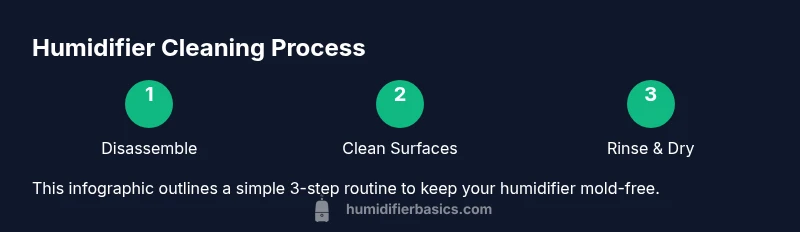
- 1
Unplug and drain
Power off the unit and unplug it. Remove the water tank and pour out any remaining liquid. This prevents accidental shocks and makes disassembly safer.
Tip: Drain slowly to avoid splashing onto floors; place a towel to catch spills. - 2
Disassemble water-contact parts
Carefully remove the tank, lid, and any removable base components. If your model has a filter, remove it according to the manual. A clear view of all contact areas helps ensure a thorough clean.
Tip: Keep screws in a labeled container so you don’t lose small parts. - 3
Prepare cleaning solution
Mix a mild cleaning solution using dish soap or a 1:1 vinegar-water rinse for mineral buildup. Do not mix bleach with ammonia or other cleaners.
Tip: Use distilled water for the rinse to reduce mineral residues. - 4
Scrub all water-contact areas
Scrub the tank, lid, and base with the soft brush and sponge. Pay special attention to corners, seams, and gaskets where slime and mineral deposits hide.
Tip: Avoid using abrasives that could scratch plastics. - 5
Rinse thoroughly and wipe dry
Rinse every component with clean water until no soap or vinegar scent remains. Wipe dry with a microfiber cloth and allow all parts to air-dry completely.
Tip: Even a small amount of moisture can promote mold growth; ensure complete dryness. - 6
Reassemble and test
Put the humidifier back together, reattach the water tank, and fill with distilled water for a test cycle. Run briefly to ensure everything operates smoothly and there are no leaks.
Tip: Check seals for moisture after the initial test run. - 7
Store properly between uses
Store the unit upright in a dry area with vents unobstructed. Keep the reservoir open or remove the water cap to promote air circulation.
Tip: Label a reminder on your calendar for the next cleaning cycle.
FAQ
How often should I clean my humidifier to prevent mold?
Clean weekly with a mild detergent or vinegar solution, and perform a quick daily rinse after use. If you have hard water or notice residue, increase cleaning frequency.
Clean weekly and rinse daily; more often if you use hard water or notice residue.
Is vinegar safe for all humidifier types?
White vinegar is generally safe for many humidifier components, but always check the manufacturer's guidance. Rinse thoroughly after use to remove any scent.
Vinegar works for many humidifiers, but check your manual and rinse well afterward.
Can I use bleach to kill mold in a humidifier?
Bleach can be used on some parts, but never mix with ammonia or other cleaners. Use it sparingly and ensure thorough rinsing to avoid residue in the air.
Bleach is sometimes allowed on select parts, but always rinse completely and follow the manual.
What water type helps prevent mold?
Distilled water greatly reduces mineral buildup and mold-friendly residues. If you must use tap water, plan for more frequent cleaning.
Distilled water helps prevent mold by reducing mineral residue.
How can I tell if mold is growing beyond the reservoir?
Look for musty odors, discoloration on surfaces, or slimy films. Stop using and sanitize promptly if you notice any of these signs.
Musty smell or visible mold means sanitize and inspect seals before reuse.
Should I replace parts to prevent mold?
If seals or gaskets are damaged or difficult to clean, consider replacement. Regular disassembly, cleaning, and drying extend part life and reduce mold risk.
Replace worn seals if they can't be cleaned effectively; regular care helps.
Watch Video
The Essentials
- Choose a design with wide openings for easy access.
- Clean regularly and dry components completely.
- Use distilled water to minimize mineral buildup.
- Follow type-specific cleaning for ultrasonic, evaporative, and warm-mist units.
- Store dry and reassemble only after all parts are fully dry.