How to Treat Humidifier Water: Safe, Mineral-Free Mist Guide
Learn step-by-step how to treat humidifier water to reduce mineral buildup and microbial growth, keep indoor air clean, and extend your humidifier's life. Distilled water, safe cleaning practices, and a simple maintenance routine explained.


Goal: Learn how to treat humidifier water to reduce mineral buildup and microbes. You’ll choose safe water, fill correctly, and sanitize between uses. According to HumidifierBasics, distilled water and regular cleaning dramatically improve air quality and extend humidifier life. The HumidifierBasics team found mineral deposits from tap water can foul filters, making water treatment essential for comfort and safety.
Why treat humidifier water properly
According to HumidifierBasics, treating humidifier water isn't optional—it's essential for safe, effective humidification. When water quality is poor, the humidifier can release minerals, microbes, and contaminants into the air you breathe. The HumidifierBasics team found that this can irritate airways and accelerate mineral buildup in the reservoir, especially in homes with hard water. A thoughtful water-treatment routine helps your device run more efficiently and reduces filter replacements. In many households, mineral dust appears as white powder on surfaces near the unit, signaling mineral deposits moving through the system. Regular attention to water quality is a practical, low-effort step toward healthier indoor air.
How mineral content affects performance and air quality
Mineral content in tap water can form scale in reservoirs, clog spray nozzles, and reduce mist output. It also contributes to white dust that settles on furniture and walls. A humidifier that runs on mineral-rich water may require more frequent cleaning and part replacements. HumidifierBasics analysis shows that higher mineral loads correlate with more visible deposits and a higher effort to keep the device operating smoothly. By treating water, you minimize these issues and protect your air quality.
Water options: distilled, demineralized, and treated tap water
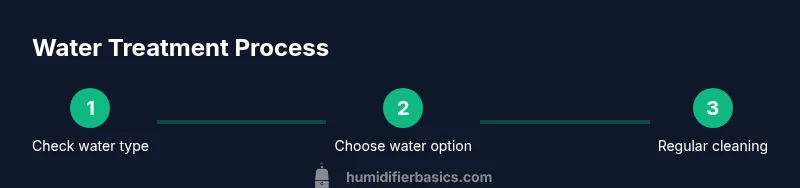
Distilled and demineralized water have fewer minerals than typical tap water, dramatically reducing mineral buildup in the tank and mist outlet. Treated tap water can be acceptable if you choose a cleaning routine and mineral-control cartridge recommended by the manufacturer. In contrast, simple tap water may leave mineral residues and support biofilm growth if the unit isn’t cleaned regularly. Choosing the right water type is a foundational step in how to treat humidifier water safely and effectively.
Safe practices for different humidifier types
Ultrasonic humidifiers tend to disperse minerals as a fine dust if fed with hard water, so distilled water is highly recommended. Evaporative models rely on a wick that can accumulate minerals; regularly replacing or cleaning the wick helps, but water choice still matters. Warm-mist devices may pose burn risks if left unattended; always unplug before refilling and avoid adding additives that aren’t approved by the manufacturer. For all types, avoid essential oils and unknown additives in the water.
How to fill and handle water safely
Start by gathering distilled or demineralized water and a clean reservoir. Empty the tank before refilling, wipe the interior with a soft cloth, and rinse thoroughly after each cleaning. If you notice mineral deposits, loosen them with a vinegar soak before scrubbing. Handle water with clean hands and store it away from heat sources to prevent bacterial growth. Keeping a simple routine reduces the chance of contamination and improves performance.
Cleaning and sanitizing your humidifier
To maintain water-quality benefits, clean the humidifier weekly with a vinegar solution: fill the tank, soak for 20 minutes, scrub all surfaces, rinse thoroughly, and dry before reuse. Sanitize monthly with a manufacturer-approved solution or a diluted bleach mixture, then rinse and air-dry completely. This routine prevents biofilm and mineral buildup that can otherwise foul the device and release contaminants into the air you breathe. Always follow the user manual for exact ratios and safety precautions.
Common mistakes and how to avoid them
Don’t rely on tap water without cleaning; minerals will accumulate over time. Avoid adding fragrances, oils, or other additives to ultrasonic units unless the manufacturer approves them. Don’t run the humidifier with stale water for extended periods, and never skip daily checks during high-use seasons. If you notice reduced mist or unusual odors, pause use and inspect for mold, slime, or mineral residues.
Building a practical maintenance routine
Create a simple weekly schedule: quick visual check every day, deep clean every 7 days, and sanitizing every 30–60 days depending on water quality and usage. Keep a log of cleanings and replacements to notice patterns over time. The HumidifierBasics team recommends sticking to a predictable cadence; consistency beats occasional, heavy cleaning. By embedding water-treatment habits into daily life, you’ll maintain better air quality and extend your humidifier’s lifespan.
Tools & Materials
- Distilled water or demineralized water(Use to minimize mineral deposits)
- Measuring cup(For accurate cleaning solutions)
- White vinegar (5% acetic acid)(Soak and dissolve mineral deposits)
- Soft-bristle brush or old toothbrush(Gentle scrubbing of reservoirs and vents)
- Non-abrasive cleaning cloth(Wipe surfaces and dry completely)
- Household bleach (5-6% sodium hypochlorite)(Sanitize between uses if manufacturer allows)
- Spray bottle(Apply vinegar solution for soaking)
- Latex gloves(Protect hands during cleaning)
Steps
Estimated time: 60-90 minutes
- 1
Gather water-treatment supplies
Assemble distilled water, measurement tools, vinegar, cleaning cloths, and any gloves needed. This reduces trips to the cabinet and keeps work sanitary.
Tip: Set out everything on a clean tray to avoid cross-contamination - 2
Empty and inspect the reservoir
Power down the unit, remove the reservoir, and pour out old water. Check for scale, slime, or mold, and note any deposits that need extra attention.
Tip: Take a photo of deposits to monitor changes over time - 3
Prepare a vinegar soak
Mix a 1:1 solution of white vinegar and warm water. Submerge or apply to areas with mineral buildup and let soak for 10–15 minutes to loosen deposits.
Tip: Avoid using metal containers that corrode when exposed to vinegar - 4
Scrub and rinse components
Scrub the reservoir, base, and vents with a soft brush, then rinse thoroughly with clean water until no vinegar scent remains.
Tip: Rinse twice to ensure all vinegar and deposits are removed - 5
Sanitize (optional)
If you sanitize, prepare a manufacturer-approved solution or a diluted bleach mix according to directions, soak for 2–5 minutes, then rinse completely.
Tip: Never mix vinegar with bleach; rinse well between steps - 6
Fill with distilled water
Fill the reservoir with distilled or demineralized water to minimize mineral buildup in future use.
Tip: Use a measuring cup to avoid overfilling - 7
Reassemble and dry
Dry all components completely before reassembling to prevent microbial growth. Reattach the reservoir securely.
Tip: Air-dry overnight if possible for best results - 8
Test and monitor
Plug in the unit and run a short test cycle to confirm proper mist output and absence of odors. Adjust routine based on performance.
Tip: Keep an eye on mineral dust signs and white residue - 9
Schedule ongoing maintenance
Set a recurring reminder for weekly cleaning and monthly sanitizing and track results over time.
Tip: A simple calendar reminder makes consistency easy
FAQ
Should I always use distilled water in my humidifier?
Yes. Distilled or demineralized water reduces mineral buildup, dust emission, and the need for frequent cleaning.
Yes—distilled water helps prevent mineral dust and buildup, making maintenance easier.
Can I use essential oils in a humidifier to treat water?
Most humidifiers are not designed for essential oils and oils can clog components or trigger allergies.
Don't add essential oils to most humidifiers unless the manufacturer approves them.
How often should I clean my humidifier to keep water treatment effective?
Clean the unit weekly and sanitize it monthly or as recommended by the manufacturer.
Clean it at least once a week for best results.
Is it safe to sanitize with bleach?
Bleach can be used in some cases with manufacturer approval; follow dilution guidelines and rinse thoroughly.
Bleach is sometimes used; follow the label and rinse well.
What signs indicate mineral buildup or biofilm?
White dust, cloudy water, musty odor, and reduced mist output are common signs.
Look for white dust or cloudy water and reduced mist.
Watch Video
The Essentials
- Use distilled water to minimize mineral buildup.
- Clean weekly and sanitize monthly or per manufacturer guidance.
- Avoid additives like essential oils in most humidifiers.
- Keep a maintenance log to spot trends early.
- Regular water treatment extends humidifier life and improves air quality.