Humidifier Water: What Water to Use for Safe Humidity
Learn which water to use in your humidifier to prevent mineral buildup, mold, and bacteria. Distilled, demineralized, filtered, and boiled options explained with practical maintenance tips for safer, healthier air.


By the end of this guide, you’ll know humidifier what water to use for safe, efficient operation. We’ll compare distilled, demineralized, filtered, and boiled options, explain mineral buildup and microbial risks, and give practical tips for ultrasonic, evaporative, and warm-mist models. You’ll also learn a simple routine to keep water clean and your air healthier.
Why water quality matters for humidifiers
Water quality is not just a minor detail when you run a humidifier at home. The minerals in hard water can deposit on heating elements and across reservoir surfaces, leading to white dust that can disperse into the air you breathe. Bacteria and mold can proliferate in standing water if you don’t empty and clean the tank regularly. For homeowners and renters alike, understanding humidifier what water to use is a practical step toward healthier indoor air. According to HumidifierBasics, using the right water reduces mineral dust, lowers the risk of clogging, and prolongs the life of your device. In this section we’ll cover how mineral content, microbial risk, and device design interact with water choice and cleaning routines.
Water options explained: distilled vs demineralized vs filtered vs boiled
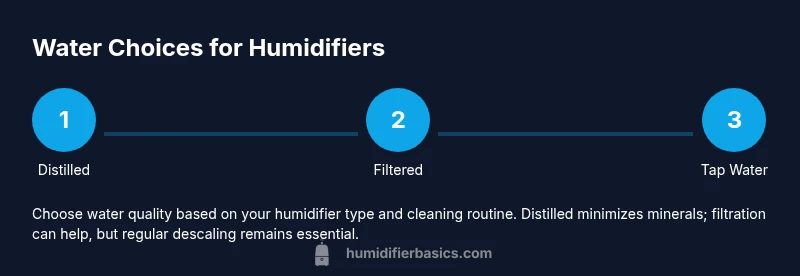
Distilled water is the gold standard for many humidifiers. It is mineral-free, so it minimizes scale buildup on heating elements and reduces white dust that can be dispersed into rooms. Demineralized water is a close alternative that removes most minerals and is often more affordable or accessible; it’s a good middle ground when distilled water isn’t convenient. Filtered tap water can work for some devices, but its effectiveness depends on the filter’s quality and the mineral content of your local water supply. Boiled water can help reduce some microbial load, but it does not remove minerals; it may temporarily reduce bacteria in the reservoir, yet mineral deposits will still accumulate with use. Across all options, regular cleaning is essential to avoid microbial growth and mineral scale. When choosing water, consider both your humidifier type and your cleaning routine to minimize long-term maintenance.
How to choose water for different humidifier types
Humidifier types differ in their tolerance to mineral content and their susceptibility to mineral deposition. Ultrasonic humidifiers tend to produce a visible mist that can carry mineral dust if you use hard water, so distilled water is highly recommended for these models. Evaporative humidifiers, which rely on a wick or filter, are somewhat more forgiving with mineral content but will still accumulate mineral buildup over time if you use hard tap water; using filtered or distilled water will cut down on buildup and extend filter life. Warm mist humidifiers heat water to create steam; they can tolerate tap water better in some cases, but mineral deposits can still form and scale heating elements; distilled or demineralized water is the safest choice for longevity and clean operation. In all cases, consult your device manual for permitted water types and avoid adding additives that could damage components.
Practical steps to keep water clean and safe
A simple daily routine goes a long way. Empty and rinse the reservoir, wipe the interior with a soft cloth, and refill with fresh water daily. This minimizes microbial growth and keeps residue from building up. At least once a week, perform a deeper cleaning using a mild descaling solution such as white vinegar diluted with water; soak, then scrub and rinse thoroughly. If you notice white dust or reduced airflow, scale buildup may be present and requires more thorough descaling. Always allow components to air-dry completely before reassembling. Finally, label containers with the water type used and the date of the last cleaning to stay organized and consistent.
Maintenance routines to prevent mineral buildup
To prevent mineral buildup from affecting performance, combine the right water with a disciplined cleaning schedule. Use distilled or demineralized water whenever possible to reduce mineral deposits. Replace filters and gaskets as recommended by the manufacturer, and avoid leaving standing water for extended periods. Place humidifiers away from walls and furniture to minimize moisture exposure to surfaces that could accumulate minerals. For households with very hard water, consider a home water treatment solution or using a dedicated water station for your humidifier. Regular maintenance saves money over time by reducing replacement parts and improving efficiency.
Authority sources and quick reading
When you want to explore the topic further, consult authoritative sources. For practical guidance on indoor air quality and humidifiers, see the EPA and university extension resources below. These references reinforce the idea that water choice and maintenance play a central role in safe, effective humidification.
Common mistakes to avoid
Common mistakes include using hard tap water without cleaning, neglecting daily reservoir emptying, and skipping descaling. Don’t assume filtered water is always free of minerals; filters can reduce, but not completely remove, minerals. Avoid adding essential oils to humidifiers, as many models are not designed for oils and can damage components. Finally, never ignore model-specific instructions; some devices have unique requirements for water types and cleaning methods that can impact performance and safety.
Tools & Materials
- Clear distilled water(Preferred for most humidifiers to minimize minerals)
- Demineralized water(A viable alternative if distilled water isn’t available)
- Filtered tap water(Use a certified home water filter; effectiveness depends on local water quality)
- Boiled tap water(KILLS microbes but does not remove minerals; not a mineral-removal method)
- White vinegar(Descaling solution for mineral buildup (1:1 with water for soaking))
- Soft brush and microfiber cloth(Gentle cleaning for reservoirs and bases)
- Measuring cup(For accurate measurements of water and cleaning solutions)
- Gloves/eye protection(When handling cleaning chemicals)
Steps
Estimated time: 25-35 minutes
- 1
Identify your humidifier type
Locate the model label and consult the manual to determine whether your device is ultrasonic, evaporative, or warm-mist. This matters because some models are more forgiving of mineral content than others, and certain cleaning routines apply differently. Knowing the type helps you tailor water choice and maintenance.
Tip: Check the user manual or manufacturer site for model-specific guidance. - 2
Choose water based on your model
If you have an ultrasonic humidifier, distilled or demineralized water is strongly recommended to minimize white dust and mineral buildup. For evaporative models, filtered water can reduce mineral dust but is not a guarantee; still schedule regular cleaning. If you own a warm-mist unit, distilled water remains the safest option for long-term use.
Tip: Avoid hard water to reduce mineral deposits. - 3
Prepare water and clean tools
Prepare your water by running it through a home water filter, or boil water for 5-10 minutes then cool before use. Keep a clean container dedicated for refilling the humidifier. Wash tools after each use to prevent cross-contamination.
Tip: Let boiled water cool to a safe handling temperature before refilling. - 4
Fill reservoir and run a test cycle
Fill the reservoir with the selected water and run a short test cycle to ensure there are no leaks and that mist output is even. Wipe any spills promptly to avoid moisture sitting on surfaces. This initial run helps confirm the water choice is appropriate for your model.
Tip: Monitor mist output and adjust humidity settings as needed. - 5
Establish a weekly cleaning routine
Disassemble parts per the manual and descale with a 1:1 vinegar solution for 20 minutes, then scrub gently and rinse thoroughly. Dry all parts completely before reassembly to prevent microbial growth. Keep a calendar reminder to stay consistent.
Tip: Always rinse well to remove vinegar residue before using again.
FAQ
Is boiled water safe to use in a humidifier?
Boiling water can kill microbes, but it does not remove minerals. For most devices, distilled water is the safest option to minimize mineral buildup and white dust.
Boiling kills microbes but doesn’t remove minerals, so distilled water is usually the safest choice.
Can I use tap water in my humidifier?
Tap water can work for some units, but mineral content can lead to deposits and dust. If you use tap water, be prepared to descale more often and consider filtration.
Tap water can work, but mineral buildup is more likely; regular cleaning helps.
How often should I clean the humidifier?
Empty and rinse the reservoir daily, then perform a thorough cleaning weekly. If you have hard water, descale more frequently.
Clean the reservoir daily and do a deeper clean every week.
Does distilled water prevent all mineral buildup?
Distilled water greatly reduces mineral buildup but does not guarantee zero deposits. Regular cleaning remains important across all water types.
Distilled water helps a lot, but you still need routine cleaning.
What water should I use for different humidifier types?
Ultrasonic units benefit most from distilled water; evaporative units tolerate filtered water better but still benefit from mineral reduction; warm-mist units should also favor distilled water when possible.
Ultrasonic likes distilled water; evaporative can use filtered water, but distilled is best when you can get it.
Watch Video
The Essentials
- Use distilled or demineralized water for most humidifiers.
- Hard water increases mineral dust and deposits—prefer softer water when possible.
- Clean regularly to prevent bacteria and mold growth.
- Tailor water choice to your humidifier type and follow the manufacturer's guidelines.