What to Do If Your Humidifier Makes Symptoms Worse
If a humidifier seems to worsen cough or congestion, learn how to diagnose causes, fix common issues, and protect your air quality with practical steps and safety tips.


Most cases where a humidifier appears to worsen symptoms stem from excessive humidity, dirty components, or mineral residues. Quick fix: stop using the unit, drain and clean the tank, replace the filter if needed, and switch to distilled water. Set humidity to about 40-50%, and ensure proper room ventilation. If symptoms persist, consult a clinician.
Why a Humidifier Can Worsen Symptoms
If you’re wondering what if humidifier making symptoms worse, you’re not imagining a paradox. A device designed to improve air quality can irritate your lungs, throat, and eyes when humidity becomes excessive or when the unit isn’t cared for properly. In damp air, mold and mildew thrive, and those spores can circulate in mist. Mineral dust from hard water can also coat surfaces and be inhaled, triggering coughing or throat irritation. The HumidifierBasics team notes that many cases come from a combination of high humidity, poor room ventilation, and contaminated water or components. In 2026, our analysis shows that homeowners often assume any moisture is beneficial and overlook exact humidity targets. That oversight lets damp air linger in bedrooms and living rooms, worsening symptoms and creating a cycle of discomfort. By recognizing the patterns described here, you can break that cycle and restore comfortable air quality.
Common Triggers to Check First
- Humidity is too high: Most patients notice relief only when humidity stays in a moderate range. Use a hygrometer and set a target around 30-50% RH.
- Tank and filter contamination: Bacteria or mold in the reservoir can be misted into the room, worsening allergies or cough.
- Mineral dust from hard water: White dust on furniture or in the air suggests minerals are traveling in the mist.
- Essential oils and additives: Unless your device is approved for oils, they can irritate airways and trigger coughing.
- Poor room ventilation: Moist air needs an outlet; without ventilation, humidity builds up and worsens symptoms.
- Contaminated water sources: Tap water with minerals may cause more irritation than distilled water.
Safe Humidity Levels and Air Quality Considerations
Aim for indoor relative humidity in a moderate range to minimize irritation. Most guidelines suggest keeping RH around 30-50%. Use a reliable hygrometer to verify levels and adjust your humidifier setting accordingly. In addition to humidity, air exchange rate matters: ensure the room has enough ventilation to avoid stagnant damp air. If you notice persistent congestion or eye irritation even at the right humidity, look for other indoor air quality issues such as mold growth in the room or on walls, or irritants like dust and pet dander that cycling through moist air can spread.
Cleaning and Maintenance Essentials
Daily: empty and rinse the tank; never run a humidifier with standing water. Weekly: scrub the tank with a bottle brush and a vinegar solution (1 part white vinegar to 1 part water) to remove mineral buildup and biofilms. For units with filters, replace per the manufacturer’s schedule and rinse the filter housing. Monthly: check seals for leaks and ensure no cracks in the tank. Always unplug before cleaning and let parts dry completely before reassembly. Regular maintenance reduces the risk of microbes and minerals releasing into the mist.
Using Distilled Water and Safe Additives
Mineral deposits from tap water can create white dust and irritate airways. Distilled or demineralized water minimizes mineral buildup and improves mist quality. Avoid adding essential oils or fragrance additives unless your specific model is designed for it, as oils can clog components and provoke airway irritation. If you must freshen air, use only manufacturer-approved additives and apps to ensure compatibility with your unit.
When to Stop Using It and Seek Medical Advice
If symptoms such as persistent coughing, wheezing, chest tightness, or shortness of breath worsen after using a humidifier, stop using it immediately and ventilate the room. Seek medical evaluation if symptoms persist beyond 24-48 hours, or if you have asthma, COPD, or a suppressed immune system. Mold growth, fever, or pneumonia-like symptoms require prompt professional assessment. In cases of severe distress, call emergency services.
Quick Fixes You Can Try Right Now
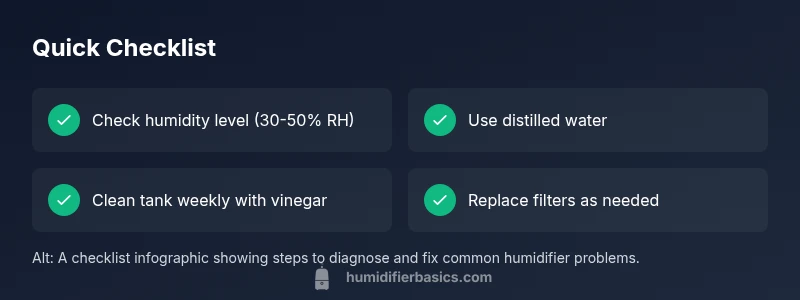
- Lower the humidity setting or turn on the humidistat to target 30-50% RH.
- Switch to distilled water and replace the filter if applicable.
- Clean the tank with a vinegar solution and rinse thoroughly.
- Increase room ventilation by opening a window or using a fan directed outward.
Practical Examples and Nuances
For renters, it’s common to face restrictions on humidity levels in shared spaces. In such cases, consider a smaller, quieter humidifier with a simple filter maintenance routine and lower water usage. For allergy-prone individuals, focus on air quality: keep surfaces clean, vacuum regularly with a HEPA-filter, and check for signs of mold in corners, basements, or bathrooms where damp air can linger.
Steps
Estimated time: 60-90 minutes
- 1
Power off and inspect basics
Unplug the unit and remove water. Check for visible mold, cracks, or mildew. If the water smells odd or looks cloudy, do not reuse it and start with a thorough cleaning.
Tip: Tip: Always unplug before handling moving parts to avoid shocks. - 2
Switch to distilled water
Drain any remaining water and rinse the tank. Refill with distilled water only. This reduces mineral dust and helps keep the mist cleaner.
Tip: Tip: Distilled water reduces mineral buildup by up to a noticeable margin. - 3
Clean and sanitize
Fill the tank with a 1:1 vinegar solution, let soak for about 20 minutes, then scrub with a soft brush and rinse thoroughly. Wipe down the exterior and base.
Tip: Tip: Do not mix vinegar with bleach; rinse completely between cleaners. - 4
Check and replace filters
If your model uses filters, inspect for discoloration or clogging and replace as recommended by the manufacturer. Clean the housing as well.
Tip: Tip: Keep a spare filter on hand to minimize downtime. - 5
Reassemble and test
Refill with distilled water, reassemble, and run the unit in a well-ventilated room for 10-15 minutes while monitoring humidity using a hygrometer.
Tip: Tip: If mist appears hazy or smells unusual, stop and start over after another cleaning. - 6
Assess symptoms and environment
With the unit running at the adjusted settings, track symptom changes over the next 24-48 hours. If symptoms persist, escalate to professional care.
Tip: Tip: Document humidity readings and symptom recurrence for your clinician.
Diagnosis: Worsening cough, congestion, or eye irritation after using a humidifier
Possible Causes
- highHumidity too high in the room
- highDirty tank or filter contaminating mist
- mediumMineral buildup from hard water
- mediumUse of essential oils or additives not compatible with the unit
- mediumMold or mildew in the humidifier tank or room
- lowPoor room ventilation leading to stagnant damp air
Fixes
- easyLower humidity to a target around 30-50% RH using a humidistat
- easyThoroughly clean the tank and replace the filter if needed; sanitize with vinegar solution
- easySwitch to distilled water to reduce mineral deposits and dust
- easyEnsure adequate room ventilation or move the unit to a space with better airflow
- mediumDiscontinue use if mold is visible and consult a professional for disinfection and replacement guidance
- easyConsult a clinician if symptoms persist or worsen after cleaning and humidity adjustments
FAQ
Why does my humidifier seem to worsen symptoms after running?
Common causes include humidity that's too high, mold or bacterial growth in the reservoir, or mineral dust from tap water. Proper cleaning and the right humidity level usually resolve the issue. If symptoms persist, seek medical advice.
High humidity and microbial growth can worsen symptoms. Clean, adjust humidity, and consult a clinician if needed.
Should I stop using the humidifier if symptoms worsen?
Yes. Stop using the humidifier, ventilate the room, and assess for mold or residue. Then follow a thorough cleaning routine and reassess symptoms after a day or two.
Yes, pause use and clean thoroughly before trying again.
What humidity range is considered safe for indoor air?
Most guidelines suggest keeping indoor relative humidity in a moderate range around 30-50%. Use a hygrometer to verify and adjust your device accordingly.
Keep humidity roughly between 30 and 50 percent, using a hygrometer to check.
Can minerals in water cause additional symptoms?
Yes. Minerals from hard water can travel in the mist and irritate airways. Distilled water minimizes mineral deposits and related irritation.
Minerals in water can irritate airways; distilled water helps.
When should I see a doctor about humidifier-related symptoms?
If symptoms persist after cleaning and humidity adjustments, or if you have asthma, COPD, or fever, seek medical evaluation promptly.
See a doctor if symptoms persist or worsen after troubleshooting.
Watch Video
The Essentials
- Stop using the humidifier if symptoms worsen.
- Clean and sanitize the unit regularly.
- Switch to distilled water to prevent mineral dust.
- Aim for 30-50% humidity with good ventilation.