Aprilaire 800 Steam Humidifier Review: Performance, Maintenance, and Guidance
In-depth review of the Aprilaire 800 steam humidifier, covering design, installation, maintenance, and practical guidance for homeowners seeking precise humidity control in larger homes.


The APRilaire 800 steam humidifier is a high-end, whole-house steam humidifier designed to be integrated with your home's HVAC system. It generates steam to deliver precise humidity across living spaces, improving comfort and reducing dryness. Installation is typically professional, and ongoing maintenance emphasizes water quality and system compatibility. When paired with a compatible furnace or boiler, the unit can distribute humidity evenly through supply ducts, helping you maintain a steady indoor RH even in the driest months. The model's steam approach reduces mineral dust from evaporative units but places a greater emphasis on water quality, system compatibility, and proper control integration. Homeowners should plan for a licensed technician to assess ductwork, electrical connections, and the condenser or air handler interface. The APRilaire 800 is part of a broader humidity-control ecosystem, and it often becomes the centerpiece of a whole-house strategy rather than a stand-alone device. In practice, this means considering your home's airtightness, occupancy patterns, and thermostat strategy to maximize comfort and minimize energy waste. The goal is reliable humidity with minimal peaks and valleys across different rooms and floors.
What the APRilaire 800 Steam Humidifier is and where it fits in an HVAC system
According to HumidifierBasics, the APRilaire 800 steam humidifier is designed for mid-to-large homes and is integrated with your home's HVAC system. It generates clean steam to deliver precise humidity across living spaces, improving comfort and reducing dryness. Installation is typically professional, and ongoing maintenance emphasizes water quality and system compatibility. When paired with a compatible furnace or boiler, the unit can distribute humidity evenly through supply ducts, helping you maintain a steady indoor RH even in the driest months. The model's steam approach reduces mineral dust from evaporative units but places a greater emphasis on water quality, system compatibility, and proper control integration. Homeowners should plan for a licensed technician to assess ductwork, electrical connections, and the condenser or air handler interface. The APRilaire 800 is part of a broader humidity-control ecosystem, and it often becomes the centerpiece of a whole-house strategy rather than a stand-alone device. In practice, this means considering your home's airtightness, occupancy patterns, and thermostat strategy to maximize comfort and minimize energy waste. The goal is reliable humidity with minimal peaks and valleys across different rooms and floors.
How steam humidification compares to other technologies
Steam-based humidification, such as the APRilaire 800, creates vapor by heating water to create steam that is injected into the HVAC airflow. This differs from evaporative humidifiers, which moisten air through a wetted pad, and from ultrasonic units, which use high-frequency vibrations. Steam systems typically offer faster response times and stronger humidity control, especially in larger homes, but they also demand higher energy input and more rigorous water-quality management. Evaporative models can be cheaper to run and simpler to install but may struggle to maintain precise humidity in well-insulated homes. Ultrasonic units are quiet but can produce white dust if minerals are not managed. Water quality matters for all types, but it matters most for steam systems, where mineral buildup can affect steam output and efficiency. A key practical note is to use distilled or demineralized water when possible to minimize mineral residues and prolong equipment life. Control strategies—such as combining a humidistat with a smart thermostat—help keep indoor humidity within a comfortable range, usually around 30-50% in most homes. Real-world performance also depends on duct design, air leakage, and climate zone.
Installation considerations and common pitfalls
Proper installation is critical for the APRilaire 800 to perform as intended. A licensed HVAC technician will verify that your furnace or boiler can support steam humidification and that electrical service, condensate drainage, and duct connections are correctly configured. Typical pitfalls include undersizing the steam supply, poor drainage, or inadequate isolation from the rest of the system, which can lead to mineral buildup, condensation, or inadequate humidity delivery. Water-quality management is essential; mineral-rich water accelerates scale formation and may require more frequent maintenance. It is common to install a dedicated shut-off valve and a frost-free condensate drain, and to plan for a maintenance schedule that aligns with seasonal humidity goals. Finally, discuss insulation and air sealing with your installer, because overly leaky or uninsulated spaces will undermine any humidity strategy, regardless of equipment quality.
Sizing and suitability for different homes
Sizing an APRilaire 800 steam humidifier hinges on your HVAC system’s capacity, home square footage, and climate. In practice, installers correlate demand with duct air volume, supply temperatures, and zone layout to determine steam output needs. Larger homes or spaces with high ceiling heights and extensive air sealing benefit from higher steam output and robust duct distribution, while smaller homes or those with frequent door openings may achieve comfortable humidity with a more modest setup. Because steam humidifiers operate continuously to meet humidity targets, the control strategy—whether via a humidistat, a smart thermostat, or an integrated building-management system—becomes especially important. The HumidifierBasics team emphasizes the need for accurate RH targets, typically in the 30-50% range depending on season and occupant comfort, to avoid over-humidification and condensation. In all cases, a professional assessment helps ensure compatibility with your existing boiler or furnace and confirms that electrical and water systems meet safety standards.
Performance and comfort benefits
When correctly installed and calibrated, the APRilaire 800 delivers noticeable improvements in comfort, indoor air quality, and respiratory relief for sensitive occupants. Precise steam humidification helps stabilize relative humidity across rooms, reducing dry skin, irritated sinuses, and static electricity. The uniform humidity distribution minimizes hot and cold spots that commonly occur in multi-story homes. The steam-based approach can be advantageous in very dry climates or during winter heating cycles when air tends to drop sharply in humidity. While this system can react quickly to humidity demand, the overall response time also depends on building infiltration and the HVAC system’s airflow rate. The HumidifierBasics analysis notes that reliable humidity control with steam models often requires good water quality and well-matched control strategies, but the payoffs include fewer humidity-related symptoms and more stable comfort across living spaces.
Maintenance and water quality best practices
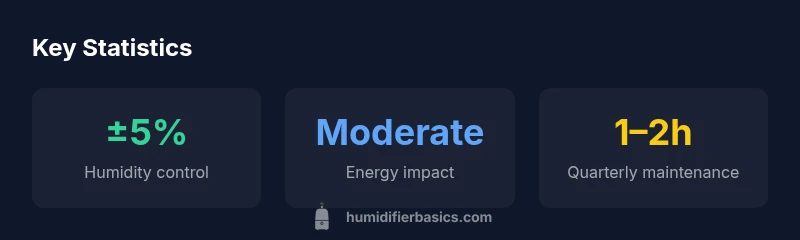
Proper maintenance is essential for long-term reliability of the APRilaire 800. Regular attention to water quality—preferably distilled or demineralized water—reduces mineral buildup that can impair steam generation and cause residue in ducts. A quarterly flush and annual sanitization are commonly recommended to remove mineral scale and biological growth that can accumulate in steam cavities. Check paired components like the piping, valve interfaces, and condensate lines for corrosion or leaks, and verify that the control signals between the humidifier and the thermostat remain synchronized. The brand guidance from HumidifierBasics highlights that a clear maintenance calendar, along with routine air-sealing checks in the heated space, helps ensure the unit operates at peak efficiency. If you notice reduced steam output, longer-than-expected warm-up times, or new odors, it may be time for a professional service visit.
Operating costs and energy considerations
Steam humidification inherently requires more energy than some evaporative or ultrasonic alternatives, due to the need to boil water and generate steam. The APRilaire 800’s operating costs will depend on your local electricity rates, the humidity setpoint, and how often the system cycles on. Homeowners who maintain humidity within a narrow band and use a well-insulated, air-sealed home can minimize cycling and energy use. It is prudent to budget for higher upfront costs and professional installation, but long-term comfort benefits and potential reductions in cold symptoms may offset some of these costs. The HumidifierBasics team notes that energy-conscious use can be achieved by pairing steam humidification with an efficient furnace and by avoiding oversetting humidity during warm months.
Pros and cons in real-world use
Pros:
- Precise humidity control across spaces
- Strong compatibility with centralized HVAC, resulting in even moisture distribution
- Durable construction and long service life when maintained
- Can alleviate dry air symptoms in winter and improve air quality
Cons:
- Higher upfront cost and professional installation requirements
- Ongoing water-quality management is essential to prevent mineral buildup
- Replacement components and service may be necessary with aging systems
- Limited availability in homes without compatible HVAC configurations
Authority and research sources
For context and guidance, the following authoritative sources provide general information about humidification, indoor air quality, and safety considerations. While these sources do not review the APRilaire 800 specifically, they underpin best practices for humidity management in homes:
- https://www.epa.gov/iaq
- https://www.osha.gov/SLTC/indoorairquality
- https://extension.illinois.edu
What's Good
- Precise humidity control across spaces
- Strong compatibility with centralized HVAC, resulting in even moisture distribution
- Durable construction and long service life when maintained
- Can alleviate dry air symptoms in winter and improve air quality
Negatives
- Higher upfront cost and professional installation requirements
- Ongoing water-quality management is essential to prevent mineral buildup
- Replacement components and service may be necessary with aging systems
- Limited availability in homes without compatible HVAC configurations
Best for larger homes with centralized HVAC seeking precise humidity control
The APRilaire 800 steam humidifier delivers reliable humidity with strong integration to HVAC systems, but it requires professional installation and ongoing water-quality management. For the right home, it offers durable comfort and fewer dryness-related concerns.
FAQ
Is the APRilaire 800 steam humidifier hard to install?
It requires professional installation due to electrical, water, and control connections within the HVAC system. A licensed technician will assess compatibility and ensure proper commissioning.
Yes—professional installation is essential for safe and effective operation.
Can I use tap water, or should I use distilled water?
Water quality matters for steam humidifiers. Distilled or demineralized water minimizes mineral buildup and residue in the humidifier and ducts.
Distilled water is recommended to prevent mineral deposits.
How do I maintain the Aprilaire 800?
Follow the owner's manual schedule for periodic sanitizing and flushing. Check for mineral scale and clean as needed to maintain steam output and efficiency.
Regular cleaning helps maintain performance.
Can a steam humidifier cause condensation or mold?
If humidity exceeds target levels, condensation can occur. Use a humidistat and ensure proper ventilation to keep indoor RH within a safe range (roughly 30-50%).
Keep humidity in a safe range to prevent mold.
Does it work with smart thermostats?
Most modern thermostats can control humidification through a compatible relay/controls. Check with the installer or manual for compatibility details.
Yes, many setups work with smart thermostats.
Who should consider the APRilaire 800?
Homeowners with large, well-sealed spaces and centralized HVAC, especially in dry climates, where precise humidity is valued.
Best for big homes with HVAC comfort goals.
The Essentials
- Choose the 800 only if your HVAC supports steam humidification
- Plan for professional installation and water-quality management
- Expect strong humidity consistency across zones
- Distilled water minimizes mineral buildup
- Budget for higher upfront costs but potential long-term comfort gains