How Much Is a Home Humidifier? A 2026 Price Guide
Discover how much a home humidifier costs in 2026. Learn price ranges by type, factors influencing price, ongoing costs, and practical tips for renters and homeowners.


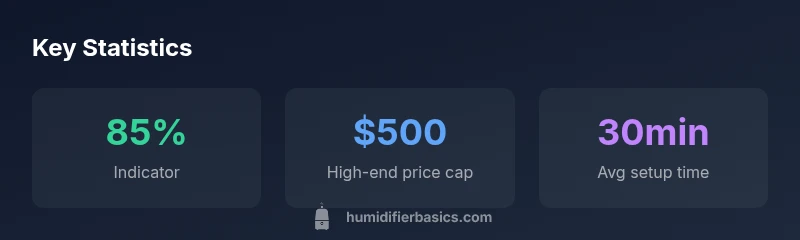
Typical home humidifier prices range from about $40 to $500, depending on type, capacity, features, and brand. Entry-level models with basic mist control and small tanks are on the lower end, while high-capacity, smart-connected units with built-in humidistats sit toward the upper end. Warranty length and filtration needs also influence upfront cost.
What determines the cost of a home humidifier
According to HumidifierBasics, the price you pay for a home humidifier reflects more than just the brand. Core factors include the type (evaporative, ultrasonic, warm-mist), tank size and water capacity, and the unit’s covering area. Features such as built‑in humidistats, auto‑shutoff, and smart controls can push costs higher, as can antimicrobial treatments or specialized mineral management systems. Replacement filters or cartridges add to long‑term costs and should be considered in a total cost picture. Energy efficiency matters too, especially for larger spaces or warm‑mist units that run heaters. When budgeting, consider both the upfront cost and the ongoing expenses—filters, electricity, and water quality strategies (e.g., distilled water vs. tap water). This section helps you frame how much to allocate for a humidifier based on your home size, desired comfort level, and maintenance tolerance.
Price ranges by type: evaporative, ultrasonic, warm-mist
Price bands vary by technology. Evaporative models tend to be the most affordable upfront, often delivering good performance with a simple wick or filter system. Ultrasonic humidifiers are typically quiet and appealing for bedrooms or home offices, but they may require mineral filtration or distilled water to prevent white dust. Warm-mist units can deliver more immediate relief in very dry spaces but usually come with higher energy use and maintenance needs. Expect low-end evaporative units around the $40–$80 range, mid-range ultrasonic or evaporative units around $100–$250, and premium warm-mist or smart-enabled models at $300–$500 or more. Durability, warranty length, and brand reputation can shift these ranges by a small amount. For renters and homeowners, choosing the right type is about balancing upfront cost with long-term upkeep.
How capacity and coverage affect price
Room size and target humidity levels are the primary determinants of capacity and, by extension, price. A compact unit designed for small bedrooms or offices may cost less but will require more frequent refills and replacements, potentially offsetting initial savings. Medium to large rooms call for higher-capacity units with larger tanks or multiple-mode configurations. These models are typically priced higher, reflecting longer run times, better spray consistency, and more precise humidity control. If you regularly run a humidifier for several hours daily, consider models with energy-saving features and auto‑adjustment capabilities. While higher capacity units may have steeper upfront prices, the per‑hour operating cost can be lower due to better efficiency and reduced maintenance needs per unit of humidity delivered.
Features that add to price (and value)
Premium features can substantially affect upfront cost but also enhance user experience and long-term value. Digital controls, programmable timers, humidity sensors, auto-stop shutdown, and app connectivity add convenience and precision. Filters that improve air quality or mineral-removal cartridges increase ongoing costs but reduce mineral dust and buildup in the home. Energy star ratings or optimized heat and evaporation efficiency can lower electricity usage over time. If you need multi-room coverage or integrated smart home routines, expect to pay more upfront with the payoff in ease of use and consistent comfort. When evaluating features, weigh how often you’ll use them and how long you plan to stay in the space.
Ongoing costs beyond the upfront price
Upfront price is only part of the story. Ongoing costs typically include replacement filters or cartridges every 6–12 months, depending on usage and water quality. If you rely on tap water, you may incur more frequent maintenance or cleaning to prevent mineral buildup. Energy consumption varies by model and settings; larger or heated units consume more power, though smart features can help manage usage. Water quality can influence maintenance costs; distilled or demineralized water minimizes residue but adds to ongoing expenses. For cost-conscious buyers, a model with a single filter and reliable maintenance schedule can offer a predictable total cost of ownership over several years.
Practical buying scenarios: apartment, small home, large home
In an apartment or compact room, a small evaporative or ultrasonic model priced at the low end often suffices. For a family home with multiple rooms, a mid-range unit that covers a larger area or a small multi-room system becomes more practical, even if it costs more upfront. In larger homes with higher humidity needs, you may opt for a high-end, multi-zone system or a central humidification solution, which commands a premium but can balance comfort with energy efficiency. Renters should prioritize units with compact footprints and good warranty terms, while homeowners can invest in higher-capacity units with durable components and robust support.
Quick buyer checklist and how to compare quotes
Use this quick checklist to compare bids:
- Confirm room coverage in square feet and recommended humidity range.
- Compare upfront price and included accessories (filters, stands, hoses).
- Review maintenance requirements and filter replacement costs.
- Check warranty length and what it covers (parts, labor).
- Consider energy use and any smart features aligned with your preferences.
- Compare delivery cost and return policy.
- Request a clear quote for required parts, including filters and cleaning kits over a 2–3 year horizon.
Budgeting for a humidifier in 2026 and energy considerations
Budgeting for a humidifier involves planning for both purchase and ongoing costs. If you live in a climate with pronounced winter dryness, an efficient unit with auto humidity control can reduce energy usage and improve comfort without a dramatic spike in electricity costs. For many households, a mid-range model with a reliable filter system and passive mineral control delivers the best value. When evaluating price discussions with retailers, ask for itemized quotes that separate the base unit, required filters, and any optional maintenance kits. A transparent comparison helps you estimate total ownership costs over the first 2–3 years and decide which features matter most for your space.
Renters vs homeowners: budget and maintenance differences
Renters often prioritize compact, inexpensive models that fit modest space and do not require permanent installation. Homeowners might justify higher upfront costs for larger units, multi-room configurations, or central humidification systems with longer warranties and better energy efficiency. Regardless of status, prioritize models with straightforward maintenance and predictable replacement costs. The right choice minimizes risk of mold or dry skin while keeping energy and filter expenses manageable over time.
Price ranges by humidifier type
| Type | Typical Price Range | Notes |
|---|---|---|
| Evaporative | $40–$200 | Simple, cost-effective; requires regular filters |
| Ultrasonic | $50–$250 | Quiet operation; mineral dust risk; use distilled water |
| Warm-mist | $60–$400 | Higher energy use; mineral buildup considerations |
FAQ
How much does a typical home humidifier cost?
Prices vary by type and capacity, but most homes spend between the low end and mid range upfront. Add maintenance costs over time, especially for filters and water treatment. Consider your space and desired humidity levels to pick a model that balances price with long-term value.
Most homes pay a few dozen to a few hundred dollars upfront, plus ongoing maintenance costs.
Do ultrasonic humidifiers cost more upfront than evaporative models?
Ultrasonic units often sit in the mid-range to higher-end price bracket due to quiet operation and features. Evaporative units are usually more affordable upfront but may require more frequent filter changes. Your choice depends on noise sensitivity, maintenance tolerance, and room size.
Ultrasonic models tend to be pricier upfront than basic evaporative ones.
Are there ongoing costs besides the purchase price?
Yes. Expect filter or cartridge replacements, energy use, and water choices. Distilled water can reduce mineral buildup but adds ongoing costs. Factor these into your annual budget when comparing models.
Filters and energy add to yearly costs.
Is it worth paying more upfront for a higher-end model?
If you need precise humidity control, multi-room coverage, or smart features, a higher-end model can offer better long-term value. For smaller spaces, a budget model with reliable maintenance may suffice. Weigh upfront cost against expected maintenance and energy savings.
It depends on space size and how much you value automation.
What features most impact price and value?
Humidistat accuracy, auto mode, energy efficiency, multi-room capability, and smart connectivity tend to raise price but also improve comfort and convenience. Prioritize features that align with your daily routine and climate needs.
Look for a good balance of features and maintenance costs.
“Prices vary with features, but the best value blends upfront affordability with easy maintenance and energy efficiency.”
The Essentials
- Clarify your room size before choosing a model
- Expect upfront price plus ongoing maintenance costs
- Consider features that improve comfort and efficiency
- Balance price with warranty and maintenance needs