What Can Be Used in a Humidifier? A Practical Guide
A data-driven guide to safe liquids for humidifiers, explaining water types, maintenance, and best practices to protect devices and improve indoor air quality.


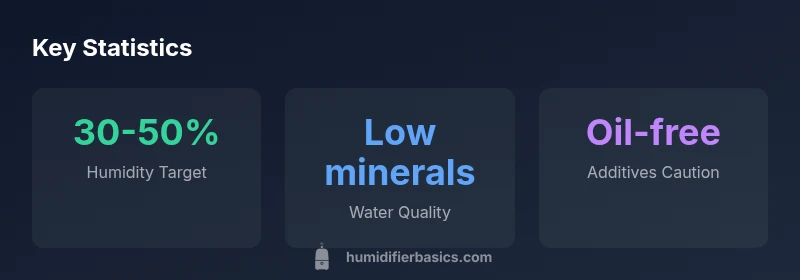
According to HumidifierBasics, the safest liquids for a humidifier are distilled, demineralized, or deionized water. Tap water can leave mineral dust and encourage mold growth, while essential oils or fragrance additives are not recommended for most units. For air quality goals, maintain indoor humidity around 30-50% and use water that minimizes mineral buildup. Always check your model's manual before use.
Water Types and Why They Matter
Water quality matters for both your unit and indoor air. Using water with low mineral content reduces white dust and mineral buildup inside the tanks and tubing. This section answers what can be used in a humidifier and why water choice matters. HumidifierBasics emphasizes starting with distilled, demineralized, or deionized water whenever possible. For renters and homeowners, this practice also minimizes cleaning frequency and helps extend the device's life. Always keep a clean reservoir and replace water daily if possible to avoid stagnation.
Why minerals matter
Minerals like calcium and magnesium dissolve into the air as the unit runs, forming deposits on heating elements and nebulizers. Over time, these deposits can reduce efficiency, increase energy use, and release particles that resemble dust. A low-mineral water source minimizes these issues and supports consistent humidity control.
Distilled, Demineralized, and Deionized Water: What Works Best
Distilled water is produced to remove most minerals, making it the top choice for most humidifiers. Demineralized and deionized waters also offer very low mineral content. In practice, any of these options reduce the chance of white dust and mineral deposits. If these options are unavailable, using bottled water with relatively low mineral content is a reasonable fallback, but you should still clean the unit regularly.
Note: The goal is to minimize dissolved solids in the water, not to extract maximum humidity. Humidity levels affect comfort and health; water choice affects the appliance's maintenance burden.
Tap Water: Minerals, Scale, and Air Quality Impact
Tap water varies widely in mineral content. Hard water can leave mineral scale in the reservoir, humidifier plates, and filters, which can reduce efficiency and release fine dust. HumidifierBasics analysis shows that water hardness correlates with cleaning frequency and mineral deposition. For many households, switching to distilled or demineralized water lowers the risk and simplifies maintenance. If you must use tap water, plan for more frequent cleaning and possible filter changes.
Oils, Fragrances, and Additives: What to Avoid
Most humidifiers are not designed to disperse essential oils or fragrance additives. Oils can clog diaphragms, tubing, and ultrasonic transducers, leading to reduced performance or device failure. If you want scent, consider a separate diffuser or a humidifier model that explicitly supports fragrance additives. Never mix oils with plain water in a unit that is not rated for oils.
Cleaning and Maintenance: Preventing Mineral Buildup
Regular cleaning is essential, especially if you sometimes use water with minerals. Empty, rinse, and dry the reservoir daily if possible. Perform a deep clean weekly using a 1:1 vinegar-to-water solution or a humidifier-safe cleaner, then rinse thoroughly. Replacing filters as recommended by the manufacturer also reduces mineral buildup and improves overall air quality. A simple maintenance routine saves time and money in the long run.
Warm-Mist vs Cool-Mist: Water Choices by Unit Type
Warm-mist humidifiers boil water, which can kill some bacteria but does not eliminate mineral content. Cool-mist humidifiers spread aerosols that can carry minerals if the water is mineral-rich. Regardless of type, low-mineral water reduces residue and helps the unit operate efficiently. Always consult the user manual for unit-specific recommendations and never mix additives with water unless the manufacturer approves.
Practical Steps: Choosing Water and Testing Humidity
Create a simple water-use plan: keep distilled or demineralized water on hand, perform a weekly clean, and monitor humidity with a reliable hygrometer. Aim for a comfortable range (roughly 30-50%), adjusting based on season, occupancy, and room size. Keeping a journal of maintenance tasks helps catch issues early and reduces the chance of mold growth due to overly damp conditions.
Myths Debunked: Common Misconceptions about Humidifier Water
Myth: Any water is fine for a humidifier. Reality: Mineral content affects deposits and performance. Myth: Oils improve humidification. Reality: Oils can damage most humidifiers. Myth: Higher humidity always equals better comfort. Reality: Over-humidification promotes mold and dust mites. Separate concerns for scent and moisture for best results.
Quick-Start Checklist: Safe, Simple Water Use (2 minutes)
- Use distilled or demineralized water when possible
- Avoid adding essential oils unless the unit supports it
- Clean weekly and deep-clean monthly
- Keep humidity in the 30-50% range for comfort and health
Comparison of water sources for humidifiers
| Water Source | Best For | Notes |
|---|---|---|
| Tap Water | Moderate to quick use | High mineral content; can cause deposits |
| Distilled Water | Low mineral content | Minimizes scale and white dust |
| Demineralized Water | Low mineral content | Good balance; easier on unit |
| Deionized Water | Very low minerals | Best performance; minimal deposits |
FAQ
What water is best for a humidifier?
Distilled water is generally the best option because it has the fewest minerals. Demineralized or deionized water are also suitable. If you must use tap water, expect more frequent cleaning.
Distilled water is best for most humidifiers; if you can’t get it, demineralized water works too, but you’ll need to clean more often.
Can I use tap water in a humidifier?
Tap water can be used, but it increases mineral buildup and can release dust. This means more cleaning and potential short-term efficiency loss.
Tap water works, but you’ll see more mineral buildup and need to clean more often.
Are essential oils safe in humidifiers?
Most humidifiers aren’t designed for essential oils. Oils can clog components and void warranties. Use a diffuser or a unit designed for oils if scent is desired.
Oils aren’t safe in most humidifiers; use a diffuser instead.
How often should I clean my humidifier?
Clean the reservoir weekly, and perform a deeper clean monthly or as recommended by the manufacturer. Empty and dry the unit between uses when possible.
Clean weekly and do a deeper clean every month.
What humidity level should I maintain?
Aim for about 30-50% relative humidity. Adjust for season and room size, ensuring you don’t over-humidify to avoid mold.
Keep humidity around 30-50% for comfort and safety.
Does water quality affect energy use?
Water quality can influence cleaning needs and efficiency, but energy use is mainly driven by your device and settings. Low-mineral water reduces deposits that can impair efficiency.
Mineral-rich water can increase cleaning burden; low-mineral water helps.
“Choosing the right water and sticking to a maintenance routine dramatically improves indoor air quality and extends the life of your humidifier.”
The Essentials
- Use low-mineral water when possible to reduce residue.
- Avoid essential oils in most humidifiers; opt for diffusers if scent is desired.
- Regular cleaning prevents mineral buildup and mold growth.
- Match water choice to your humidifier type (cool-mist vs warm-mist).
- Aim for 30-50% indoor humidity for comfort and health.