What to Use in a Vicks Humidifier: A Practical Guide
Learn which liquids are safe for a Vicks humidifier, why water quality matters, and how to use VapoSteam and other approved additives correctly for healthier indoor air.


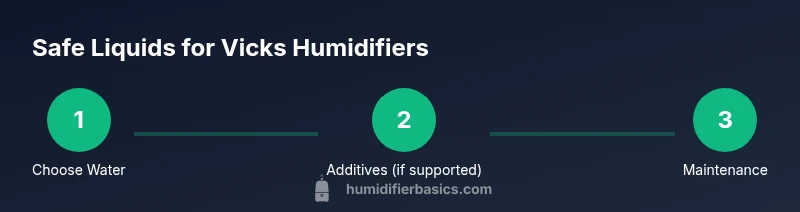
What to use in a Vicks humidifier is straightforward: use distilled water or clean tap water and only add Vicks-approved additives if your model supports them (such as VapoSteam or VapoPads). Do not add essential oils, medicines, or homemade mixtures unless the manufacturer specifies. Follow the manual and maintain the unit with regular cleaning.
Why liquids matter
According to HumidifierBasics, the wrong liquids can damage your device and negatively affect indoor air quality. Minerals in hard water can accumulate as white dust on furniture and inside the humidifier, which may irritate the lungs or worsen allergies for some people. Oils, fragrances, or medicines not approved by the manufacturer can clog valves, seals, and sensors, leading to reduced mist output or malfunction. The goal is to keep the water simple and the additive choices deliberate, so the humidifier runs efficiently and healthfully. When you choose liquids thoughtfully, you also reduce mineral buildup, improve energy efficiency, and extend the unit’s lifespan. For renters and homeowners alike, following manufacturer recommendations matters for safety and warranty coverage.
Safe liquids to use in a Vicks humidifier
Most Vicks humidifiers perform best with clean water. Distilled water is ideal because it has minerals removed, resulting in less mineral residue and white dust on surfaces. If distilled water isn’t available, filtered or low-mineral tap water is acceptable, provided you regularly clean the tank and base to prevent buildup. Some Vicks models support approved additives like VapoSteam or VapoPads designed for humidifier use. Only add these products if the model explicitly supports them and always follow the recommended dosage and frequency from the manufacturer. Never substitute with household cleaners, essential oils, alcohol-based liquids, or any non-approved substances, as they can damage components and release unwanted fumes into the room.
Additives you can (or cannot) use
Check your model’s manual to confirm whether additives are supported. If your humidifier is designed to work with VapoSteam, use that exact product and measure it according to the instructions. Avoid using essential oils, fragrances, or medicines not labeled for humidifier use; these can clog steam paths and promote mold growth in the water tank. If your device has a dedicated aromatherapy pad or tray, use only the pads recommended by Vicks. Never mix multiple additives or pour liquids directly into electrical components. When in doubt, stick to water alone and use other forms of scent or relief via room diffusers away from the humidifier.
How to choose water quality for best results
Water quality directly influences performance and maintenance. Distilled water minimizes mineral buildup, reduces white dust, and keeps the mist clear. If you rely on tap water, consider a home water test or a simple home filtration approach to lower mineral content, but remember: filtration should not introduce particulates into the reservoir. Empty and rinse tanks daily if you use tap water, and perform a weekly deep clean with a mild, non-abrasive dish soap. Leaving water in the tank for long periods can encourage bacterial growth; therefore, empty, rinse, and dry the tank between uses. For households with sensitivity to minerals, the extra step of using distilled water is worth the investment for air quality and equipment longevity.
Step-by-step setup and maintenance overview
A clean installation starts with verifying compatibility, followed by careful filling, correct additive use (if supported), and daily maintenance. This section provides context for the upcoming STEP-BY-STEP, emphasizing safety and routine checks. By understanding the water quality impact and safe additive rules, you’ll reduce the risk of mineral residue, mold, and unpleasant odors. HumidifierBasics recommends building a simple weekly maintenance routine that includes emptying the reservoir, rinsing with clean water, wiping dry, and inspecting seals for wear. This approach helps maintain efficient mist output and healthier indoor air quality.
Cleaning, storage, and odor control
Proper cleaning is essential to prevent mold and bacterial growth. Empty the tank completely, rinse with clean water, and wipe dry with a lint-free cloth. Use only mild soap if needed, avoiding abrasive cleaners that could damage plastics. Dry all components before reassembly to prevent trapped moisture that fosters mold. When storing, ensure the unit is fully dry and stored in a cool, dry location. If you notice any unusual odors or cloudy water, repeat a thorough cleaning cycle and consider replacing filters or gaskets as recommended by the manufacturer.
Troubleshooting common issues safely
If you see reduced mist, unusual odors, or visible buildup, first unplug the unit and inspect for mineral deposits or residue. A vinegar-warm water solution can help dissolve mineral buildup, but only use this method if the user manual approves it. Rinse thoroughly afterward. Persistent problems may indicate a gasket wear or sensor issue; consult the manual for replacement parts and warranty guidance. Remember: never operate a damaged humidifier. Regular maintenance and using water of appropriate quality are your best preventatives.
Brand-specific notes and practical tips
Vicks models vary in features like VapoSteam compatibility, aroma pads, or medicated additives. Always prioritize the user manual for model-specific guidance. If your unit supports VapoSteam, follow the exact dosage guidelines and only add during the filling phase. Place the humidifier on a level, water-resistant surface away from direct sunlight and heat sources. Consider using a hygrometer to monitor room humidity and keep levels between about 30-50% for comfort and health. HumidifierBasics emphasizes that consistent cleaning and correct liquid choices are the foundation of safe, effective humidification.
Authority sources and further reading
For safe usage guidelines and general indoor air quality considerations, refer to authoritative resources and manufacturer instructions. This section collates reliable references to support safe practices and informed decisions. Always cross-check product manuals and official brand advisories before trying new liquids or additives.
Quick-start safety recap for busy days
- Use distilled water when possible to reduce mineral buildup.
- Only use additives if the model explicitly supports them.
- Do not use essential oils, medicines, or homemade liquids unless approved.
- Clean the unit daily and perform a weekly deep clean.
- If unsure, revert to water-only operation and consult the manufacturer.
Tools & Materials
- Distilled water(Best option to minimize mineral buildup and white dust)
- Clean water (tap or filtered)(Okay if distilled isn’t available; use it with extra cleaning)
- Soft cloth for cleaning(For daily wipe-downs and tank exterior)
- Mild dish soap(Only if the manufacturer approves its use; avoid harsh cleaners)
- VapoSteam or VapoPads (approved additives)(Only if your specific Vicks model supports them)
- Measuring cup(For precise additive measurements if approved)
Steps
Estimated time: 15-25 minutes
- 1
Check compatibility
Look up your Vicks humidifier model in the manual to confirm whether additives like VapoSteam are supported. If not, plan to use water only. Why: improper additives can damage the unit and void warranties.
Tip: If in doubt, contact customer support before adding any liquids other than water. - 2
Prepare water
Decide between distilled water or clean tap water based on availability. Ensure the water is at room temperature and free of odors. Why: warm or hot water can encourage mineral deposition and reduce device life.
Tip: Rinse the reservoir with clean water before refilling. - 3
Fill the tank
Fill the reservoir to the manufacturer’s fill line using your chosen water. Do not overfill and avoid placing additives directly into the tank unless explicitly supported. Why: overfilling can cause leaks and damage the unit.
Tip: Use a funnel to minimize spills and keep the base clean. - 4
Add approved additive if supported
If the model supports additives like VapoSteam, add only the recommended amount per the manual. Never mix multiple additives. Why: incorrect dosages can affect safety and odor.
Tip: Double-check dosage before closing the tank. - 5
Power on and test
Plug in and run the humidifier for a few minutes to verify mist output and check for leaks or unusual smells. Why: early testing helps catch issues before long-term use.
Tip: If you notice thinning mist or strange odors, power off and inspect for residue buildup. - 6
Daily cleaning routine
Empty the water, rinse the tank and base, wipe dry, and reassemble. Why: regular cleaning prevents mold and bacterial growth within the reservoir.
Tip: Use mild soap only if recommended; avoid abrasive cleaners.
FAQ
Can I use tap water in a Vicks humidifier?
Tap water is generally acceptable if distilled water isn’t available, but it can lead to mineral buildup and more frequent cleaning. Always follow the model’s manual.
Tap water is usually okay, but distilled water reduces mineral buildup; follow your model’s manual for the exact guidance.
Should I use essential oils in a Vicks humidifier?
Most Vicks humidifiers are not designed for essential oils. Using oils can clog components and create fumes. Only use oils if your model explicitly supports it.
Essential oils aren’t typically recommended unless your model says so; they can damage the unit.
What additives are approved for Vicks humidifiers?
Only use additives that are labeled for humidifiers and supported by your specific Vicks model, such as VapoSteam when permitted. Read the manual for dosage and compatibility.
Only use additives the manual approves; follow dosage directions exactly.
How often should I clean a Vicks humidifier?
Clean the tank daily with water and wipe surfaces dry. Do a deeper clean weekly with mild soap and rinse thoroughly to prevent mold.
Clean daily and do a deeper weekly clean for best safety and performance.
What if I notice white dust or odor after using water?
White dust often indicates mineral content in water; switch to distilled water and clean the unit thoroughly. Odor may signal mold or bacterial growth, requiring a full sanitation cycle.
Switch to distilled water and clean the unit; odor means sanitize and dry it well before next use.
Watch Video
The Essentials
- Use distilled water to minimize mineral buildup
- Only use approved additives if the model supports them
- Never include oils or medicines not approved by the manufacturer
- Clean daily to prevent mold and bacteria
- Follow the manual for maintenance and safety